
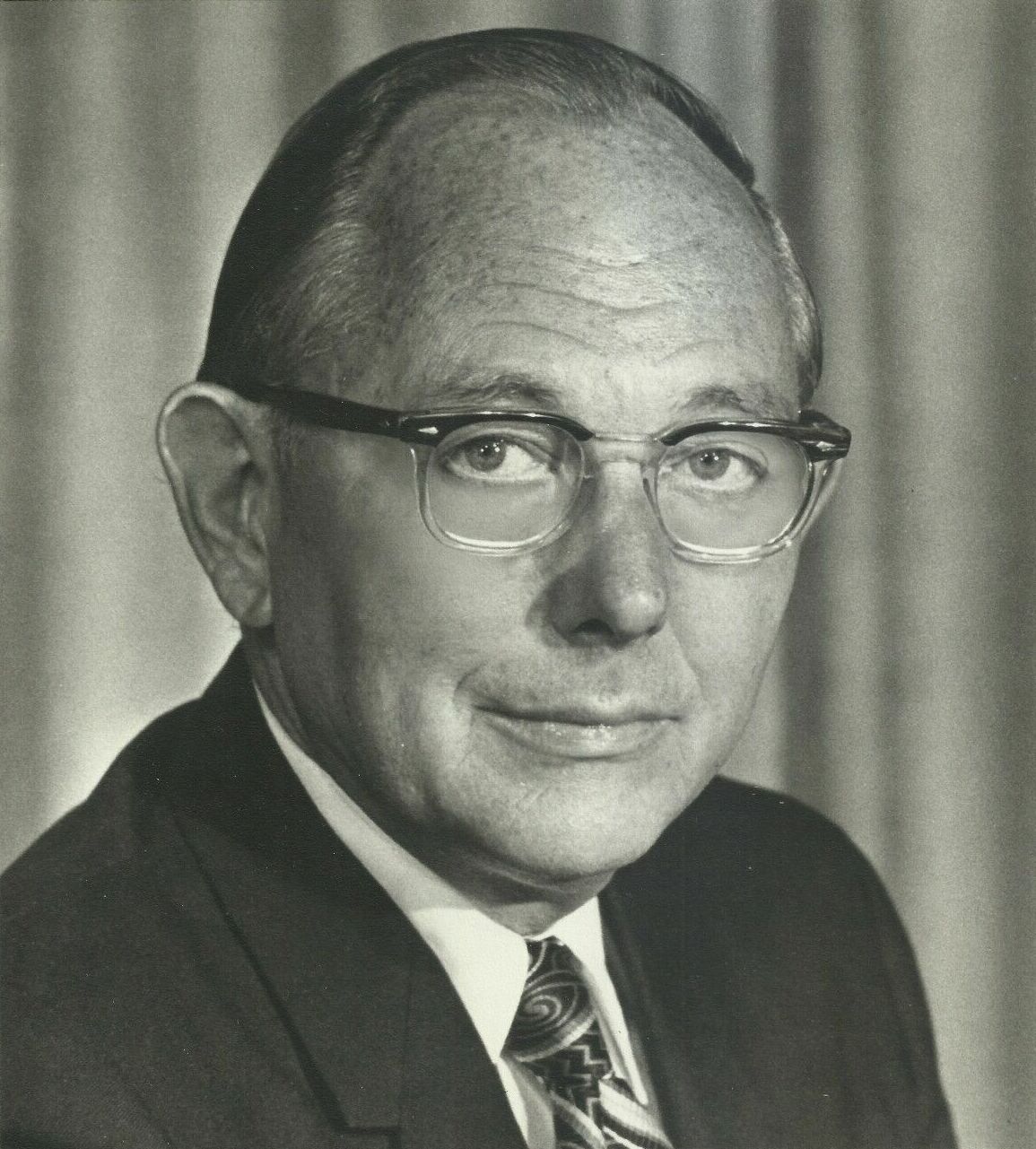
Historical · U.S. Court of Appeals for the Federal Circuit
Jack Richard Miller
Former Circuit Judge · U.S. Court of Appeals for the Federal Circuit · 1982–1994 · Appointed by None Reassignment
Jack Richard Miller served as a circuit judge of the U.S. Court of Appeals for the Federal Circuit (1982–1994). Miller was appointed by None Reassignment.
Key facts
- Full name
- Jack Richard Miller
- Court
- U.S. Court of Appeals for the Federal Circuit
- Office
- Circuit Judge (U.S. Court of Appeals)
- Status
- Former circuit judge
- Duty status
- Not serving
- Appointment
- Recess appointment
- FJC seat
- CAFC0501
- Tenure
- 1982–1994
- Confirmed
- —
- Born
- 1916-06-06
- Died
- 1994-08-29
- First year on the bench
- 1982
- Dataset version
- 1.20260711
Appointment & service record
U.S. Court of Appeals for the Federal Circuit · 1982–1985
- Seat
- CAFC0501
- Appointment
- Recess appointment
- Appointing president
- None Reassignment
- Confirmed
- Recess appointment
- Commissioned
- 1982-10-01
- Senior status
- 1985-06-06
Court, FJC seat, appointment type (Senate-confirmed or recess), appointing president, confirmation and commission dates, and senior-status date are drawn from the Federal Judicial Center Biographical Directory and Wikidata.[1][2][3]
Sources
- [1]https://www.fjc.gov/node/1385136fjc · retrieved 2026-07-11
- [2]https://www.fjc.gov/history/judges/biographical-directory-article-iii-federal-judges-exportfjc-directory · retrieved 2026-07-11
- [3]https://www.wikidata.org/wiki/Q1677124Wikidata · retrieved 2026-07-11
Biographical narrative
1,224 words · sourced from the Wikipedia REST extract
Jack Richard Miller was a United States circuit judge who served on the United States Court of Appeals for the Federal Circuit from 1982 to 1985. Born in Chicago in 1916, he had a distinguished career that spanned military service, legal practice, academia, legislative office, and the federal judiciary. Before his appointment to the Federal Circuit, Miller represented Iowa in the United States Senate for twelve years and previously served as a judge on the United States Court of Customs and Patent Appeals. His path to the federal appellate bench reflected the breadth of his professional experience in tax law, legislative policy, and specialized federal jurisdiction.
Early life and legal career
Miller was born on June 6, 1916, in Chicago, Illinois. As a teenager in 1932, he relocated to Sioux City, Iowa, which would become his long-term home and political base. His educational background was notably international and diverse. He attended The Oratory School in England before pursuing higher education in the United States. In 1938, he earned an Artium Baccalaureus degree from Creighton University, followed by an Artium Magister degree from the Catholic University of America in 1939.
Miller's early career was interrupted by World War II, during which he served with distinction in the United States Army Air Corps from 1942 to 1946. His military service was extensive and varied, including deployment to the China-Burma-India Theater, a position on the faculty at the Army Command and General Staff College at Fort Leavenworth, and duty at Air Force Headquarters in Washington, D.C. By the end of his service, he had attained the rank of lieutenant colonel.
Following the war, Miller pursued legal education, receiving his Juris Doctor from Columbia Law School in 1946. He supplemented this training with postgraduate study at the University of Iowa College of Law later that same year. His early legal career focused on federal tax law; from 1947 to 1948, he worked as an attorney with the Office of Chief Counsel of the United States Internal Revenue Service. Miller then briefly entered academia, serving as an assistant professor of law at Notre Dame Law School for one year. After this academic appointment, he returned to Sioux City and established himself in private legal practice.
Miller's transition into public service began at the state level. He was elected to the Iowa House of Representatives in 1955, serving in the lower chamber of the state legislature. Two years later, in 1957, he was elected to the Iowa Senate, advancing to the upper chamber and gaining experience in state legislative matters that would inform his later federal service.
In 1960, Miller successfully ran for the United States Senate in a race to replace retiring Senator Thomas E. Martin, who had represented Iowa as a member of the Republican Party. Miller faced Iowa's sitting governor in the general election and prevailed in a close contest. During his Senate tenure, he served on the influential Senate Finance Committee, where his background in tax law proved relevant to his legislative work. He won reelection in 1966 in a more decisive victory, but his Senate career ended in 1972 when he was defeated in an election that was considered an upset at the time.
Miller's voting record in the Senate included support for several significant pieces of civil rights legislation. He voted in favor of the Civil Rights Act of 1964, the Voting Rights Act of 1965, and the 24th Amendment to the United States Constitution. He also supported the confirmation of Thurgood Marshall to the United States Supreme Court. However, he did not cast a vote on the Civil Rights Act of 1968.
Federal appellate service
Miller's transition to the federal judiciary occurred shortly after his Senate career concluded. President Richard Nixon, a Republican, nominated him on June 28, 1973, to a seat on the United States Court of Customs and Patent Appeals. The vacancy had been created by a previous judge on that specialized court. The Senate confirmed Miller's nomination on the same day it was submitted, and he received his commission on July 6, 1973. This appointment represented a shift from legislative to judicial work, and from general policy matters to the specialized areas of customs and patent law that fell within the jurisdiction of that tribunal.
Miller served on the Court of Customs and Patent Appeals for nearly a decade. On October 1, 1982, his judicial position underwent a significant transformation due to congressional reorganization of the federal court system. By operation of law, he was reassigned to the newly created United States Court of Appeals for the Federal Circuit. This reassignment was authorized by statute and reflected Congress's decision to consolidate and reorganize certain specialized appellate jurisdictions. The Federal Circuit was established to hear appeals in areas including patent law, international trade, government contracts, and certain claims against the federal government.
Miller's service on the Federal Circuit continued until he assumed senior status on June 6, 1985, his sixty-ninth birthday. Senior status is a form of semi-retirement that allows federal judges to continue hearing cases on a reduced schedule while creating a vacancy for a new active judge to be appointed. His assumption of senior status marked the end of his active service on the court, though he retained his judicial commission.
Jurisprudence and legacy
Miller's judicial career spanned a period of significant transition in federal appellate jurisdiction over specialized legal matters. His service bridged two distinct courts: the Court of Customs and Patent Appeals, which had existed for decades as a specialized tribunal, and the Federal Circuit, which represented a modern reorganization of federal appellate review in technical and commercial areas. This transition positioned him as part of the founding group of judges on the Federal Circuit, though his active service on the new court was relatively brief before he took senior status.
His background in tax law, gained through his work with the Internal Revenue Service and his service on the Senate Finance Committee, provided relevant experience for the complex commercial and governmental matters that came before both courts on which he served. The Court of Customs and Patent Appeals and its successor, the Federal Circuit, required judges to develop expertise in highly technical areas of law, including patent validity and infringement, customs classification, and international trade regulations.
Miller's career reflected a pattern not uncommon among federal appellate judges of his era: a combination of private practice, government service, legislative experience, and judicial appointment. His twelve years in the Senate provided him with insight into the legislative process and statutory interpretation that would inform his judicial work. The specialized nature of the courts on which he served meant that his judicial legacy is primarily associated with the development of law in patent, customs, and related commercial fields, though specific details of his opinions and judicial philosophy are part of the court's institutional record rather than widely known to the general public.
After assuming senior status in 1985, Miller retired to Temple Terrace, Florida. His service on the Federal Circuit terminated on August 29, 1994, due to his death at the age of seventy-eight. In recognition of his military service during World War II, he was interred at Arlington National Cemetery. His career encompassed significant contributions to American public life across multiple branches of government and spanned more than four decades of service in various capacities.
Sources & provenance
Every quantitative or attributable claim above carries a per-section [N] marker that resolves to the corresponding URL below. Each entry records the upstream provider, the canonical URL, and the timestamp at which the underlying source was retrieved.
Key facts
- https://www.fjc.gov/node/1385136fjc · retrieved 2026-07-11
- https://www.fjc.gov/history/judges/biographical-directory-article-iii-federal-judges-exportfjc-directory · retrieved 2026-07-11
- https://www.wikidata.org/wiki/Q1677124Wikidata · retrieved 2026-07-11
Biographical narrative
- https://en.wikipedia.org/wiki/Jack_Miller_(politician)Wikipedia · retrieved 2026-07-11
Explore the federal judiciary
The U.S. Courts of Appeals are the intermediate appellate courts of the federal judiciary — thirteen circuits sitting between the district courts and the Supreme Court. Browse the full roster of judges on the U.S. Court of Appeals for the Federal Circuit, or explore how the appointed federal judiciary fits into the federal government.