
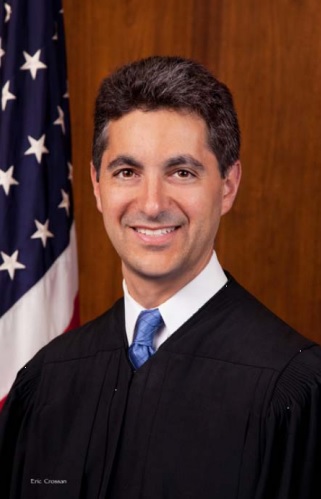
Currently serving · U.S. Court of Appeals for the Federal Circuit
Leonard Philip Stark
Currently serving
Circuit Judge · U.S. Court of Appeals for the Federal Circuit · 2022–present · Appointed by Joe Biden
Leonard Philip Stark serves as a circuit judge of the U.S. Court of Appeals for the Federal Circuit (2022–present). Stark was appointed by Joe Biden.
Key facts
- Full name
- Leonard Philip Stark
- Court
- U.S. Court of Appeals for the Federal Circuit
- Office
- Circuit Judge (U.S. Court of Appeals)
- Status
- Active circuit judge
- Duty status
- Active
- Appointment
- Senate-confirmed
- FJC seat
- CAFC1004
- Tenure
- 2022–present
- Confirmed
- 2022-02-09
- Born
- 1969
- Died
- —
- First year on the bench
- 2022
- Dataset version
- 1.20260705
Appointment & service record
U.S. Court of Appeals for the Federal Circuit · 2022–present
- Seat
- CAFC1004
- Appointment
- Senate-confirmed
- Appointing president
- Joe Biden
- Confirmed
- 2022-02-09
- Commissioned
- 2022-03-16
- Senior status
- —
Court, FJC seat, appointment type (Senate-confirmed or recess), appointing president, confirmation and commission dates, and senior-status date are drawn from the Federal Judicial Center Biographical Directory and Wikidata.[1][2][3]
Sources
- [1]https://www.fjc.gov/node/1393291fjc · retrieved 2026-07-05
- [2]https://www.fjc.gov/history/judges/biographical-directory-article-iii-federal-judges-exportfjc-directory · retrieved 2026-07-05
- [3]https://www.wikidata.org/wiki/Q6525608Wikidata · retrieved 2026-07-05
Biographical narrative
1,072 words · sourced from the Wikipedia REST extract
Leonard Philip Stark (born July 5, 1969) is an American jurist who serves as a circuit judge on the United States Court of Appeals for the Federal Circuit. Prior to his appointment to the appellate bench, he held a long tenure on the United States District Court for the District of Delaware, including service as chief judge, and earlier served as a United States magistrate judge in the same district. In addition to his judicial duties, Stark has maintained an academic presence as an adjunct professor at the University of Pennsylvania Carey Law School.
Early life and legal career
Stark was born in Detroit, Michigan, in 1969. He pursued higher education at the University of Delaware, where he completed a dual undergraduate program, earning both a Bachelor of Arts and a Bachelor of Science in history and political science, respectively, in 1991. That same year he also received a Master of Arts in history from the university, reflecting an early interdisciplinary focus on the social sciences.
Following his studies in Delaware, Stark was awarded a Rhodes Scholarship, which enabled him to attend Magdalen College at the University of Oxford. There he earned a Doctor of Philosophy in politics in 1993, deepening his scholarly engagement with governmental and legal theory. He subsequently returned to the United States to study law at Yale Law School, receiving his Juris Doctor in 1996.
Stark’s professional career began with a clerkship on the United States Court of Appeals for the Third Circuit, where he worked for Judge Walter King Stapleton from 1996 to 1997. This experience provided him with insight into appellate practice and federal jurisprudence. After completing his clerkship, Stark entered private practice as an associate at Skadden, Arps, Slate, Meagher & Flom in Wilmington, Delaware. From 1997 until 2001 he specialized in corporate and securities matters, representing clients on complex financial transactions and regulatory compliance issues.
In 2002 Stark transitioned to public service, joining the United States Attorney’s Office for the District of Delaware as an assistant United States attorney. Over a five‑year period he handled criminal prosecutions and civil litigation on behalf of the federal government, gaining courtroom experience in both trial and appellate contexts. Concurrently, Stark began contributing to legal education; since 2016 he has served as an adjunct professor at the University of Pennsylvania Carey Law School, where he teaches courses that draw upon his extensive background in corporate law, criminal prosecution, and judicial administration.
Stark’s early career thus combined academic scholarship, private‑sector practice, federal prosecutorial work, and teaching—experiences that would inform his later service on the bench.
Federal appellate service
Stark first entered the federal judiciary as a United States magistrate judge for the District of Delaware in 2007, a position selected by the district judges of that court. In this capacity he assisted with pretrial matters, conducted evidentiary hearings, and issued recommendations on dispositive motions, thereby gaining substantive exposure to the procedural dimensions of federal litigation.
On March 17, 2010 President Barack Obama nominated Stark to fill a vacancy on the United States District Court for the District of Delaware that had arisen after Judge Kent A. Jordan was elevated to the Third Circuit. The Senate confirmed Stark by voice vote on August 5, 2010, and he received his commission five days later. As a district judge, Stark presided over a broad docket that included commercial disputes, patent litigation, and criminal cases, reflecting the diverse caseload of Delaware’s federal court.
Stark’s leadership abilities were recognized when he became chief judge of the District of Delaware on July 1, 2014. He served in that administrative role for seven years, overseeing case management, supervising court personnel, and implementing procedural reforms aimed at improving efficiency and access to justice. His tenure as chief judge concluded on July 1, 2021, after which he continued to serve as an active district judge until his elevation to the appellate bench.
The transition to the Federal Circuit began with President Joe Biden’s nomination of Stark on November 3, 2021 to fill the seat vacated by Judge Kathleen M. O’Malley, who retired in March 2022. The Senate Judiciary Committee held a hearing on December 1, 2021 and reported his nomination favorably on January 13, 2022 with a 16–6 vote. Following cloture proceedings, the full Senate confirmed Stark on February 9, 2022 by a vote of 61–35. He received his commission on March 16, 2022 and was sworn in the following day.
As an active circuit judge on the Federal Circuit, Stark now participates in a court with nationwide jurisdiction over specialized areas such as patents, government contracts, international trade, and certain claims against the United States. His role involves reviewing district‑court decisions for legal error, interpreting statutes that affect federal procurement and intellectual property, and contributing to the development of uniform legal standards across the nation.
Jurisprudence and legacy
Although Stark’s tenure on the Federal Circuit is still in its early stages, his prior judicial experience provides a foundation for his contributions to appellate jurisprudence. His background in corporate and securities law equips him to navigate complex commercial disputes that frequently arise before the Federal Circuit, particularly those involving patent licensing and technology transfer agreements. Moreover, his years as an assistant United States attorney give him practical insight into criminal procedure and governmental enforcement actions, which can inform decisions on matters such as false claims and fraud against the federal government.
Stark’s service as chief judge of a district court also informs his perspective on case management and procedural fairness. The administrative reforms he oversaw in Delaware—aimed at streamlining docket flow and enhancing transparency—reflect an ongoing concern for judicial efficiency that may influence his approach to panel organization, opinion drafting, and the use of technology within the appellate system.
In addition to his courtroom duties, Stark’s continued involvement in legal education underscores a commitment to mentoring future lawyers. His adjunct professorship at Penn Carey Law allows him to share practical insights from both private practice and federal service with law students, fostering an understanding of how statutory interpretation and procedural rules operate in high‑stakes litigation.
Overall, Leonard P. Stark’s career trajectory—from academic scholarship through private practice, federal prosecution, district‑court adjudication, and now appellate review—illustrates a breadth of experience across multiple facets of the legal system. While his long‑term impact on Federal Circuit jurisprudence will become clearer over time, his record suggests an emphasis on rigorous statutory analysis, procedural integrity, and the efficient administration of justice.
Sources & provenance
Every quantitative or attributable claim above carries a per-section [N] marker that resolves to the corresponding URL below. Each entry records the upstream provider, the canonical URL, and the timestamp at which the underlying source was retrieved.
Key facts
- https://www.fjc.gov/node/1393291fjc · retrieved 2026-07-05
- https://www.fjc.gov/history/judges/biographical-directory-article-iii-federal-judges-exportfjc-directory · retrieved 2026-07-05
- https://www.wikidata.org/wiki/Q6525608Wikidata · retrieved 2026-07-05
Biographical narrative
- https://en.wikipedia.org/wiki/Leonard_P._StarkWikipedia · retrieved 2026-07-05
Explore the federal judiciary
The U.S. Courts of Appeals are the intermediate appellate courts of the federal judiciary — thirteen circuits sitting between the district courts and the Supreme Court. Browse the full roster of judges on the U.S. Court of Appeals for the Federal Circuit, or explore how the appointed federal judiciary fits into the federal government.