
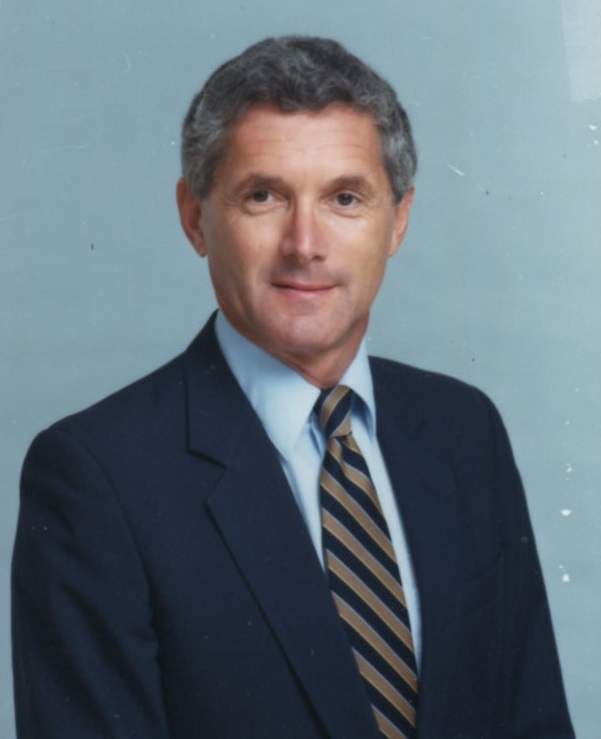
Currently serving · U.S. Court of Appeals for the Federal Circuit
S. Jay Plager
Currently servingSenior status
Senior Circuit Judge · U.S. Court of Appeals for the Federal Circuit · 1989–present · Appointed by George H W Bush
S. Jay Plager serves as a senior circuit judge of the U.S. Court of Appeals for the Federal Circuit (1989–present). Plager was appointed by George H W Bush. Plager assumed senior status in 2000 and continues to hear cases.
Key facts
- Full name
- S. Jay Plager
- Court
- U.S. Court of Appeals for the Federal Circuit
- Office
- Circuit Judge (U.S. Court of Appeals)
- Status
- Senior circuit judge (still serving)
- Duty status
- Senior
- Appointment
- Senate-confirmed
- FJC seat
- CAFC0802
- Tenure
- 1989–present
- Confirmed
- 1989-11-08
- Born
- 1931
- Died
- —
- First year on the bench
- 1989
- Dataset version
- 1.20260705
Appointment & service record
U.S. Court of Appeals for the Federal Circuit · 1989–present
- Seat
- CAFC0802
- Appointment
- Senate-confirmed
- Appointing president
- George H W Bush
- Confirmed
- 1989-11-08
- Commissioned
- 1989-11-11
- Senior status
- 2000-11-30 (still serving)
Court, FJC seat, appointment type (Senate-confirmed or recess), appointing president, confirmation and commission dates, and senior-status date are drawn from the Federal Judicial Center Biographical Directory and Wikidata.[1][2][3]
Sources
- [1]https://www.fjc.gov/node/1386371fjc · retrieved 2026-07-05
- [2]https://www.fjc.gov/history/judges/biographical-directory-article-iii-federal-judges-exportfjc-directory · retrieved 2026-07-05
- [3]https://www.wikidata.org/wiki/Q7387558Wikidata · retrieved 2026-07-05
Biographical narrative
1,028 words · sourced from the Wikipedia REST extract
Sheldon Jay Plager (born May 16, 1931) is a senior United States circuit judge of the Court of Appeals for the Federal Circuit. Appointed to the bench by President George H. W. Bush in 1989, he served as an active‑service judge until assuming senior status at the end of 2000 and continues to hear cases. Prior to his judicial career, Plager accumulated extensive experience as a naval officer, law professor, dean, and federal administrator, contributing scholarly works on administrative law and intellectual property.
Early life and legal career
S. Jay Plager was born in Long Branch, New Jersey, the son of A.L. Plager and Clara Plager. He attended public schools in his hometown before enrolling at the University of North Carolina, where he earned a Bachelor of Arts degree in 1952. Following his undergraduate studies, Plager entered the United States Navy, beginning a military career that would span more than two decades. He received his commission as an ensign in 1952 and served on active duty after World War II, ultimately attaining the rank of commander before retiring from the service in 1970.
While serving in the Navy, Plager pursued legal education. He obtained a Juris Doctor with high honors from the University of Florida College of Law in 1958 and subsequently earned a Master of Laws from Columbia Law School in 1961. His academic credentials laid the foundation for a parallel career in legal scholarship and teaching.
Plager’s first faculty appointment was at the University of Florida, where he served as a law professor from 1958 to 1963. He then joined the faculty of the University of Illinois College of Law, remaining there until 1977. During this period, he developed expertise in administrative and intellectual‑property law, topics that would later feature prominently in his judicial work. In 1977, Plager was appointed dean and professor at the Indiana University Maurer School of Law, a position he held through 1984. His deanship involved overseeing academic programs, faculty recruitment, and curricular reforms.
In addition to his permanent appointments, Plager held several visiting positions that broadened his scholarly perspective. He taught as a visiting professor at the University of Wisconsin Law School and served as a visiting scholar at Stanford Law School. Internationally, he was a visiting fellow at both Cambridge University and the Rockefeller Foundation Research Center, engagements that facilitated comparative legal research.
Plager’s experience extended beyond academia into federal administration. From 1986 to 1987, he acted as counselor to the undersecretary of the United States Department of Health and Human Services, providing legal advice on regulatory matters. He subsequently joined the Office of Management and Budget, where he served three years as associate director and later as administrator of the Office of Information and Regulatory Affairs (OIRA). In that capacity, Plager was responsible for reviewing federal regulations, coordinating inter‑agency policy development, and ensuring compliance with executive directives concerning rulemaking.
Throughout his career, Plager authored numerous articles and books on topics ranging from administrative law to patent policy. His scholarly output reflects a sustained engagement with the legal issues that intersect governmental regulation and private rights, an orientation that would inform his later judicial philosophy.
Federal appellate service
President George H. W. Bush nominated S. Jay Plager to the United States Court of Appeals for the Federal Circuit on September 12, 1989, filling the vacancy created by Judge Shiro Kashiwa. The Senate confirmed Plager’s appointment on November 8, 1989, and he received his commission three days later, on November 11. He occupied the seat designated as CAFC0802 on the Federal Circuit bench.
During his tenure as an active‑service judge from 1989 until late 2000, Judge Plager participated in panels that addressed a broad spectrum of issues within the Federal Circuit’s jurisdiction, including patent law, government contracts, and international trade. His opinions often reflected the analytical rigor cultivated during his academic and regulatory career.
On November 30, 2000, Judge Plager assumed senior status, a form of semi‑retirement that permits continued participation in casework while allowing for a reduced caseload. As a senior circuit judge, he remains an active member of the Federal Circuit, hearing appeals and contributing to the development of federal jurisprudence.
Jurisprudence and legacy
Judge Plager’s judicial contributions are distinguished by a consistent emphasis on thorough statutory interpretation and respect for administrative processes. Drawing upon his background in regulatory affairs, he has frequently highlighted the importance of agency expertise when reviewing agency actions, aligning with principles that seek to balance deference to specialized bodies against the judiciary’s role in safeguarding legal standards.
In patent cases, Judge Plager’s opinions have underscored the need for clear claim construction and careful analysis of prior art, reflecting his long‑standing interest in intellectual‑property law. His written decisions often incorporate detailed factual assessments, demonstrating a methodical approach that mirrors academic scholarship.
Beyond individual rulings, Judge Plager’s broader impact includes mentorship of younger judges and clerks, as well as continued engagement with legal education. He has maintained ties to academia through occasional lectures and publications, thereby bridging the gap between judicial practice and scholarly discourse. His extensive body of written work—encompassing articles, treatises, and conference papers—has contributed to ongoing debates in administrative law and patent policy.
While specific case names are not enumerated here, Judge Plager’s participation in notable decisions, such as those involving government contracts and procurement disputes, has helped shape the Federal Circuit’s jurisprudential landscape. His analytical style, characterized by careful weighing of statutory text against regulatory intent, continues to influence how the court approaches complex legal questions.
Judge Plager’s personal life includes a marriage to Frankie Lee (née Bird) in 1951, with whom he had three children and six grandchildren; the marriage ended in divorce in 1980. His long service in both the Navy and the federal judiciary reflects a career dedicated to public service across multiple branches of government.
Overall, S. Jay Plager’s legacy encompasses a blend of academic achievement, regulatory expertise, and judicial stewardship. His contributions to the Federal Circuit have reinforced the court’s role as a specialized appellate body, particularly in areas where law intersects with technology and governmental regulation. Through continued senior service, scholarly output, and mentorship, he remains an influential figure within the federal judiciary.
Sources & provenance
Every quantitative or attributable claim above carries a per-section [N] marker that resolves to the corresponding URL below. Each entry records the upstream provider, the canonical URL, and the timestamp at which the underlying source was retrieved.
Key facts
- https://www.fjc.gov/node/1386371fjc · retrieved 2026-07-05
- https://www.fjc.gov/history/judges/biographical-directory-article-iii-federal-judges-exportfjc-directory · retrieved 2026-07-05
- https://www.wikidata.org/wiki/Q7387558Wikidata · retrieved 2026-07-05
Biographical narrative
- https://en.wikipedia.org/wiki/S._Jay_PlagerWikipedia · retrieved 2026-07-05
Explore the federal judiciary
The U.S. Courts of Appeals are the intermediate appellate courts of the federal judiciary — thirteen circuits sitting between the district courts and the Supreme Court. Browse the full roster of judges on the U.S. Court of Appeals for the Federal Circuit, or explore how the appointed federal judiciary fits into the federal government.