
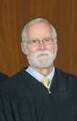
Currently serving · U.S. Court of Appeals for the Federal Circuit
William Curtis Bryson
Currently servingSenior status
Senior Circuit Judge · U.S. Court of Appeals for the Federal Circuit · 1994–present · Appointed by Bill Clinton
William Curtis Bryson serves as a senior circuit judge of the U.S. Court of Appeals for the Federal Circuit (1994–present). Bryson was appointed by Bill Clinton. Bryson assumed senior status in 2013 and continues to hear cases.
Key facts
- Full name
- William Curtis Bryson
- Court
- U.S. Court of Appeals for the Federal Circuit
- Office
- Circuit Judge (U.S. Court of Appeals)
- Status
- Senior circuit judge (still serving)
- Duty status
- Senior
- Appointment
- Senate-confirmed
- FJC seat
- CAFC0202
- Tenure
- 1994–present
- Confirmed
- 1994-09-28
- Born
- 1945
- Died
- —
- First year on the bench
- 1994
- Dataset version
- 1.20260705
Appointment & service record
U.S. Court of Appeals for the Federal Circuit · 1994–present
- Seat
- CAFC0202
- Appointment
- Senate-confirmed
- Appointing president
- Bill Clinton
- Confirmed
- 1994-09-28
- Commissioned
- 1994-09-29
- Senior status
- 2013-01-07 (still serving)
Court, FJC seat, appointment type (Senate-confirmed or recess), appointing president, confirmation and commission dates, and senior-status date are drawn from the Federal Judicial Center Biographical Directory and Wikidata.[1][2][3]
Sources
- [1]https://www.fjc.gov/node/1378491fjc · retrieved 2026-07-05
- [2]https://www.fjc.gov/history/judges/biographical-directory-article-iii-federal-judges-exportfjc-directory · retrieved 2026-07-05
- [3]https://www.wikidata.org/wiki/Q8007398Wikidata · retrieved 2026-07-05
Biographical narrative
1,229 words · sourced from the Wikipedia REST extract
William Curtis Bryson is a senior United States circuit judge on the Court of Appeals for the Federal Circuit. Appointed by President Bill Clinton in 1994, he has served on that court for more than two decades and continues to hear cases after assuming senior status in 2013. In addition to his appellate work, Judge Bryson completed a seven‑year term on the United States Foreign Intelligence Surveillance Court of Review, becoming its presiding judge in September 2013. His career spans extensive service in the Department of Justice, notable clerkships with prominent jurists, and a reputation for prolific writing on government contract law.
Early life and legal career
William Curtis Bryson was born on August 19, 1945, in Houston, Texas. He attended St. John’s School, graduating in 1963, and then pursued undergraduate studies at Harvard University, where he earned a Bachelor of Arts degree magna cum laude in 1969. Following his time at Harvard, Bryson returned to Texas for legal training, receiving a Juris Doctor from the University of Texas School of Law in 1973.
After completing law school, Bryson entered the federal judiciary as a clerk for Judge Henry Friendly of the United States Court of Appeals for the Second Circuit. This experience was followed by a prestigious clerkship with Justice Thurgood Marshall of the United States Supreme Court, providing him exposure to appellate and constitutional issues at the nation’s highest level.
Bryson’s professional trajectory then moved to the Department of Justice, where he held a series of increasingly responsible positions. From 1978 to 1979 he served as Assistant to the United States Solicitor General, contributing to the government’s advocacy before the Supreme Court. He was appointed chief of the Appellate Section within the Criminal Division from 1979 until 1982, overseeing appellate strategy for criminal matters. In 1982 Bryson became Special Counsel in the Organized Crime and Racketeering Section of the same division, a role he fulfilled through 1986; his performance earned him the Attorney General’s Award for Exceptional Service in 1984.
The latter part of Bryson’s Department of Justice career was marked by senior leadership in the Solicitor General’s Office. From 1986 to 1994 he acted as Deputy United States Solicitor General, assisting in the formulation of the government’s positions on a broad array of legal issues before appellate courts. In 1994 he briefly served as Deputy Associate United States Attorney General (acting), further expanding his experience in federal litigation and policy.
During this period Bryson also contributed to legal scholarship, co‑authoring “Grand Jury Law and Practice,” a two‑volume loose‑leaf treatise published in 1986 with Sara S. Beale. His expertise in government contracts became especially prominent; by 2010 he was identified as the only federal circuit judge that year who authored more than two opinions dealing with contract disputes, underscoring his standing as one of the most prolific writers on the subject.
Bryson’s personal life intersected with his professional world when he met Julia Penny Clark while both were students at the University of Texas School of Law. The couple later clerked together at the Supreme Court and married; Clark practices labor law and employee benefits, and the family includes two daughters.
Federal appellate service
The nomination of William Curtis Bryson to the United States Court of Appeals for the Federal Circuit came on June 22, 1994, when President Bill Clinton selected him to fill the vacancy left by Judge Howard Thomas Markey. Following Senate confirmation on September 28, 1994, Bryton received his commission the next day and began service as an active circuit judge.
During his tenure as an active judge, Bryson participated in the Federal Circuit’s distinctive jurisdiction over patent law, government contracts, international trade, and certain claims against the United States. His background in the Department of Justice’s appellate sections informed his approach to complex statutory interpretation and procedural matters that frequently arise before the court. Over the years he authored numerous opinions, many of which addressed intricate issues in government procurement—a field where his prior experience as a DOJ official proved especially relevant.
On January 7, 2013, Bryson elected to take senior status, a form of semi‑retirement that permits continued judicial service while allowing for a reduced caseload. Even after assuming senior status, he remained an active participant in the Federal Circuit’s docket, hearing appeals and contributing to the development of federal law.
In parallel with his work on the Federal Circuit, Bryson was appointed to the United States Foreign Intelligence Surveillance Court of Review (FISCR), the appellate body that reviews decisions from the Foreign Intelligence Surveillance Court. He served a seven‑year term on the FISCR, concluding in 2018. Notably, on September 1, 2013—shortly after taking senior status on the Federal Circuit—he became the presiding judge of the FISCR, overseeing its limited but consequential review of surveillance authorizations and related legal questions.
Bryson’s dual service on both a specialized appellate court and the FISCR reflects a career that bridges traditional civil‑law adjudication with matters of national security. His continued involvement in hearing cases after senior status demonstrates an ongoing commitment to the federal judiciary.
Jurisprudence and legacy
Judge William Curtis Bryson’s jurisprudential contributions are most evident in his extensive writings on government contract law. The Federal Circuit, as the primary forum for disputes involving federal procurement, has relied on his opinions to clarify statutory requirements, contractual obligations, and procedural standards that govern interactions between the government and private contractors. His reputation as a prolific author of contract‑related decisions highlights both the depth of his expertise and the influence of his reasoning on subsequent case law.
Beyond contracts, Bryson’s background in criminal appellate work and organized‑crime prosecution informs his perspective on issues of procedural fairness and evidentiary standards. While specific case holdings are not enumerated here, his participation in a court that adjudicates patent disputes, international trade matters, and claims against the United States suggests a broad impact across multiple areas of federal law.
Bryson’s service on the Foreign Intelligence Surveillance Court of Review adds a distinct dimension to his legacy. As presiding judge, he oversaw appellate review of surveillance authorizations—a function critical to balancing national security interests with constitutional protections. Although the FISCR operates largely behind the scenes, its decisions shape the legal framework governing electronic surveillance and intelligence gathering.
His career trajectory—from clerkships with Judge Henry Friendly and Justice Thurgood Marshall, through senior roles in the Department of Justice, to a long tenure on the Federal Circuit—exemplifies a path of public service grounded in both litigation and scholarship. The Attorney General’s Award for Exceptional Service received in 1984 acknowledges his contributions to organized‑crime enforcement, while his co‑authorship of a treatise on grand jury practice reflects an engagement with legal education.
Judge Bryson’s personal background—originating in Houston, educated at Harvard and the University of Texas, and married to fellow attorney Julia Penny Clark—provides context for a professional life marked by dedication to federal law. His continued activity as a senior judge ensures that his experience remains accessible to litigants and colleagues alike.
In sum, William Curtis Bryson’s enduring presence on the United States Court of Appeals for the Federal Circuit, combined with his specialized expertise in government contracts and his leadership role on the Foreign Intelligence Surveillance Court of Review, constitute a substantive legacy within the federal judiciary. His body of written opinions continues to guide practitioners and scholars navigating the complex intersection of statutory interpretation, contractual obligations, and national‑security considerations.
Sources & provenance
Every quantitative or attributable claim above carries a per-section [N] marker that resolves to the corresponding URL below. Each entry records the upstream provider, the canonical URL, and the timestamp at which the underlying source was retrieved.
Key facts
- https://www.fjc.gov/node/1378491fjc · retrieved 2026-07-05
- https://www.fjc.gov/history/judges/biographical-directory-article-iii-federal-judges-exportfjc-directory · retrieved 2026-07-05
- https://www.wikidata.org/wiki/Q8007398Wikidata · retrieved 2026-07-05
Biographical narrative
- https://en.wikipedia.org/wiki/William_Curtis_BrysonWikipedia · retrieved 2026-07-05
Explore the federal judiciary
The U.S. Courts of Appeals are the intermediate appellate courts of the federal judiciary — thirteen circuits sitting between the district courts and the Supreme Court. Browse the full roster of judges on the U.S. Court of Appeals for the Federal Circuit, or explore how the appointed federal judiciary fits into the federal government.