
Historical · U.S. Court of Appeals for the Fifth Circuit
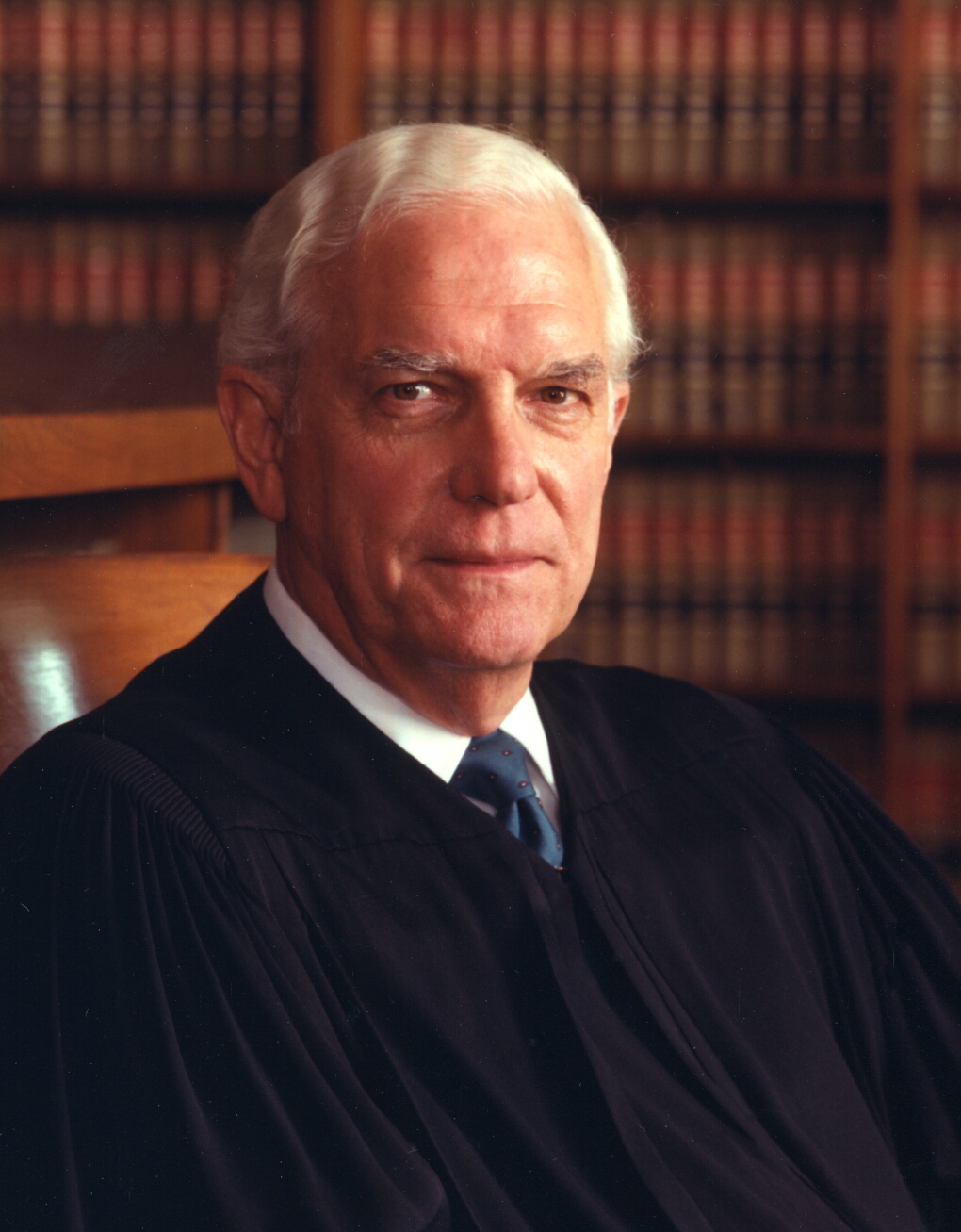
Charles Clark
Former Circuit Judge · U.S. Court of Appeals for the Fifth Circuit · 1969–1992 · Appointed by Richard Nixon
Charles Clark served as a circuit judge of the U.S. Court of Appeals for the Fifth Circuit (1969–1992). Clark was appointed by Richard Nixon.
Key facts
- Full name
- Charles Clark
- Court
- U.S. Court of Appeals for the Fifth Circuit
- Office
- Circuit Judge (U.S. Court of Appeals)
- Status
- Former circuit judge
- Duty status
- Not serving
- Appointment
- Senate-confirmed
- FJC seat
- CA51302
- Tenure
- 1969–1992
- Confirmed
- 1969-10-15
- Born
- 1925-09-12
- Died
- 2011-03-06
- First year on the bench
- 1969
- Dataset version
- 1.20260711-2
Appointment & service record
U.S. Court of Appeals for the Fifth Circuit · 1969–1992
- Seat
- CA51302
- Appointment
- Senate-confirmed
- Appointing president
- Richard Nixon
- Confirmed
- 1969-10-15
- Commissioned
- 1969-10-17
- Senior status
- —
- Chief Judge
- 1981–1992
Court, FJC seat, appointment type (Senate-confirmed or recess), appointing president, confirmation and commission dates, and senior-status date are drawn from the Federal Judicial Center Biographical Directory and Wikidata.[1][2][3]
Sources
- [1]https://www.fjc.gov/node/1379141fjc · retrieved 2026-07-11
- [2]https://www.fjc.gov/history/judges/biographical-directory-article-iii-federal-judges-exportfjc-directory · retrieved 2026-07-11
- [3]https://www.wikidata.org/wiki/Q5076287Wikidata · retrieved 2026-07-11
Biographical narrative
1,258 words · sourced from the Wikipedia REST extract
Charles Clark was a United States circuit judge who served on the United States Court of Appeals for the Fifth Circuit from 1969 to 1992, including eleven years as Chief Judge from 1981 until his retirement. Appointed by President Richard M. Nixon, a Republican, and confirmed by the Senate in October 1969, he became one of the most prominent federal jurists from Mississippi in the modern era. Over the course of his distinguished judicial career, he authored more than 2,200 opinions and played a significant role in the administration of the federal judiciary through his service on the Judicial Conference of the United States. He passed away in 2011 at the age of 85.
Early life and legal career
Charles Clark was born on September 12, 1925, in Memphis, Tennessee, to Charles and Anita Clark. He came from a family with deep roots in Mississippi history; he was the great-grandson of Charles Clark, who served as Governor of Mississippi from 1863 to 1865 during the Civil War era. Clark grew up in the Mississippi Delta region and graduated from Cleveland High School in Cleveland, Mississippi.
His early adulthood was shaped by military service during World War II. In 1943, while still a young man, he entered the United States Naval Reserve with the rank of ensign. He served in the Naval Reserve for three years during the war, leaving the service in 1946 after the conclusion of hostilities. Following his military service, Clark began practicing law in Jackson, Mississippi, in 1946, even before completing his formal legal education. He attended the University of Mississippi School of Law, where he was a member of the Delta Psi fraternity and met Emily, who would become his wife. He earned his Bachelor of Laws degree from the University of Mississippi in 1948.
Clark maintained his private law practice in Jackson for several years during the late 1940s and early 1950s. When the Korean War intensified in 1951, he rejoined the Naval Reserve, this time as a lieutenant. He served for approximately one year before leaving the Naval Reserve again in 1952, and he resumed his civilian law practice in Jackson in 1953. He would continue in private practice for nearly a decade and a half.
A significant and controversial moment in Clark's legal career came in 1962, when he represented the Board of Trustees of the University of Mississippi in litigation brought by James Meredith, an African American applicant who had been denied admission to the university. Clark argued on behalf of the university that it maintained no policy based on race and that Meredith's rejection was due to a lack of qualifications. The case proceeded through the federal courts and was ultimately resolved by the United States Supreme Court, which ruled in Meredith's favor in September 1962. The Supreme Court's decision led to Meredith's enrollment at the university, an event that precipitated the Ole Miss riot of 1962, a violent confrontation that required federal intervention to restore order.
Federal appellate service
On October 7, 1969, President Richard M. Nixon nominated Clark to fill a vacancy on the United States Court of Appeals for the Fifth Circuit. The seat had been vacated by Judge Claude Feemster Clayton. Clark's confirmation process moved with remarkable speed; the United States Senate confirmed his nomination just eight days later, on October 15, 1969. He received his commission two days after confirmation and began his service on one of the nation's largest and most influential federal appellate courts.
The Fifth Circuit at that time had jurisdiction over a vast region of the Deep South, and its docket included many cases involving civil rights, desegregation, and other matters of significant social and legal importance. Clark would serve on this court for nearly twenty-three years, establishing himself as a prolific and influential jurist.
In both 1973 and 1976, Clark was among those recommended for consideration to fill vacancies on the United States Supreme Court. On each occasion, he received the American Bar Association's highest qualification rating, reflecting the legal profession's assessment of his judicial abilities and temperament. Although he was not ultimately appointed to the Supreme Court, the consideration itself reflected his standing within the federal judiciary.
In 1981, Clark assumed the position of Chief Judge of the Fifth Circuit, the administrative and ceremonial leader of the court. He would serve in this capacity for eleven years, until his retirement from active service on January 15, 1992. As Chief Judge, he was responsible for overseeing the court's operations, assigning cases, and representing the circuit in various administrative matters. His tenure as Chief Judge coincided with a period of significant growth and change in the federal judiciary.
Beyond his work on the Fifth Circuit, Clark was appointed to serve on the Judicial Conference of the United States, the principal policymaking body for the federal court system. He received this appointment first from Chief Justice Warren Burger and later from Chief Justice William Rehnquist. During his eleven years of service on the Judicial Conference, he held positions of significant responsibility, serving as chairman of the Budget Committee and subsequently as chairman of the Executive Committee. These roles placed him at the center of efforts to shape the administration, funding, and policies of the federal courts nationwide.
Jurisprudence and legacy
Over the course of his judicial career, Clark authored more than 2,200 opinions, a substantial body of work that addressed a wide range of legal issues within the Fifth Circuit's jurisdiction. This prolific output reflected both his long tenure on the court and his active engagement with the cases that came before him. His opinions addressed matters of federal law across numerous areas, contributing to the development of legal doctrine in the Fifth Circuit.
Clark's judicial philosophy and approach to deciding cases were shaped by his experiences in private practice and his service during a transformative period in American law. His tenure on the Fifth Circuit spanned from the final years of the Warren Court era through the Burger and early Rehnquist Court periods, a time of significant evolution in constitutional interpretation and federal jurisprudence.
Several attorneys who clerked for Clark went on to distinguished legal careers of their own. His law clerks included Leslie H. Southwick, who clerked from 1976 to 1977 and later became a federal appellate judge himself; Rodney A. Smolla, who clerked from 1978 to 1979 and became a prominent legal scholar; Rives Kistler, who clerked from 1981 to 1982 and later served on the Oregon Supreme Court; Michael B. Thornton, who clerked from 1983 to 1984; and Charles R. Eskridge III, who clerked from 1990 to 1991.
Clark's contributions to the legal profession were recognized through various honors. He received an honorary Doctorate of Laws from Mississippi College in recognition of his judicial service. In the spring of 2009, he was inducted into the Hall of Fame at the University of Mississippi School of Law, his alma mater, an honor that acknowledged his significance to the legal community in Mississippi and beyond.
After his retirement from active service in 1992, Clark continued to reside in Jackson, Mississippi, with his wife Emily. He remained connected to the legal community until his death on March 6, 2011. At the time of his passing, he was recognized as the highest-ranking judicial official from Mississippi since Lucius Quintus Cincinnatus Lamar II had served on the United States Supreme Court in the 1890s, a testament to his prominence in the federal judiciary and his lasting impact on the legal landscape of his home state and the Fifth Circuit.
Sources & provenance
Every quantitative or attributable claim above carries a per-section [N] marker that resolves to the corresponding URL below. Each entry records the upstream provider, the canonical URL, and the timestamp at which the underlying source was retrieved.
Key facts
- https://www.fjc.gov/node/1379141fjc · retrieved 2026-07-11
- https://www.fjc.gov/history/judges/biographical-directory-article-iii-federal-judges-exportfjc-directory · retrieved 2026-07-11
- https://www.wikidata.org/wiki/Q5076287Wikidata · retrieved 2026-07-11
Biographical narrative
- https://en.wikipedia.org/wiki/Charles_Clark_(judge)Wikipedia · retrieved 2026-07-11
Explore the federal judiciary
The U.S. Courts of Appeals are the intermediate appellate courts of the federal judiciary — thirteen circuits sitting between the district courts and the Supreme Court. Browse the full roster of judges on the U.S. Court of Appeals for the Fifth Circuit, or explore how the appointed federal judiciary fits into the federal government.