
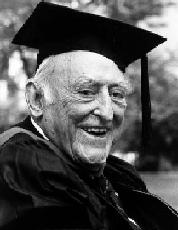
Historical · U.S. Court of Appeals for the Fifth Circuit
John Minor Wisdom
Former Circuit Judge · U.S. Court of Appeals for the Fifth Circuit · 1957–1999 · Appointed by Dwight D Eisenhower
John Minor Wisdom served as a circuit judge of the U.S. Court of Appeals for the Fifth Circuit (1957–1999). Wisdom was appointed by Dwight D Eisenhower.
Key facts
- Full name
- John Minor Wisdom
- Court
- U.S. Court of Appeals for the Fifth Circuit
- Office
- Circuit Judge (U.S. Court of Appeals)
- Status
- Former circuit judge
- Duty status
- Not serving
- Appointment
- Senate-confirmed
- FJC seat
- CA50106
- Tenure
- 1957–1999
- Confirmed
- 1957-06-26
- Born
- 1905-05-17
- Died
- 1999-05-15
- First year on the bench
- 1957
- Dataset version
- 1.20260711
Appointment & service record
U.S. Court of Appeals for the Fifth Circuit · 1957–1977
- Seat
- CA50106
- Appointment
- Senate-confirmed
- Appointing president
- Dwight D Eisenhower
- Confirmed
- 1957-06-26
- Commissioned
- 1957-06-27
- Senior status
- 1977-01-15
Court, FJC seat, appointment type (Senate-confirmed or recess), appointing president, confirmation and commission dates, and senior-status date are drawn from the Federal Judicial Center Biographical Directory and Wikidata.[1][2][3]
Sources
- [1]https://www.fjc.gov/node/1389971fjc · retrieved 2026-07-11
- [2]https://www.fjc.gov/history/judges/biographical-directory-article-iii-federal-judges-exportfjc-directory · retrieved 2026-07-11
- [3]https://www.wikidata.org/wiki/Q6248952Wikidata · retrieved 2026-07-11
Biographical narrative
1,221 words · sourced from the Wikipedia REST extract
John Minor Wisdom was a United States circuit judge who served on the United States Court of Appeals for the Fifth Circuit from 1957 until his death in 1999. Appointed by President Dwight D. Eisenhower, a Republican, Wisdom became one of the most influential federal appellate judges of the twentieth century, particularly recognized for his role in advancing civil rights through the federal judiciary during a transformative period in American history. He was part of a group of Fifth Circuit judges who issued decisions that helped implement school desegregation and other civil rights protections across the Deep South. His judicial service spanned more than four decades, and he received the Presidential Medal of Freedom in recognition of his contributions to American jurisprudence and civil society.
Early life and legal career
John Minor Wisdom was born on May 17, 1905, in New Orleans, Louisiana, where he would spend most of his life and career. He attended the Isidore Newman School in New Orleans before pursuing higher education. In 1925, he earned a Bachelor of Arts degree from Washington and Lee University, located in Lexington, Virginia. After completing his undergraduate studies, Wisdom returned to Louisiana to attend Tulane University Law School, where he excelled academically and graduated first in his class in 1929 with a Bachelor of Laws degree. Two years later, on October 24, 1931, he married Charles Mathews.
Following his graduation from law school, Wisdom entered private practice in New Orleans in 1929, where he would continue to practice law for nearly three decades until his appointment to the federal bench. During this period, he also maintained an academic connection to his alma mater, serving as an adjunct professor of law at Tulane University from 1938 to 1957. His legal career was interrupted by military service during World War II, when he served as a lieutenant colonel in the United States Army from 1942 to 1946.
Beyond his legal practice, Wisdom became deeply involved in politics, though his partisan affiliation shifted during his early career. He initially identified as a Democrat but left that party in response to what he viewed as corruption in the administration of Louisiana Governor Huey Pierce Long, Jr. This political realignment led him to become active in Republican Party politics in Louisiana, a state where the Republican Party had minimal presence during that era. Wisdom's political involvement reached its zenith when he served as the Republican National Committeeman from Louisiana. In this capacity, he played a significant role at the 1952 Republican National Convention in Chicago, Illinois, where he was instrumental in securing the presidential nomination for Dwight D. Eisenhower. Wisdom's political efforts continued through the 1956 general election, when he was credited with helping Eisenhower carry Louisiana, marking the first time the state had voted for a Republican presidential candidate in eighty years.
Federal appellate service
President Eisenhower nominated Wisdom to the United States Court of Appeals for the Fifth Circuit on March 14, 1957, to fill a vacancy created by the departure of Judge Wayne G. Borah. The United States Senate confirmed the nomination on June 26, 1957, and Wisdom received his commission the following day. At the time of his appointment, the Fifth Circuit encompassed a much larger geographic area than it does today, with jurisdiction over Louisiana, Mississippi, Texas, Alabama, Georgia, Florida, and the Panama Canal Zone. The circuit would not be reorganized to its current, smaller configuration until October 1, 1981.
Wisdom's tenure on the Fifth Circuit coincided with one of the most consequential periods in American legal history, as federal courts grappled with implementing the Supreme Court's desegregation mandates and protecting civil rights in the face of substantial resistance. He became known as one of the "Fifth Circuit Four," a group of judges on that court who issued decisions that significantly advanced the objectives of the Civil Rights Movement. These jurists faced considerable opposition and controversy as they worked to enforce constitutional protections in a region where segregation had been deeply entrenched.
Beyond his work on the Fifth Circuit, Wisdom took on additional judicial responsibilities in specialized forums. When the Judicial Panel on Multidistrict Litigation was created in 1968, he became a member from its inception. This panel coordinates and consolidates complex civil cases filed in multiple federal districts, and Wisdom served as its chairman from 1975 until 1978. He also served on the Special Court created under the Regional Rail Reorganization Act beginning in 1975. When Judge Henry Friendly retired in 1986, Wisdom became the Presiding Judge of this Special Court, a position he held until the court was dissolved in 1996.
On January 15, 1977, Wisdom assumed senior status, a form of semi-retirement that allows federal judges to continue hearing cases with a reduced caseload. He remained active in this capacity for more than two additional decades. His service on the federal bench terminated on May 15, 1999, when he died in New Orleans, just two days before what would have been his ninety-fourth birthday. During the years from 1947 to 1972, Wisdom resided at the Brevard-Rice House, located at 1239 First Street in New Orleans' Garden District.
Jurisprudence and legacy
Wisdom's judicial philosophy and written opinions reflected a nuanced understanding of constitutional principles, particularly regarding equal protection and civil rights. His approach recognized both the principle of colorblindness in certain contexts and the necessity of race-conscious remedies to address historical discrimination. This balanced perspective informed his participation in numerous significant decisions during his time on the Fifth Circuit.
The impact of Wisdom's judicial work received recognition at the highest levels. In 1993, President Bill Clinton, a Democrat, awarded him the Presidential Medal of Freedom, the nation's highest civilian honor. The following year, on May 25, 1994, the Fifth Circuit's headquarters building in New Orleans was renamed the John Minor Wisdom U.S. Court of Appeals Building, a tribute that ensures his name remains associated with the court he served for more than four decades.
Wisdom's influence extended through the many law clerks he mentored during his lengthy judicial career. His former clerks went on to distinguished careers across multiple sectors of American public life. They include a United States Senator, multiple federal judges at both the circuit and district court levels, bankruptcy and magistrate judges, state appellate justices, law school professors and deans, and leaders in government administration. This network of former clerks helped disseminate his judicial philosophy and approach to legal reasoning throughout the legal profession.
Upon his death, Wisdom made provisions to preserve his intellectual legacy. He bequeathed his writings, papers, and various personal effects to Tulane University Law School, which displays these materials in Weinmann Hall, the law school building. He also donated his personal collection of Mardi Gras memorabilia to the University of New Orleans, reflecting his deep connection to New Orleans culture and traditions.
Wisdom's life and judicial career have been the subject of scholarly examination. He is featured prominently in the book "Unlikely Heroes" by Jack Bass, which examines the Southern federal judges who facilitated the desegregation of the South despite significant social and political pressure. A comprehensive biography, "Champion of Civil Rights: Judge John Minor Wisdom," written by Professor Joel William Friedman of Tulane Law School, was published by Louisiana State University Press in January 2009, providing a detailed examination of his contributions to American civil rights jurisprudence.
Sources & provenance
Every quantitative or attributable claim above carries a per-section [N] marker that resolves to the corresponding URL below. Each entry records the upstream provider, the canonical URL, and the timestamp at which the underlying source was retrieved.
Key facts
- https://www.fjc.gov/node/1389971fjc · retrieved 2026-07-11
- https://www.fjc.gov/history/judges/biographical-directory-article-iii-federal-judges-exportfjc-directory · retrieved 2026-07-11
- https://www.wikidata.org/wiki/Q6248952Wikidata · retrieved 2026-07-11
Biographical narrative
- https://en.wikipedia.org/wiki/John_Minor_WisdomWikipedia · retrieved 2026-07-11
Explore the federal judiciary
The U.S. Courts of Appeals are the intermediate appellate courts of the federal judiciary — thirteen circuits sitting between the district courts and the Supreme Court. Browse the full roster of judges on the U.S. Court of Appeals for the Fifth Circuit, or explore how the appointed federal judiciary fits into the federal government.