
Historical · U.S. Court of Appeals for the Fifth Circuit
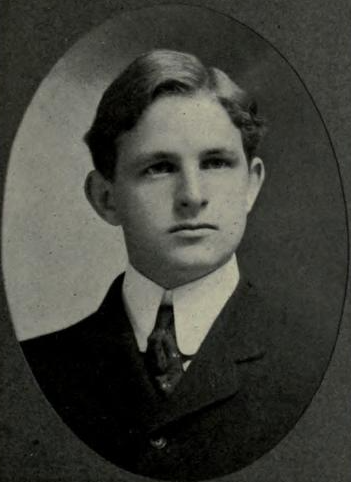
Joseph Chappell Hutcheson Jr.
Former Circuit Judge · U.S. Court of Appeals for the Fifth Circuit · 1931–1973 · Appointed by Herbert Hoover
Joseph Chappell Hutcheson Jr. served as a circuit judge of the U.S. Court of Appeals for the Fifth Circuit (1931–1973). Jr. was appointed by Herbert Hoover.
Key facts
- Full name
- Joseph Chappell Hutcheson Jr.
- Court
- U.S. Court of Appeals for the Fifth Circuit
- Office
- Circuit Judge (U.S. Court of Appeals)
- Status
- Former circuit judge
- Duty status
- Not serving
- Appointment
- Senate-confirmed
- FJC seat
- CA50401
- Tenure
- 1931–1973
- Confirmed
- 1931-01-13
- Born
- 1879-10-19
- Died
- 1973-01-18
- First year on the bench
- 1931
- Dataset version
- 1.20260711
Appointment & service record
U.S. Court of Appeals for the Fifth Circuit · 1931–1964
- Seat
- CA50401
- Appointment
- Senate-confirmed
- Appointing president
- Herbert Hoover
- Confirmed
- 1931-01-13
- Commissioned
- 1931-01-26
- Senior status
- 1964-11-04
- Chief Judge
- 1948–1959
Court, FJC seat, appointment type (Senate-confirmed or recess), appointing president, confirmation and commission dates, and senior-status date are drawn from the Federal Judicial Center Biographical Directory and Wikidata.[1][2][3]
Sources
- [1]https://www.fjc.gov/node/1382611fjc · retrieved 2026-07-11
- [2]https://www.fjc.gov/history/judges/biographical-directory-article-iii-federal-judges-exportfjc-directory · retrieved 2026-07-11
- [3]https://www.wikidata.org/wiki/Q6282071Wikidata · retrieved 2026-07-11
Biographical narrative
1,170 words · sourced from the Wikipedia REST extract
Joseph Chappell Hutcheson Jr. was a United States circuit judge who served on the United States Court of Appeals for the Fifth Circuit from 1931 to 1964, including eleven years as Chief Judge from 1948 to 1959. Prior to his appellate service, he served as a United States district judge for the Southern District of Texas from 1918 to 1931. Born in Houston in 1879, Hutcheson had a distinguished career that spanned more than four decades on the federal bench, making him one of the longest-serving federal judges in American history by time in active service. He also served briefly as Mayor of Houston from 1917 to 1918 and participated in international diplomatic efforts following World War II.
Early life and legal career
Joseph Chappell Hutcheson Jr. was born on October 19, 1879, in Houston, Texas. His parents were Joseph Chappell Hutcheson and Mildred Lightfoot Carrington. He received his early education in Houston, attending both public and private schools in the city, and later studied at Bethel Military Academy. Hutcheson initially pursued higher education at the University of Virginia before transferring to the University of Texas School of Law, where he completed his legal studies and earned a Bachelor of Laws degree in 1900.
Following his graduation, Hutcheson returned to Houston and established a law practice with his father. He maintained a private practice in Houston for eighteen years, from 1900 to 1918, building a reputation in the legal community. During this period, he also became involved in municipal government, serving as chief legal adviser to the city of Houston from 1913 to 1917. His public service expanded when he was elected Mayor of Houston, a position he held from 1917 to 1918. This brief tenure in municipal leadership came during the final years of World War I, a period of significant change and challenge for American cities.
Hutcheson's transition from municipal politics and private practice to the federal judiciary came in 1918. President Woodrow Wilson, a Democrat, nominated him to serve as a United States district judge for the Southern District of Texas. The nomination was submitted on March 29, 1918, to fill a vacancy left by Judge Waller Thomas Burns. The Senate confirmed the appointment on April 6, 1918, and Hutcheson received his commission the same day. He would serve in this district court position for nearly thirteen years, presiding over cases in the federal trial court for the Southern District of Texas until his elevation to the appellate bench in 1931.
Federal appellate service
Hutcheson's service on the United States Court of Appeals for the Fifth Circuit began when President Herbert Hoover, a Republican, nominated him to fill a newly created seat authorized by federal statute. The nomination was made on December 20, 1930, and the Senate confirmed Hutcheson on January 13, 1931. He received his commission on January 26, 1931, the same day his service on the district court terminated. This elevation marked the beginning of more than three decades of service on one of the nation's most important federal appellate courts.
The Fifth Circuit during Hutcheson's tenure had jurisdiction over federal appeals from several Southern states, and the court would eventually become nationally prominent for its civil rights decisions in the 1950s and 1960s. Hutcheson's stature on the court was such that he was considered for a potential appointment to the United States Supreme Court during the early years of President Franklin Roosevelt's administration. Although Roosevelt ultimately selected Hugo Black for the Supreme Court, the consideration itself reflected Hutcheson's standing in the federal judiciary.
In 1948, Hutcheson became Chief Judge of the Fifth Circuit, a position he would hold for eleven years until 1959. As Chief Judge, he also served as a member of the Judicial Conference of the United States, the principal policymaking body for the federal court system. Historical accounts indicate that Hutcheson exercised considerable authority during his tenure as Chief Judge, with his leadership style characterized as autocratic. After stepping down from the chief judgeship in 1959, Hutcheson continued to serve as an active circuit judge but participated in relatively few of the civil rights cases that would soon bring the Fifth Circuit national attention and acclaim.
The period following Hutcheson's chief judgeship saw the emergence of what became known as the "Fifth Circuit Four," a group of judges who issued groundbreaking decisions advancing civil rights in the South. Although Hutcheson sat on only a small number of these controversial civil rights cases, he reportedly was not unfavorable toward the decisions being made by his colleagues. He described himself as a Jeffersonian Democrat, reflecting a political philosophy rooted in traditional Democratic principles.
By the time Hutcheson assumed senior status on November 4, 1964, he had achieved a remarkable milestone in judicial service. He was the longest-serving federal judge measured by time in active service since the Civil War era. He held the distinction of being the last appeals court judge in active service who had been appointed by President Hoover, and the last federal judge in active service whose original appointment to the federal bench had been made by President Wilson. His combined service on the district and circuit courts spanned more than forty-six years of active duty.
Jurisprudence and legacy
Beyond his judicial duties, Hutcheson participated in significant international diplomatic work in the aftermath of World War II. He served as a member of the Anglo-American Committee on Displaced Persons, a body established to address the humanitarian crisis facing refugees in post-war Europe. In 1946, this committee issued recommendations calling for Britain to substantially increase the number of Jewish refugees permitted to enter Palestine, reflecting the urgent need to find homes for Holocaust survivors and other displaced persons.
Hutcheson's judicial career represents an era of transition in the federal judiciary and in American law more broadly. His appointment to the district court came during World War I, and his elevation to the circuit court occurred during the early years of the Great Depression. His tenure as Chief Judge spanned the post-World War II period and the beginning of the modern civil rights era. The Fifth Circuit over which he presided would become one of the most consequential courts in American history for its role in dismantling legal segregation in the South, though much of this transformation occurred during and after the final years of his active service.
The length of Hutcheson's service remains notable in the history of the federal judiciary. As of the present day, he ranks as the eighth-longest-serving federal judge by time in active service, a testament to both his longevity and his sustained commitment to judicial work across multiple decades. His service continued in senior status until his death on January 18, 1973, in Houston, the city where he was born and where he had begun his legal career more than seven decades earlier. He was ninety-three years old at the time of his death, having witnessed and participated in profound changes in American law and society throughout his long career on the bench.
Sources & provenance
Every quantitative or attributable claim above carries a per-section [N] marker that resolves to the corresponding URL below. Each entry records the upstream provider, the canonical URL, and the timestamp at which the underlying source was retrieved.
Key facts
- https://www.fjc.gov/node/1382611fjc · retrieved 2026-07-11
- https://www.fjc.gov/history/judges/biographical-directory-article-iii-federal-judges-exportfjc-directory · retrieved 2026-07-11
- https://www.wikidata.org/wiki/Q6282071Wikidata · retrieved 2026-07-11
Biographical narrative
- https://en.wikipedia.org/wiki/Joseph_Chappell_Hutcheson_Jr.Wikipedia · retrieved 2026-07-11
Explore the federal judiciary
The U.S. Courts of Appeals are the intermediate appellate courts of the federal judiciary — thirteen circuits sitting between the district courts and the Supreme Court. Browse the full roster of judges on the U.S. Court of Appeals for the Fifth Circuit, or explore how the appointed federal judiciary fits into the federal government.