
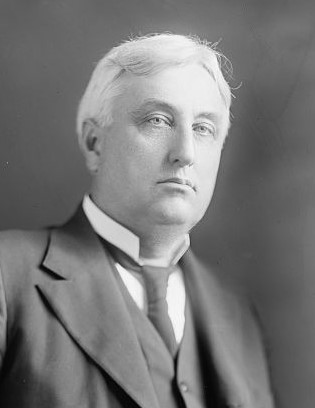
Historical · U.S. Court of Appeals for the Fifth Circuit
Robert Lynn Batts
Former Circuit Judge · U.S. Court of Appeals for the Fifth Circuit · 1917–1919 · Appointed by Woodrow Wilson
Robert Lynn Batts served as a circuit judge of the U.S. Court of Appeals for the Fifth Circuit (1917–1919). Batts was appointed by Woodrow Wilson.
Key facts
- Full name
- Robert Lynn Batts
- Court
- U.S. Court of Appeals for the Fifth Circuit
- Office
- Circuit Judge (U.S. Court of Appeals)
- Status
- Former circuit judge
- Duty status
- Not serving
- Appointment
- Senate-confirmed
- FJC seat
- CA50202
- Tenure
- 1917–1919
- Confirmed
- 1917-02-05
- Born
- 1864-11-01
- Died
- 1935-05-19
- First year on the bench
- 1917
- Dataset version
- 1.20260711
Appointment & service record
U.S. Court of Appeals for the Fifth Circuit · 1917–1919
- Seat
- CA50202
- Appointment
- Senate-confirmed
- Appointing president
- Woodrow Wilson
- Confirmed
- 1917-02-05
- Commissioned
- 1917-02-05
- Senior status
- —
Court, FJC seat, appointment type (Senate-confirmed or recess), appointing president, confirmation and commission dates, and senior-status date are drawn from the Federal Judicial Center Biographical Directory and Wikidata.[1][2][3]
Sources
- [1]https://www.fjc.gov/node/1377571fjc · retrieved 2026-07-11
- [2]https://www.fjc.gov/history/judges/biographical-directory-article-iii-federal-judges-exportfjc-directory · retrieved 2026-07-11
- [3]https://www.wikidata.org/wiki/Q7347073Wikidata · retrieved 2026-07-11
Biographical narrative
1,172 words · sourced from the Wikipedia REST extract
Robert Lynn Batts was a United States circuit judge who served on the United States Court of Appeals for the Fifth Circuit from 1917 to 1919. Born in Texas in the years following the Civil War, he built a distinguished legal career that encompassed private practice, public service as an assistant state attorney general, legal academia, federal appellate service, and corporate counsel work. Appointed to the federal bench by President Woodrow Wilson, a Democrat, Batts served during a transformative period in American history that included the final years of World War I and the beginning of the postwar era. His tenure on the Fifth Circuit, though relatively brief, came at a time when the federal courts were navigating significant questions related to wartime governance and the expansion of federal authority.
Early life and legal career
Robert Lynn Batts was born on November 1, 1864, in Bastrop, Texas, a small community in the central part of the state. He came of age during the Reconstruction era and the subsequent period of Texas's reintegration into the national economy and legal system. Batts pursued his legal education at the University of Texas School of Law, one of the state's premier institutions for legal training, and earned his Bachelor of Laws degree in 1886. This was a period when formal legal education was becoming increasingly professionalized, though many lawyers still entered the profession through apprenticeship rather than university study.
Following his graduation, Batts immediately entered private practice in his hometown of Bastrop, where he practiced law from 1886 to 1891. During these early years of practice, he would have handled the typical matters that came before small-town Texas lawyers of the era, likely including property disputes, commercial transactions, and criminal defense work. His practice in Bastrop provided him with foundational experience in the practical application of law and courtroom advocacy.
In 1891, Batts transitioned from private practice to public service when he accepted a position as an assistant state attorney general of Texas. He served in this capacity from 1891 to 1893, representing the state's interests in legal matters and gaining experience in appellate advocacy and constitutional questions. This role would have exposed him to higher-level legal issues and provided him with experience in the state's appellate courts.
After completing his service as assistant attorney general in 1893, Batts embarked on an academic career, joining the faculty of the University of Texas at Austin as a professor of law. He taught at the law school from 1893 to 1900, a seven-year period during which he would have instructed students in various areas of legal doctrine and contributed to the development of legal education in Texas. His academic work allowed him to engage with legal theory and scholarship while training the next generation of Texas lawyers.
In 1900, Batts returned to private practice, this time establishing himself in Austin, the state capital. He maintained his private practice in Austin for seventeen years, from 1900 to 1917, building a substantial practice and reputation in the legal community. Austin's status as the seat of state government would have provided opportunities for work involving state agencies, legislative matters, and appellate practice before the Texas Supreme Court and Court of Criminal Appeals. This extended period of practice in the capital city established Batts as a prominent member of the Texas bar.
Federal appellate service
On January 17, 1917, President Woodrow Wilson nominated Batts to serve as a circuit judge on the United States Court of Appeals for the Fifth Circuit. The nomination came to fill a vacancy that had been created by the departure of Judge Andrew Phelps McCormick from the court. At the time of his nomination, Batts was fifty-two years old and had accumulated three decades of varied legal experience spanning private practice, government service, and legal education.
The United States Senate confirmed Batts's nomination on February 5, 1917, and he received his commission on the same day. His confirmation came during a momentous period in American history—just two months before the United States would enter World War I. The Fifth Circuit at that time had jurisdiction over Texas, Louisiana, Mississippi, Alabama, Georgia, and Florida, and the court heard appeals from federal district courts throughout this expansive region of the South.
As a circuit judge, Batts would have participated in three-judge panels hearing appeals in a wide range of federal matters, including diversity jurisdiction cases, federal question cases, admiralty matters, and bankruptcy appeals. The Fifth Circuit during this period handled significant commercial litigation arising from the Gulf Coast's maritime industries, as well as cases involving federal taxation, interstate commerce, and constitutional questions. The wartime period brought additional matters related to federal regulatory authority and emergency measures.
Batts served on the Fifth Circuit for approximately two and a half years. On August 22, 1919, he resigned from the federal bench, stepping down from his lifetime appointment. His resignation came in the aftermath of World War I and during the early stages of the postwar adjustment period. While federal judgeships carried significant prestige and the security of lifetime tenure, it was not uncommon during this era for judges to return to private practice or accept positions in the private sector, particularly given the relatively modest judicial salaries of the time.
Jurisprudence and legacy
Following his resignation from the federal bench, Batts accepted a position as general counsel to Gulf Oil, one of the major petroleum companies operating in the United States. He served in this corporate legal role from 1919 to 1923, a four-year period that coincided with the rapid expansion of the American oil industry in the 1920s. His work for Gulf Oil would have involved advising the company on regulatory compliance, commercial transactions, litigation strategy, and the complex legal issues facing a major corporation operating across multiple states.
In 1924, Batts once again returned to private practice in Austin, where he had previously practiced before his appointment to the federal bench. He continued in private practice for the remainder of his professional life, from 1924 until 1935. This final phase of his career brought him full circle, returning to the independent practice of law in Texas's capital city where he had established himself at the turn of the century.
Batts died on May 19, 1935, in Austin at the age of seventy. His career had spanned nearly half a century and encompassed virtually every major avenue of legal practice available to lawyers of his generation: private practice in both small-town and urban settings, government service at the state level, legal academia, service on the federal appellate bench, corporate counsel work, and a return to private practice. His relatively brief service on the Fifth Circuit came during a pivotal moment in the court's history, as the federal judiciary adapted to the demands of wartime and the expanding role of federal law in American life. While his tenure was shorter than that of many federal judges, his varied career reflected the diverse opportunities and transitions that characterized the legal profession during the late nineteenth and early twentieth centuries.
Sources & provenance
Every quantitative or attributable claim above carries a per-section [N] marker that resolves to the corresponding URL below. Each entry records the upstream provider, the canonical URL, and the timestamp at which the underlying source was retrieved.
Key facts
- https://www.fjc.gov/node/1377571fjc · retrieved 2026-07-11
- https://www.fjc.gov/history/judges/biographical-directory-article-iii-federal-judges-exportfjc-directory · retrieved 2026-07-11
- https://www.wikidata.org/wiki/Q7347073Wikidata · retrieved 2026-07-11
Biographical narrative
- https://en.wikipedia.org/wiki/R._L._BattsWikipedia · retrieved 2026-07-11
Explore the federal judiciary
The U.S. Courts of Appeals are the intermediate appellate courts of the federal judiciary — thirteen circuits sitting between the district courts and the Supreme Court. Browse the full roster of judges on the U.S. Court of Appeals for the Fifth Circuit, or explore how the appointed federal judiciary fits into the federal government.