
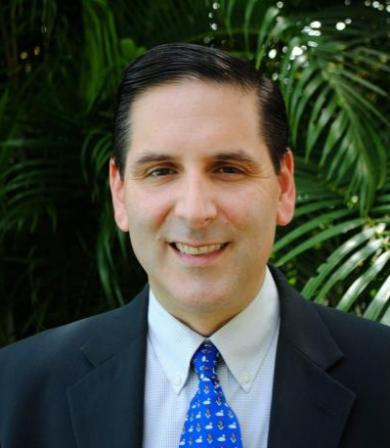
Currently serving · U.S. Court of Appeals for the First Circuit
Gustavo Antonio Gelpí Jr.
Currently serving
Circuit Judge · U.S. Court of Appeals for the First Circuit · 2021–present · Appointed by Joe Biden
Gustavo Antonio Gelpí Jr. serves as a circuit judge of the U.S. Court of Appeals for the First Circuit (2021–present). Jr. was appointed by Joe Biden.
Key facts
- Full name
- Gustavo Antonio Gelpí Jr.
- Court
- U.S. Court of Appeals for the First Circuit
- Office
- Circuit Judge (U.S. Court of Appeals)
- Status
- Active circuit judge
- Duty status
- Active
- Appointment
- Senate-confirmed
- FJC seat
- CA10502
- Tenure
- 2021–present
- Confirmed
- 2021-10-18
- Born
- 1965
- Died
- —
- First year on the bench
- 2021
- Dataset version
- 1.20260705
Appointment & service record
U.S. Court of Appeals for the First Circuit · 2021–present
- Seat
- CA10502
- Appointment
- Senate-confirmed
- Appointing president
- Joe Biden
- Confirmed
- 2021-10-18
- Commissioned
- 2021-10-19
- Senior status
- —
Court, FJC seat, appointment type (Senate-confirmed or recess), appointing president, confirmation and commission dates, and senior-status date are drawn from the Federal Judicial Center Biographical Directory and Wikidata.[1][2][3]
Sources
- [1]https://www.fjc.gov/node/1392456fjc · retrieved 2026-07-05
- [2]https://www.fjc.gov/history/judges/biographical-directory-article-iii-federal-judges-exportfjc-directory · retrieved 2026-07-05
- [3]https://www.wikidata.org/wiki/Q5621408Wikidata · retrieved 2026-07-05
Biographical narrative
1,069 words · sourced from the Wikipedia REST extract
Gustavo Antonio Gelpí Jr., born in 1965, is a United States circuit judge on the Court of Appeals for the First Circuit. He previously served as chief district judge for the United States District Court for the District of Puerto Rico and held a variety of positions in both public defense and government service in Puerto Rico before his appointment to the federal bench. In 2021 he was elevated to the appellate court by President Joseph R. Biden, becoming the second Hispanic jurist and the second native of Puerto Rico to sit on the First Circuit.
Early life and legal career
Gelpí was born in San Juan, Puerto Rico, in 1965 and completed his secondary education at Academia del Perpetuo Socorro. He pursued undergraduate studies at Brandeis University, receiving a Bachelor of Arts degree in 1987. Continuing toward a legal profession, he earned a Juris Doctor from Suffolk University Law School in Boston, Massachusetts, graduating in 1991.
Following law school, Gelpí began his career as a judicial clerk for Judge Juan Pérez‑Giménez of the United States District Court for the District of Puerto Rico, serving in that capacity from 1991 to 1993. He then entered federal public defense work, acting as an assistant federal public defender from 1993 until 1997. His experience in criminal defense provided a foundation for later service in governmental legal roles.
In 1997 Gelpí joined the Puerto Rico Department of Justice, first as an assistant to the attorney general and subsequently as an assistant attorney general within the office of legal counsel. During Governor Pedro Rosselló’s second term, he was appointed Solicitor General of Puerto Rico, a position he held from 1999 to 2000. The role placed him at the forefront of appellate advocacy on behalf of the Commonwealth. After completing his tenure as solicitor general, Gelpí spent a brief period in private practice as special litigation counsel with the law firm McConnell Valdés during the first half of 2001.
Later that year he entered the federal judiciary as a United States magistrate judge for the District of Puerto Rico, serving from 2001 to 2006. In this capacity he assisted district judges with pre‑trial matters and other duties assigned under the Federal Magistrates Act, gaining extensive experience in federal procedural practice.
Federal appellate service
Gelpí’s transition to a full Article III judgeship began on April 24, 2006, when President George W. Bush nominated him to fill a vacancy on the United States District Court for the District of Puerto Rico created by the senior status of Judge Hector M. Laffitte. The Senate confirmed Gelpí by voice vote on July 20, 2006, and he received his commission on August 1, 2006. He served as a district judge for more than fifteen years, handling civil and criminal matters arising under federal law within the jurisdiction of Puerto Rico.
From April 13, 2018, until October 20, 2021, Gelpí held the position of chief judge of the District of Puerto Rico. In that administrative role he oversaw case management, court operations, and coordination with other branches of the federal judiciary. Concurrently, in 2013 he began a term as president of the Federal Bar Association, reflecting his involvement in professional legal organizations at the national level.
The vacancy on the First Circuit arose after the death of Judge Juan R. Torruella in October 2020. President Joseph R. Biden nominated Gelpí to the appellate seat on May 12, 2021. The Senate Judiciary Committee held a hearing on his nomination on June 23, 2021. During that hearing Republican senators raised concerns about Gelpí’s prior criticism of the Insular Cases, a series of early‑20th‑century decisions concerning the constitutional status of U.S. territories. The committee reported his nomination out of committee by a 12–10 vote on July 22, 2021.
On October 7, 2021, Majority Leader Chuck Schumer filed cloture on Gelpí’s nomination, and later that day the Senate invoked cloture with a 54‑39 vote, limiting further debate. The full Senate confirmed his appointment on October 18, 2021 by a margin of 52‑41. He received his commission the following day, October 19, 2021, and entered active service as a circuit judge for the First Circuit. His elevation marked him as the second judge of Hispanic origin to serve on that court and the second from Puerto Rico in its history.
Jurisprudence and legacy
As a district judge, Gelpí presided over a broad docket that included federal criminal prosecutions, civil rights claims, and complex commercial litigation arising within the Commonwealth. His tenure as chief judge involved administrative reforms aimed at improving case flow and access to justice for litigants in Puerto Rico, though specific initiatives are not detailed in the source material.
Gelpí’s appellate service began amid a politically charged confirmation process that highlighted differing perspectives on territorial jurisprudence. The Senate votes—54‑39 for cloture and 52‑41 for confirmation—demonstrate bipartisan division but also sufficient support to secure his appointment. Since joining the First Circuit, he has contributed to panels reviewing appeals from district courts in New England and Puerto Rico, applying precedent from both the circuit and the Supreme Court. While individual opinions authored by Gelpí are not enumerated here, his participation adds a perspective shaped by extensive experience in Puerto Rican legal institutions and federal public defense.
His career reflects a trajectory that moves from local education through varied roles in defense, government advocacy, private practice, and the federal judiciary. The combination of clerkship experience, service as a federal public defender, leadership within the Department of Justice of Puerto Rico, and years on the district bench provides Gelpí with a multifaceted understanding of both criminal and civil law at the federal level. His appointment to the First Circuit expands the representation of Hispanic jurists on the appellate bench and underscores the growing presence of judges from U.S. territories in the national judicial system.
Beyond his formal duties, Gelpí’s involvement with professional organizations such as the Federal Bar Association indicates a commitment to the broader legal community. His presidency of that association suggests engagement with issues affecting federal practitioners nationwide, including continuing education, ethics, and access to justice initiatives.
In sum, Gustavo Antonio Gelpí Jr.’s service illustrates a blend of courtroom experience, administrative leadership, and participation in the evolving dialogue about the constitutional status of U.S. territories. His ongoing work on the First Circuit contributes to the development of federal appellate jurisprudence while reflecting the diverse backgrounds that characterize the modern United States judiciary.
Sources & provenance
Every quantitative or attributable claim above carries a per-section [N] marker that resolves to the corresponding URL below. Each entry records the upstream provider, the canonical URL, and the timestamp at which the underlying source was retrieved.
Key facts
- https://www.fjc.gov/node/1392456fjc · retrieved 2026-07-05
- https://www.fjc.gov/history/judges/biographical-directory-article-iii-federal-judges-exportfjc-directory · retrieved 2026-07-05
- https://www.wikidata.org/wiki/Q5621408Wikidata · retrieved 2026-07-05
Biographical narrative
- https://en.wikipedia.org/wiki/Gustavo_Gelp%C3%ADWikipedia · retrieved 2026-07-05
Explore the federal judiciary
The U.S. Courts of Appeals are the intermediate appellate courts of the federal judiciary — thirteen circuits sitting between the district courts and the Supreme Court. Browse the full roster of judges on the U.S. Court of Appeals for the First Circuit, or explore how the appointed federal judiciary fits into the federal government.