
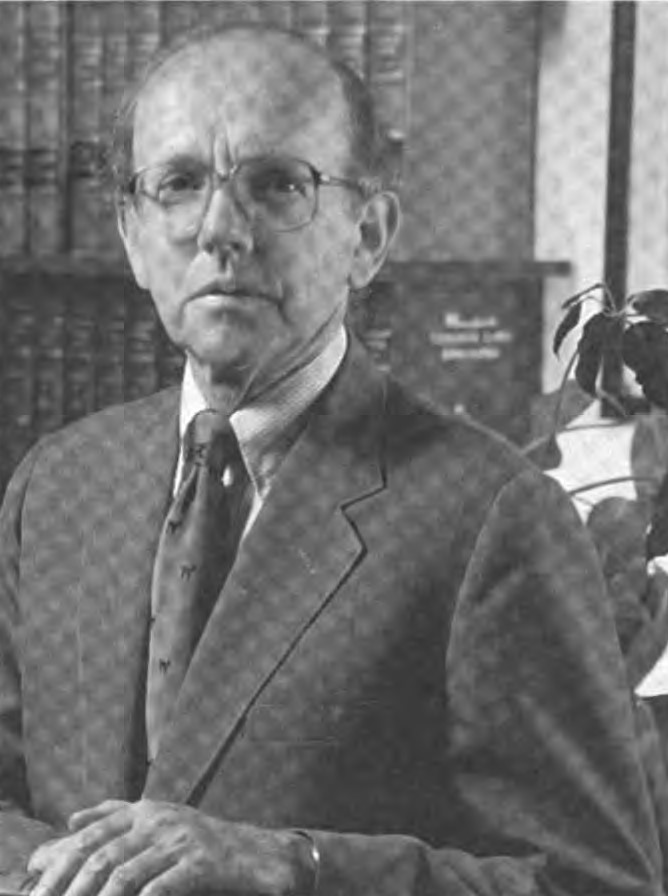
Currently serving · U.S. Court of Appeals for the First Circuit
Levin Hicks Campbell
Currently servingSenior status
Senior Circuit Judge · U.S. Court of Appeals for the First Circuit · 1972–present · Appointed by Richard Nixon
Levin Hicks Campbell serves as a senior circuit judge of the U.S. Court of Appeals for the First Circuit (1972–present). Campbell was appointed by Richard Nixon. Campbell assumed senior status in 1992 and continues to hear cases.
Key facts
- Full name
- Levin Hicks Campbell
- Court
- U.S. Court of Appeals for the First Circuit
- Office
- Circuit Judge (U.S. Court of Appeals)
- Status
- Senior circuit judge (still serving)
- Duty status
- Senior
- Appointment
- Senate-confirmed
- FJC seat
- CA10105
- Tenure
- 1972–present
- Confirmed
- 1972-06-28
- Born
- 1927
- Died
- —
- First year on the bench
- 1972
- Dataset version
- 1.20260705
Appointment & service record
U.S. Court of Appeals for the First Circuit · 1972–present
- Seat
- CA10105
- Appointment
- Senate-confirmed
- Appointing president
- Richard Nixon
- Confirmed
- 1972-06-28
- Commissioned
- 1972-06-30
- Senior status
- 1992-01-03 (still serving)
- Chief Judge
- 1983–1990
Court, FJC seat, appointment type (Senate-confirmed or recess), appointing president, confirmation and commission dates, and senior-status date are drawn from the Federal Judicial Center Biographical Directory and Wikidata.[1][2][3]
Sources
- [1]https://www.fjc.gov/node/1378781fjc · retrieved 2026-07-05
- [2]https://www.fjc.gov/history/judges/biographical-directory-article-iii-federal-judges-exportfjc-directory · retrieved 2026-07-05
- [3]https://www.wikidata.org/wiki/Q6535630Wikidata · retrieved 2026-07-05
Biographical narrative
970 words · sourced from the Wikipedia REST extract
Levin Hicks Campbell, born on January 2, 1927, is a senior United States circuit judge who has served on the Court of Appeals for the First Circuit since his appointment in 1972. Over a career that spans private practice, state‑level public service, and more than four decades on the federal bench—including a tenure as chief judge—Campbell’s professional life reflects extensive experience in both litigation and judicial administration.
Early life and legal career
Levin Hicks Campbell was born in Summit, New Jersey, in 1927. He pursued his undergraduate education at Harvard University, receiving an Artium Baccalaureus degree in 1948. Continuing at the same institution, he earned a Bachelor of Laws from Harvard Law School three years later, in 1951.
Following law school, Campbell entered military service as a lieutenant in the United States Army Judge Advocate General’s Corps. His assignment lasted from 1952 to 1954 and included deployment to Korea, where he was awarded the Commendation Medal for his contributions.
After completing his military duty, Campbell returned to civilian life and joined the Boston law firm Ropes, Gray, Best, Coolidge & Rugg. In this private practice setting he gained experience in a range of legal matters, laying the groundwork for subsequent public‑sector roles.
Campbell’s involvement in state politics began in 1963 when he was elected to the Massachusetts House of Representatives, serving a single term that concluded in 1964. He subsequently entered the executive branch of the Commonwealth, first as an assistant attorney general under Attorney General Edward W. Brooke and later as the First Assistant Attorney General under Elliott L. Richardson. These positions placed him at the center of Massachusetts’ legal administration during a period of significant social change.
In 1968, Campbell was appointed to the Massachusetts Superior Court as an associate justice. He served on that trial court until 1970, presiding over civil and criminal matters within the state’s general‑jurisdiction system. This judicial experience at the state level preceded his transition to the federal judiciary.
Federal appellate service
Campbell’s entry onto the federal bench began with a nomination by President Richard M. Nixon on November 12, 1971, to fill a vacancy on the United States District Court for the District of Massachusetts left by Judge Charles Edward Wyzanski Jr. The Senate confirmed his appointment on November 23, 1971, and he received his commission three days later, on November 30, 1971. His service as a district judge was brief; less than a year later, on August 31, 1972, he vacated the position after being elevated to the appellate court.
President Nixon nominated Campbell again on June 15, 1972, this time to the United States Court of Appeals for the First Circuit, succeeding Judge Bailey Aldrich. The Senate confirmed the nomination on June 28, 1972, and Campbell received his commission two days thereafter, on June 30, 1972. He began serving as a circuit judge that same year.
During his tenure on the First Circuit, Campbell assumed the role of chief judge in 1983, a position he held until 1990. As chief judge, he was responsible for overseeing the administration of the court, managing caseload distribution, and representing the circuit in interactions with other branches of government and the broader judiciary. His leadership spanned a period marked by evolving federal jurisprudence and increasing docket pressures.
On January 3, 1992, Campbell elected to take senior status, an option that allows judges to handle reduced caseloads while still contributing to the court’s work. Although classified as an inactive senior judge in some records, he has continued to hear cases on the First Circuit, thereby extending his judicial service well beyond the typical retirement age.
Campbell’s long tenure places him among the federal judges with notable longevity of service. His career reflects continuous involvement in the appellate process for more than four decades, encompassing both active and senior capacities.
Jurisprudence and legacy
Levin Hicks Campbell’s jurisprudential impact is principally observed through his sustained participation in the First Circuit’s decision‑making body and his administrative stewardship as chief judge. While specific opinions authored by him are not detailed here, his role on a circuit that addresses federal matters arising from New England states—including complex issues of maritime law, environmental regulation, and constitutional interpretation—situates him within a body of precedent that shapes regional and national legal landscapes.
As chief judge, Campbell contributed to the efficient operation of the court during an era when federal appellate courts faced increasing caseloads and heightened public scrutiny. His responsibilities would have included supervising case management practices, implementing procedural reforms, and ensuring compliance with statutory and regulatory requirements governing the judiciary. Such administrative duties are essential for maintaining the timely administration of justice and for upholding the integrity of the appellate process.
Campbell’s career trajectory—from private practice to state legislator, from state attorney general’s office to state trial court, and ultimately to a senior position on a federal appellate bench—exemplifies a breadth of legal experience across multiple branches of government. This diverse background informs an understanding of both the practical implications of law for litigants and the broader policy considerations that influence judicial decision‑making.
The longevity of his service, extending from his initial district court appointment in 1971 through senior status well into the twenty‑first century, underscores a commitment to public duty that aligns with the federal judiciary’s emphasis on continuity and institutional memory. Judges who remain active over such periods provide mentorship to newer members of the bench and contribute to the development of consistent legal doctrines.
In summary, Levin Hicks Campbell’s professional life reflects a combination of military service, legislative participation, executive branch experience, state‑level judicial work, and extensive federal appellate tenure. His contributions to the First Circuit—both as an active judge and as chief judge—have helped shape the administration of justice within the circuit, while his ongoing senior status demonstrates a continued dedication to the federal judiciary.
Sources & provenance
Every quantitative or attributable claim above carries a per-section [N] marker that resolves to the corresponding URL below. Each entry records the upstream provider, the canonical URL, and the timestamp at which the underlying source was retrieved.
Key facts
- https://www.fjc.gov/node/1378781fjc · retrieved 2026-07-05
- https://www.fjc.gov/history/judges/biographical-directory-article-iii-federal-judges-exportfjc-directory · retrieved 2026-07-05
- https://www.wikidata.org/wiki/Q6535630Wikidata · retrieved 2026-07-05
Biographical narrative
- https://en.wikipedia.org/wiki/Levin_H._CampbellWikipedia · retrieved 2026-07-05
Explore the federal judiciary
The U.S. Courts of Appeals are the intermediate appellate courts of the federal judiciary — thirteen circuits sitting between the district courts and the Supreme Court. Browse the full roster of judges on the U.S. Court of Appeals for the First Circuit, or explore how the appointed federal judiciary fits into the federal government.