
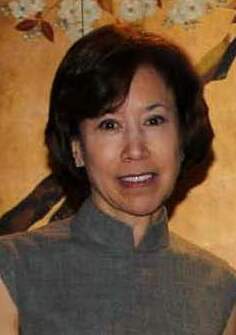
Historical · U.S. Court of Appeals for the Fourth Circuit
Allyson Kay Duncan
Former Circuit Judge · U.S. Court of Appeals for the Fourth Circuit · 2003–2019 · Appointed by George W Bush
Allyson Kay Duncan served as a circuit judge of the U.S. Court of Appeals for the Fourth Circuit (2003–2019). Duncan was appointed by George W Bush.
Key facts
- Full name
- Allyson Kay Duncan
- Court
- U.S. Court of Appeals for the Fourth Circuit
- Office
- Circuit Judge (U.S. Court of Appeals)
- Status
- Former circuit judge
- Duty status
- Not serving
- Appointment
- Senate-confirmed
- FJC seat
- CA41102
- Tenure
- 2003–2019
- Confirmed
- 2003-07-17
- Born
- 1951
- Died
- —
- First year on the bench
- 2003
- Dataset version
- 1.20260711
Appointment & service record
U.S. Court of Appeals for the Fourth Circuit · 2003–2019
- Seat
- CA41102
- Appointment
- Senate-confirmed
- Appointing president
- George W Bush
- Confirmed
- 2003-07-17
- Commissioned
- 2003-08-15
- Senior status
- 2019-03-21
Court, FJC seat, appointment type (Senate-confirmed or recess), appointing president, confirmation and commission dates, and senior-status date are drawn from the Federal Judicial Center Biographical Directory and Wikidata.[1][2][3]
Sources
- [1]https://www.fjc.gov/node/1391911fjc · retrieved 2026-07-11
- [2]https://www.fjc.gov/history/judges/biographical-directory-article-iii-federal-judges-exportfjc-directory · retrieved 2026-07-11
- [3]https://www.wikidata.org/wiki/Q4733480Wikidata · retrieved 2026-07-11
Biographical narrative
1,162 words · sourced from the Wikipedia REST extract
Allyson Kay Duncan is a former United States circuit judge who served on the United States Court of Appeals for the Fourth Circuit from 2003 to 2019. Born in 1951 in Durham, North Carolina, she made history as the first female African American judge to serve on the Fourth Circuit. Appointed by President George W. Bush, a Republican, and confirmed by the Senate in July 2003, Duncan brought to the federal appellate bench a diverse background that included experience in federal civil rights enforcement, legal academia, state judicial service, and regulatory administration. Her appointment represented a significant milestone in the diversification of the federal judiciary and concluded a lengthy vacancy on the court.
Early life and legal career
Duncan was born on September 5, 1951, in Durham, North Carolina. She pursued her undergraduate education at Hampton University, a historically black university in Virginia, where she earned a Bachelor of Arts degree in 1972. She then attended Duke University School of Law, one of the nation's leading law schools, receiving her Juris Doctor in 1975.
Following law school, Duncan began her legal career in legal publishing, working as an associate editor at the Lawyers Co-Operative Publishing Company from 1976 to 1977. She then gained valuable judicial experience by serving as a law clerk to Judge Julia Cooper Mack of the District of Columbia Court of Appeals from 1977 to 1978, a position that provided her with insight into appellate decision-making and legal reasoning.
In 1978, Duncan joined the Equal Employment Opportunity Commission, the federal agency responsible for enforcing laws against workplace discrimination. Over the course of eight years at the EEOC, she held a succession of increasingly responsible positions that demonstrated her versatility and leadership capabilities. Her roles included appellate attorney, assistant to the deputy general counsel, assistant to the chairman, acting associate legal counsel, and acting legal counsel. During her tenure, she worked under Clarence Thomas, who at the time served as chairman of the EEOC. Thomas selected Duncan to serve as his Chief of Staff, choosing her over another candidate who was also under consideration for the position.
Duncan transitioned to legal academia in 1986, joining the faculty of North Carolina Central University School of Law as an associate professor. Over four years, she taught courses in property law, appellate advocacy, and employment discrimination, sharing her practical expertise with the next generation of attorneys. Her teaching in employment discrimination drew directly on her extensive experience at the EEOC.
In 1990, Duncan received her first judicial appointment when Governor James G. Martin appointed her as an Associate Judge of the North Carolina Court of Appeals, filling a vacancy created by the departure of Charles Becton. However, her service on the state appellate court was brief, as she lost the subsequent election to James A. Wynn, who would himself later serve on the Fourth Circuit.
Following her departure from the state judiciary, Duncan was appointed as a Commissioner of the North Carolina Utilities Commission in 1991. She served in this regulatory role for seven years, gaining expertise in administrative law and the regulation of public utilities. In 1998, she entered private practice, joining the Raleigh office of Kilpatrick Stockton, a major law firm, as a partner. She practiced there until her appointment to the federal bench. In 2003, the same year as her federal appointment, Duncan achieved another historic milestone by becoming the first African American president of the North Carolina Bar Association, reflecting the high regard in which she was held by the state's legal community.
Federal appellate service
President George W. Bush nominated Duncan to the United States Court of Appeals for the Fourth Circuit on April 28, 2003. The nomination was intended to fill a seat that had been vacant since September 18, 1999, following the death of Judge Samuel James Ervin III. The lengthy vacancy had been the subject of considerable attention, as President Bill Clinton had previously nominated Professor S. Elizabeth Gibson to the seat late in his presidency, but Gibson never received a hearing or vote before the Senate Judiciary Committee before Clinton's term ended.
Duncan's nomination represented a departure from the partisan controversies that had characterized some North Carolina appointments to the Fourth Circuit. Despite being a Republican appointee, she received support from both of North Carolina's senators at the time: Elizabeth Dole, a Republican, and John Edwards, a Democrat. This bipartisan support facilitated a smooth confirmation process. The United States Senate confirmed Duncan by a unanimous vote of 93 to 0 on July 17, 2003, reflecting broad confidence in her qualifications and temperament. She was the third judge nominated to the Fourth Circuit by President Bush to be confirmed by the Senate. Duncan received her commission on August 15, 2003, and began her service on the court.
Duncan served as an active circuit judge for approximately fifteen years. In May 2018, she announced her intention to assume senior status, a form of semi-retirement available to federal judges who meet certain age and service requirements, upon the confirmation of her successor. In September 2018, President Donald Trump nominated Allison Jones Rushing to fill the seat Duncan would vacate. Following Rushing's confirmation by the Senate on March 5, 2019, Duncan assumed senior status on March 21, 2019. She fully retired from the bench on July 31, 2019, concluding her federal judicial service.
Jurisprudence and legacy
Duncan's service on the Fourth Circuit represented a historic achievement as the first female African American judge on that court. The Fourth Circuit, which hears appeals from federal district courts in Maryland, Virginia, West Virginia, North Carolina, and South Carolina, had lacked such representation throughout its history prior to her appointment. Her presence on the court contributed to the gradual diversification of the federal appellate judiciary.
Her background brought a distinctive perspective to the bench. Her extensive experience at the Equal Employment Opportunity Commission provided her with deep knowledge of federal employment discrimination law and civil rights enforcement. Her time as a law professor gave her familiarity with legal pedagogy and scholarly analysis. Her service on the North Carolina Court of Appeals and the North Carolina Utilities Commission exposed her to state law issues and administrative regulation. Her years in private practice at a major law firm rounded out her understanding of complex commercial litigation and corporate legal matters.
Duncan's path to the federal bench illustrated the various routes through which judges reach the appellate courts. Unlike some federal judges who spend their entire careers in the judiciary or in prosecutorial roles, Duncan's career encompassed multiple sectors of the legal profession. This breadth of experience, combined with her academic credentials and the bipartisan support she received, positioned her as a consensus candidate during a period when some judicial nominations had become contentious.
Her retirement in 2019 closed a chapter in the Fourth Circuit's history, but her significance as a trailblazer remains part of the court's institutional legacy and the broader history of African American jurists in the federal system.
Sources & provenance
Every quantitative or attributable claim above carries a per-section [N] marker that resolves to the corresponding URL below. Each entry records the upstream provider, the canonical URL, and the timestamp at which the underlying source was retrieved.
Key facts
- https://www.fjc.gov/node/1391911fjc · retrieved 2026-07-11
- https://www.fjc.gov/history/judges/biographical-directory-article-iii-federal-judges-exportfjc-directory · retrieved 2026-07-11
- https://www.wikidata.org/wiki/Q4733480Wikidata · retrieved 2026-07-11
Biographical narrative
- https://en.wikipedia.org/wiki/Allyson_K._DuncanWikipedia · retrieved 2026-07-11
Explore the federal judiciary
The U.S. Courts of Appeals are the intermediate appellate courts of the federal judiciary — thirteen circuits sitting between the district courts and the Supreme Court. Browse the full roster of judges on the U.S. Court of Appeals for the Fourth Circuit, or explore how the appointed federal judiciary fits into the federal government.