
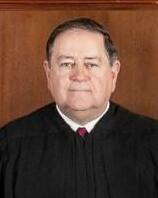
Historical · U.S. Court of Appeals for the Fourth Circuit
Dennis W. Shedd
Former Circuit Judge · U.S. Court of Appeals for the Fourth Circuit · 2002–2022 · Appointed by George W Bush
Dennis W. Shedd served as a circuit judge of the U.S. Court of Appeals for the Fourth Circuit (2002–2022). Shedd was appointed by George W Bush.
Key facts
- Full name
- Dennis W. Shedd
- Court
- U.S. Court of Appeals for the Fourth Circuit
- Office
- Circuit Judge (U.S. Court of Appeals)
- Status
- Former circuit judge
- Duty status
- Not serving
- Appointment
- Senate-confirmed
- FJC seat
- CA41302
- Tenure
- 2002–2022
- Confirmed
- 2002-11-19
- Born
- 1953
- Died
- —
- First year on the bench
- 2002
- Dataset version
- 1.20260711
Appointment & service record
U.S. Court of Appeals for the Fourth Circuit · 2002–2018
- Seat
- CA41302
- Appointment
- Senate-confirmed
- Appointing president
- George W Bush
- Confirmed
- 2002-11-19
- Commissioned
- 2002-11-26
- Senior status
- 2018-01-30
Court, FJC seat, appointment type (Senate-confirmed or recess), appointing president, confirmation and commission dates, and senior-status date are drawn from the Federal Judicial Center Biographical Directory and Wikidata.[1][2][3]
Sources
- [1]https://www.fjc.gov/node/1387711fjc · retrieved 2026-07-11
- [2]https://www.fjc.gov/history/judges/biographical-directory-article-iii-federal-judges-exportfjc-directory · retrieved 2026-07-11
- [3]https://www.wikidata.org/wiki/Q5258950Wikidata · retrieved 2026-07-11
Biographical narrative
1,164 words · sourced from the Wikipedia REST extract
Dennis Wayne Shedd is a former United States circuit judge who served on the United States Court of Appeals for the Fourth Circuit from 2002 to 2022. Born in 1953, he had a distinguished legal career that included service as a federal district court judge, work as a senior congressional staffer, and private practice in South Carolina. Appointed to the Fourth Circuit by President George W. Bush, a Republican, Shedd served as an active judge for approximately sixteen years before assuming senior status in 2018 and ultimately retiring from the federal bench in 2022.
Early life and legal career
Dennis Wayne Shedd was born on January 28, 1953. He received his primary and secondary education at Orangeburg Preparatory Schools, located in Orangeburg, South Carolina. For his undergraduate education, Shedd attended Wofford College, a private liberal arts institution in Spartanburg, South Carolina, where he earned a Bachelor of Arts degree. He continued his legal education at the University of South Carolina School of Law, obtaining his Juris Doctor degree. Seeking to further his expertise in law, Shedd pursued graduate legal studies at Georgetown University Law Center in Washington, D.C., where he earned a Master of Laws degree.
Following his legal education, Shedd embarked on a career that combined both legislative and legal work. He served in a significant capacity on Capitol Hill, working for Senator Strom Thurmond of South Carolina, a prominent and long-serving member of the United States Senate. In this role, Shedd held the position of chief counsel and staff director for the Senate Committee on the Judiciary, one of the most important committees in the Senate with jurisdiction over federal courts, constitutional amendments, and a wide range of legal matters. This position provided him with extensive experience in federal judicial matters and the legislative process surrounding the confirmation of federal judges.
In 1988, Shedd relocated to South Carolina to enter private legal practice. During his time practicing law in the state, he also contributed to legal education by serving as an adjunct professor of law at the University of South Carolina School of Law, his alma mater. This academic appointment allowed him to share his practical legal experience with law students while maintaining his practice.
Shedd's career took a significant turn toward the federal judiciary when President George H. W. Bush, a Republican, nominated him to serve as a United States District Judge for the United States District Court for the District of South Carolina. The nomination was submitted on October 17, 1990, and the Senate moved swiftly to confirm him, doing so on October 27, 1990. Shedd received his judicial commission on October 30, 1990, and began his service as a federal trial judge. He would serve in this capacity for over twelve years, presiding over federal cases in South Carolina and gaining substantial experience on the federal bench at the trial court level.
Federal appellate service
Shedd's service on the district court came to an end when he was nominated for elevation to the United States Court of Appeals for the Fourth Circuit. President George W. Bush, a Republican, nominated Shedd to the appellate court on September 4, 2001. The nomination came during a period when judicial confirmations were often subject to significant scrutiny and debate in the Senate. Shedd's nomination proceeded through the confirmation process over the course of more than a year, reflecting the deliberative nature of appellate court confirmations.
The United States Senate confirmed Shedd's appointment to the Fourth Circuit on November 19, 2002. The confirmation vote was 55 to 44, indicating that while he received majority support, a substantial number of senators voted against his confirmation. He received his commission as a circuit judge on November 26, 2002. His service as a district court judge was formally terminated on December 10, 2002, upon his elevation to the appellate court. The Fourth Circuit, headquartered in Richmond, Virginia, has jurisdiction over appeals from federal district courts in Maryland, Virginia, West Virginia, North Carolina, and South Carolina, as well as from certain federal administrative agencies.
As a circuit judge, Shedd participated in the appellate review of cases from across the Fourth Circuit's geographic jurisdiction, hearing appeals on a wide range of federal legal issues. He served as an active judge on the court for approximately sixteen years. On January 30, 2018, Shedd assumed senior status, a form of semi-retirement available to federal judges who meet certain age and service requirements. Senior status judges continue to hear cases and contribute to the work of their courts but typically carry a reduced caseload and do not participate in en banc proceedings unless specifically designated to do so. Shedd continued in senior status for several years before ultimately retiring from the federal bench entirely on May 2, 2022, concluding more than three decades of service as a federal judge.
Jurisprudence and legacy
During his tenure on the Fourth Circuit, Shedd participated in numerous appellate decisions across the full spectrum of federal law. While comprehensive records of all his opinions are maintained in federal court databases, certain decisions attracted particular attention due to their subject matter or the legal issues they addressed.
In 2007, Shedd authored an opinion for a divided panel of the court in a case involving the procedural default doctrine and its application to constitutional claims raised by a death row inmate. The procedural default doctrine is a complex area of federal habeas corpus law that can prevent federal courts from reviewing constitutional claims that were not properly raised in state court proceedings. Shedd's opinion for the panel concluded that this doctrine barred the court from considering the inmate's constitutional arguments. The fact that the panel was described as fractured suggests that the judges did not all agree on the reasoning or outcome, highlighting the difficult legal questions presented in capital cases involving procedural bars to federal review.
A decade later, Shedd participated in one of the most high-profile cases to come before the Fourth Circuit during his tenure. On May 25, 2017, he wrote a dissenting opinion when the full Fourth Circuit, sitting en banc, voted to uphold a lower court's injunction against a presidential travel ban in the case of International Refugee Assistance Project v. Trump. The en banc court ruled 10 to 3 in favor of maintaining the injunction, with Shedd among the three judges in dissent. This case was part of extensive litigation over executive orders restricting travel from certain countries, raising significant questions about presidential authority, immigration law, and constitutional protections. Shedd's dissent indicated his disagreement with the majority's legal analysis or conclusions regarding the travel ban's validity.
Shedd's career reflected a progression through multiple levels of the federal judiciary and different branches of government service, from legislative work to trial court judging to appellate review. His more than thirty years of service on the federal bench, spanning both district and circuit court appointments, represented a substantial contribution to the administration of federal justice in South Carolina and the broader Fourth Circuit.
Sources & provenance
Every quantitative or attributable claim above carries a per-section [N] marker that resolves to the corresponding URL below. Each entry records the upstream provider, the canonical URL, and the timestamp at which the underlying source was retrieved.
Key facts
- https://www.fjc.gov/node/1387711fjc · retrieved 2026-07-11
- https://www.fjc.gov/history/judges/biographical-directory-article-iii-federal-judges-exportfjc-directory · retrieved 2026-07-11
- https://www.wikidata.org/wiki/Q5258950Wikidata · retrieved 2026-07-11
Biographical narrative
- https://en.wikipedia.org/wiki/Dennis_SheddWikipedia · retrieved 2026-07-11
Explore the federal judiciary
The U.S. Courts of Appeals are the intermediate appellate courts of the federal judiciary — thirteen circuits sitting between the district courts and the Supreme Court. Browse the full roster of judges on the U.S. Court of Appeals for the Fourth Circuit, or explore how the appointed federal judiciary fits into the federal government.