
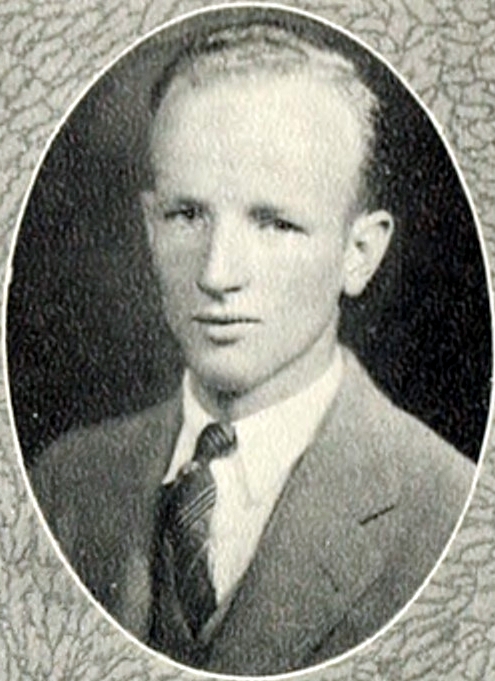
Historical · U.S. Court of Appeals for the Fourth Circuit
J. Spencer Bell
Former Circuit Judge · U.S. Court of Appeals for the Fourth Circuit · 1961–1967 · Appointed by John F Kennedy
J. Spencer Bell served as a circuit judge of the U.S. Court of Appeals for the Fourth Circuit (1961–1967). Bell was appointed by John F Kennedy.
Key facts
- Full name
- J. Spencer Bell
- Court
- U.S. Court of Appeals for the Fourth Circuit
- Office
- Circuit Judge (U.S. Court of Appeals)
- Status
- Former circuit judge
- Duty status
- Not serving
- Appointment
- Senate-confirmed
- FJC seat
- CA40601
- Tenure
- 1961–1967
- Confirmed
- 1961-09-23
- Born
- 1906-04-01
- Died
- 1967-03-19
- First year on the bench
- 1961
- Dataset version
- 1.20260711
Appointment & service record
U.S. Court of Appeals for the Fourth Circuit · 1961–1967
- Seat
- CA40601
- Appointment
- Senate-confirmed
- Appointing president
- John F Kennedy
- Confirmed
- 1961-09-23
- Commissioned
- 1961-09-27
- Senior status
- —
Court, FJC seat, appointment type (Senate-confirmed or recess), appointing president, confirmation and commission dates, and senior-status date are drawn from the Federal Judicial Center Biographical Directory and Wikidata.[1][2][3]
Sources
- [1]https://www.fjc.gov/node/1377696fjc · retrieved 2026-07-11
- [2]https://www.fjc.gov/history/judges/biographical-directory-article-iii-federal-judges-exportfjc-directory · retrieved 2026-07-11
- [3]https://www.wikidata.org/wiki/Q6107112Wikidata · retrieved 2026-07-11
Biographical narrative
1,019 words · sourced from the Wikipedia REST extract
Jesse Spencer Bell was a United States circuit judge who served on the United States Court of Appeals for the Fourth Circuit from 1961 until his death in 1967. Born in Charlotte, North Carolina, in 1906, Bell built a distinguished legal career in his home state that spanned three decades of private practice and included significant public service in the North Carolina Senate and leadership of important judicial reform efforts before his appointment to the federal bench by President John F. Kennedy, a Democrat, in 1961.
Early life and legal career
Jesse Spencer Bell was born on April 1, 1906, in Charlotte, North Carolina, where he would spend most of his professional life. He pursued his undergraduate education at Duke University, earning a Bachelor of Arts degree in 1927. Bell's legal education followed a path through multiple prestigious institutions. He studied at Harvard Law School before completing his legal training at the University of North Carolina School of Law, where he received his Bachelor of Laws degree in 1930.
Following his admission to the bar, Bell established himself in the private practice of law in Charlotte, where he practiced for more than three decades from 1930 to 1961. During this extended period in private practice, he developed expertise and a reputation that would later support his elevation to both state legislative office and the federal judiciary. His legal career was interrupted by military service, during which he served in the United States Army as a field artillery officer, ultimately achieving the rank of major. This military experience added another dimension to his professional background and demonstrated his commitment to public service beyond the legal profession.
Bell's involvement in public affairs extended beyond his law practice and military service. During the 1950s, he took on a significant role in efforts to reform North Carolina's judicial system when he was appointed to chair the Committee on Improving and Expediting the Administration of Justice in North Carolina. This body, which became known as the Bell Commission in recognition of his leadership, worked to address inefficiencies and recommend improvements to the state's court system. His chairmanship of this commission established him as a thoughtful voice on judicial administration and court reform, expertise that would prove relevant to his later service on the federal bench.
In 1957, Bell entered electoral politics when he was elected to the North Carolina Senate, where he served until 1961. His tenure in the state legislature coincided with a period of significant social and political change in the South and provided him with experience in the legislative process and public policy. During this time, he remained engaged with the Democratic Party at the national level, serving as a delegate to the 1960 Democratic National Convention, the gathering at which John F. Kennedy secured the party's presidential nomination.
Federal appellate service
President Kennedy nominated Bell to the United States Court of Appeals for the Fourth Circuit on September 14, 1961, less than a year into his presidency. The nomination was to fill a newly created seat on the court, authorized by federal statute. The Fourth Circuit, which hears appeals from federal district courts in Maryland, Virginia, West Virginia, North Carolina, and South Carolina, was expanding to meet the growing caseload in the region. Bell's nomination came at a time when the federal judiciary was beginning to play an increasingly prominent role in addressing civil rights issues and other matters of constitutional significance in the South.
The United States Senate confirmed Bell's nomination on September 23, 1961, just nine days after the president submitted it, reflecting what appears to have been a smooth confirmation process. He received his commission on September 27, 1961, and took his seat on the Fourth Circuit. At the time of his appointment, Bell was fifty-five years old and brought to the court his extensive experience in private practice, his military background, his work on judicial reform in North Carolina, and his recent service in the state legislature.
Bell served on the Fourth Circuit for approximately five and a half years. During this period, the court handled numerous significant matters as federal courts across the South grappled with cases arising from desegregation efforts, voting rights disputes, and other civil rights controversies, alongside the traditional work of a federal appellate court in criminal, civil, and administrative matters. His service on the court was cut short when he died on March 19, 1967, at the age of sixty, while still an active member of the court.
Jurisprudence and legacy
Bell's relatively brief tenure on the Fourth Circuit, lasting less than six years, limits the available record for comprehensive assessment of his judicial philosophy and approach to appellate decision-making. He served during a transformative period in American law, when federal appellate courts were addressing fundamental questions about constitutional rights, federal-state relations, and the role of the judiciary in American society. The Fourth Circuit during the 1960s confronted many of the same challenging issues facing other federal courts in the southern states as the region adapted to the requirements of Brown v. Board of Education and subsequent civil rights developments.
His background in judicial reform through his leadership of the Bell Commission in North Carolina suggests he brought to the bench a practical understanding of court administration and the importance of efficient judicial processes. His experience in private practice over three decades would have provided him with perspective on how appellate decisions affect practicing lawyers and their clients, while his legislative service offered insight into the relationship between courts and the democratic branches of government.
Bell's papers are preserved in the J. Murrey Atkins Library at the University of North Carolina at Charlotte, providing a resource for researchers interested in his career and the work of the Fourth Circuit during the 1960s. His service represents a connection between North Carolina's legal and political establishment and the federal judiciary during a consequential period in American legal history. The seat to which he was appointed continued to serve the Fourth Circuit after his death, filled by subsequent judges appointed through the same constitutional process of presidential nomination and Senate confirmation.
Sources & provenance
Every quantitative or attributable claim above carries a per-section [N] marker that resolves to the corresponding URL below. Each entry records the upstream provider, the canonical URL, and the timestamp at which the underlying source was retrieved.
Key facts
- https://www.fjc.gov/node/1377696fjc · retrieved 2026-07-11
- https://www.fjc.gov/history/judges/biographical-directory-article-iii-federal-judges-exportfjc-directory · retrieved 2026-07-11
- https://www.wikidata.org/wiki/Q6107112Wikidata · retrieved 2026-07-11
Biographical narrative
- https://en.wikipedia.org/wiki/J._Spencer_BellWikipedia · retrieved 2026-07-11
Explore the federal judiciary
The U.S. Courts of Appeals are the intermediate appellate courts of the federal judiciary — thirteen circuits sitting between the district courts and the Supreme Court. Browse the full roster of judges on the U.S. Court of Appeals for the Fourth Circuit, or explore how the appointed federal judiciary fits into the federal government.