
Historical · U.S. Court of Appeals for the Fourth Circuit
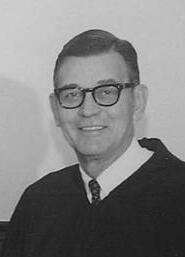
John A. Field Jr.
Former Circuit Judge · U.S. Court of Appeals for the Fourth Circuit · 1971–1995 · Appointed by Richard Nixon
John A. Field Jr. served as a circuit judge of the U.S. Court of Appeals for the Fourth Circuit (1971–1995). Jr. was appointed by Richard Nixon.
Key facts
- Full name
- John A. Field Jr.
- Court
- U.S. Court of Appeals for the Fourth Circuit
- Office
- Circuit Judge (U.S. Court of Appeals)
- Status
- Former circuit judge
- Duty status
- Not serving
- Appointment
- Senate-confirmed
- FJC seat
- CA40205
- Tenure
- 1971–1995
- Confirmed
- 1971-09-21
- Born
- 1910-03-22
- Died
- 1995-12-16
- First year on the bench
- 1971
- Dataset version
- 1.20260711
Appointment & service record
U.S. Court of Appeals for the Fourth Circuit · 1971–1976
- Seat
- CA40205
- Appointment
- Senate-confirmed
- Appointing president
- Richard Nixon
- Confirmed
- 1971-09-21
- Commissioned
- 1971-09-22
- Senior status
- 1976-04-01
Court, FJC seat, appointment type (Senate-confirmed or recess), appointing president, confirmation and commission dates, and senior-status date are drawn from the Federal Judicial Center Biographical Directory and Wikidata.[1][2][3]
Sources
- [1]https://www.fjc.gov/node/1380696fjc · retrieved 2026-07-11
- [2]https://www.fjc.gov/history/judges/biographical-directory-article-iii-federal-judges-exportfjc-directory · retrieved 2026-07-11
- [3]https://www.wikidata.org/wiki/Q6217663Wikidata · retrieved 2026-07-11
Biographical narrative
1,219 words · sourced from the Wikipedia REST extract
John A. Field Jr. was a United States circuit judge who served on the United States Court of Appeals for the Fourth Circuit from 1971 to 1995. Born in Charleston, West Virginia, in 1910, he had a distinguished legal career that spanned private practice, military service, local government, state administration, and more than three decades on the federal bench. Appointed first to the federal district court by President Dwight D. Eisenhower, a Republican, and later elevated to the circuit court by President Richard M. Nixon, also a Republican, Field served the federal judiciary until his death in 1995, including a period on a specialized national security court.
Early life and legal career
John A. Field Jr. was born on March 22, 1910, in Charleston, West Virginia, where he would spend much of his professional life. He pursued his undergraduate education at Hampden–Sydney College, a liberal arts institution in Virginia, earning an Artium Baccalaureus degree in 1932. He continued his studies at the University of Virginia School of Law, one of the nation's prominent law schools, where he obtained his Bachelor of Laws degree in 1935. Following his admission to the bar, Field entered private legal practice in his hometown of Charleston, where he worked from 1935 until 1943, establishing himself in the West Virginia legal community during the latter years of the Great Depression and the early years of World War II.
Field's career was interrupted by military service during World War II. He served in the United States Navy from 1944 to 1946, contributing to the war effort during the final years of the conflict and the immediate postwar period. After completing his naval service, he returned to Charleston and resumed his private law practice in 1947, continuing in that capacity for another decade until 1957.
During his postwar years in private practice, Field became active in local government and politics. He served as a member of the Charleston City Council from 1947 to 1951, gaining experience in municipal governance and public administration. His colleagues on the council recognized his leadership abilities, and he was elected president of that body, serving in that capacity from 1951 to 1955. This role gave him significant influence over local policy and positioned him as a prominent figure in Charleston's civic life.
Field's involvement in politics extended beyond the municipal level. In 1956, he ran as a Republican candidate for the office of West Virginia state attorney general. Although his campaign was unsuccessful, his political engagement and legal expertise led to an appointment as state tax commissioner, a position he held from 1957 to 1959. This role involved overseeing the administration of West Virginia's tax system and provided him with executive branch experience at the state level, complementing his background in private practice and local government.
Federal appellate service
Field's transition to the federal judiciary began with his appointment to the trial court bench. On May 11, 1959, President Dwight D. Eisenhower nominated him to serve as a United States district judge for the United States District Court for the Southern District of West Virginia. The nomination was made to fill a vacancy created by the departure of Judge Ben Moore. The United States Senate confirmed Field's nomination on August 12, 1959, and he received his judicial commission the following day, August 13, 1959. Notably, Field assumed the position of chief judge of the district court immediately upon his appointment, serving in that administrative capacity from 1959 until 1971. As chief judge, he bore responsibility not only for his own caseload but also for the administrative oversight of the court, managing judicial resources and court operations for the Southern District of West Virginia during a period of significant growth in federal litigation.
After more than a decade of distinguished service on the district court, Field was elevated to the appellate bench. On September 8, 1971, President Richard Nixon nominated him to a seat on the United States Court of Appeals for the Fourth Circuit. This nomination filled a vacancy that had been created when Judge Herbert Stephenson Boreman departed from the court. The Senate moved quickly on the nomination, confirming Field on September 21, 1971, according to the Federal Judicial Center records. He received his commission as a circuit judge the following day, September 22, 1971, and his service on the district court formally terminated on October 7, 1971, when his elevation became effective.
Field served as an active circuit judge on the Fourth Circuit for approximately five years. On April 1, 1976, he assumed senior status, a form of semi-retirement that allows federal judges to continue hearing cases with a reduced workload while creating a vacancy for a new active judge to be appointed. He continued to serve in senior status for nearly two decades, contributing to the work of the Fourth Circuit well into his eighties.
In addition to his Fourth Circuit responsibilities, Field was appointed to serve on the United States Foreign Intelligence Surveillance Court of Review, a specialized appellate body created to review decisions of the Foreign Intelligence Surveillance Court concerning government surveillance for foreign intelligence purposes. He served on this court from May 19, 1982, to May 18, 1989, a seven-year term during which he participated in the oversight of sensitive national security matters. Field's service on the federal bench concluded with his death on December 16, 1995, in Naples, Florida, at the age of eighty-five.
Jurisprudence and legacy
John A. Field Jr.'s judicial career spanned more than thirty-six years on the federal bench, encompassing both trial and appellate work. His tenure on the United States District Court for the Southern District of West Virginia from 1959 to 1971 gave him extensive experience with the full range of federal trial court matters, from criminal prosecutions to civil litigation involving federal law. As chief judge throughout his entire district court tenure, he played a significant administrative role in managing the court during a period when the federal judiciary was expanding its reach into areas such as civil rights, criminal procedure, and regulatory enforcement.
His elevation to the Fourth Circuit in 1971 placed him on a court with jurisdiction over federal appeals from Maryland, Virginia, West Virginia, North Carolina, and South Carolina. The Fourth Circuit during the 1970s addressed numerous significant legal questions arising from the implementation of civil rights legislation, criminal justice reform, and evolving constitutional doctrines. Field's background as both a trial judge and a former state official likely informed his approach to the diverse array of cases that came before the appellate court.
Field's willingness to continue serving in senior status for nearly twenty years after 1976 demonstrated his sustained commitment to the federal judiciary. Senior judges make important contributions to the work of the courts, helping to manage caseloads and providing continuity and experience. His additional service on the Foreign Intelligence Surveillance Court of Review reflected the confidence placed in his judgment on matters of national security and the delicate balance between government surveillance powers and individual rights.
The length and breadth of Field's career—from private practice through local government, state administration, the trial bench, and the appellate bench—provided him with a comprehensive perspective on the American legal system. His service concluded only with his death at age eighty-five, marking the end of six decades of involvement in law and public service.
Sources & provenance
Every quantitative or attributable claim above carries a per-section [N] marker that resolves to the corresponding URL below. Each entry records the upstream provider, the canonical URL, and the timestamp at which the underlying source was retrieved.
Key facts
- https://www.fjc.gov/node/1380696fjc · retrieved 2026-07-11
- https://www.fjc.gov/history/judges/biographical-directory-article-iii-federal-judges-exportfjc-directory · retrieved 2026-07-11
- https://www.wikidata.org/wiki/Q6217663Wikidata · retrieved 2026-07-11
Biographical narrative
- https://en.wikipedia.org/wiki/John_A._Field_Jr.Wikipedia · retrieved 2026-07-11
Explore the federal judiciary
The U.S. Courts of Appeals are the intermediate appellate courts of the federal judiciary — thirteen circuits sitting between the district courts and the Supreme Court. Browse the full roster of judges on the U.S. Court of Appeals for the Fourth Circuit, or explore how the appointed federal judiciary fits into the federal government.