
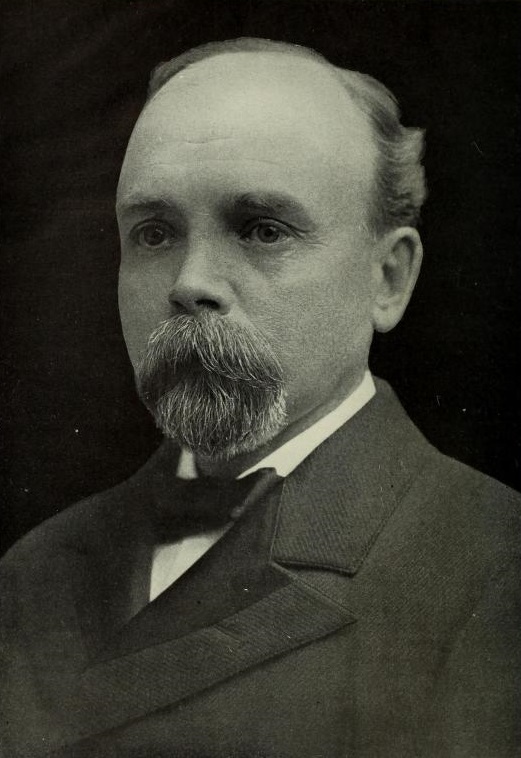
Historical · U.S. Court of Appeals for the Fourth Circuit
Martin Augustine Knapp
Former Circuit Judge · U.S. Court of Appeals for the Fourth Circuit · 1910–1923 · Appointed by None Reassignment
Martin Augustine Knapp served as a circuit judge of the U.S. Court of Appeals for the Fourth Circuit (1910–1923). Knapp was appointed by None Reassignment.
Key facts
- Full name
- Martin Augustine Knapp
- Court
- U.S. Court of Appeals for the Fourth Circuit
- Office
- Circuit Judge (U.S. Court of Appeals)
- Status
- Former circuit judge
- Duty status
- Not serving
- Appointment
- Recess appointment
- FJC seat
- CA40301
- Tenure
- 1910–1923
- Confirmed
- —
- Born
- 1843-11-06
- Died
- 1923-02-10
- First year on the bench
- 1910
- Dataset version
- 1.20260711
Appointment & service record
U.S. Court of Appeals for the Second Circuit · 1910–1916
- Seat
- CA20501
- Appointment
- Senate-confirmed
- Appointing president
- William Howard Taft
- Confirmed
- 1910-12-20
- Commissioned
- 1910-12-20
- Senior status
- —
U.S. Court of Appeals for the Fourth Circuit · 1916–1923
- Seat
- CA40301
- Appointment
- Recess appointment
- Appointing president
- None Reassignment
- Confirmed
- Recess appointment
- Commissioned
- 1916-01-01
- Senior status
- —
Court, FJC seat, appointment type (Senate-confirmed or recess), appointing president, confirmation and commission dates, and senior-status date are drawn from the Federal Judicial Center Biographical Directory and Wikidata.[1][2][3]
Sources
- [1]https://www.fjc.gov/node/1383391fjc · retrieved 2026-07-11
- [2]https://www.fjc.gov/history/judges/biographical-directory-article-iii-federal-judges-exportfjc-directory · retrieved 2026-07-11
- [3]https://www.wikidata.org/wiki/Q13607708Wikidata · retrieved 2026-07-11
Biographical narrative
1,209 words · sourced from the Wikipedia REST extract
Martin Augustine Knapp was a United States circuit judge who served on multiple federal appellate courts during the early twentieth century, including the United States Court of Appeals for the Second Circuit and the United States Court of Appeals for the Fourth Circuit. Born in 1843 in upstate New York, he had a distinguished career in both private legal practice and public service before ascending to the federal bench. Prior to his judicial appointments, Knapp gained national prominence as a member and later chairman of the Interstate Commerce Commission, where he played a significant role in mediating disputes between railroads and the public during a critical period of American transportation regulation. His federal judicial service spanned from 1910 until his death in 1923, during which time he also served on the short-lived United States Commerce Court.
Early life and legal career
Martin Augustine Knapp was born on November 6, 1843, in Spafford, New York, a small community in the central part of the state. He pursued his undergraduate education at Wesleyan University, where he earned a Bachelor of Arts degree in 1868. Following the common legal training practice of the era, Knapp read law under the supervision of practicing attorneys rather than attending a formal law school, and he was admitted to the bar in 1869.
In 1870, Knapp established a private law practice in Syracuse, New York, where he built a reputation as a capable attorney over the course of more than two decades. His practice evidently flourished, as he was selected to serve as counsel for the municipal corporation of Syracuse, a position he held from 1877 to 1883. This role would have involved representing the city government in legal matters and providing advice on municipal law questions, giving Knapp valuable experience in public law and government operations.
Knapp's career took a significant turn in 1891 when President Benjamin Harrison, a Republican, appointed him to the Interstate Commerce Commission. This federal agency, established in 1887, was charged with regulating the railroad industry and addressing concerns about discriminatory rates and practices. Knapp's appointment marked the beginning of nearly two decades of service in railroad regulation and mediation. He was reappointed to the Commission in 1897 by President Grover Cleveland, a Democrat, demonstrating bipartisan confidence in his abilities. In 1902, President Theodore Roosevelt, a Republican, reappointed him once again. Beginning in 1898, Knapp served as Chairman of the Interstate Commerce Commission, a position of considerable influence during a period when railroad regulation was among the most contentious issues in American politics and economics.
During his tenure with the Commission, Knapp took on additional responsibilities under the Erdman Act, serving as an ex officio mediator. In this capacity, he assisted in resolving numerous disputes between the public and railroad companies, gaining extensive experience in the complex legal and economic issues surrounding interstate commerce and labor relations in the transportation sector. This work continued until 1910, when he transitioned to the federal judiciary.
Federal appellate service
President William Howard Taft, a Republican, nominated Knapp to the federal bench on December 12, 1910. The nomination was to a newly created joint seat that encompassed three tribunals: the United States Commerce Court, the United States Court of Appeals for the Second Circuit, and the United States Circuit Courts for the Second Circuit. This unusual arrangement reflected the complex structure of the federal judiciary during a transitional period. The new seat had been authorized by statute. The United States Senate confirmed Knapp's nomination on December 20, 1910, and he received his commission the same day, allowing him to begin his judicial duties immediately.
Knapp's service on these courts coincided with significant changes in the structure of the federal judiciary. On December 31, 1911, the Circuit Courts were abolished as part of ongoing judicial reorganization, after which Knapp continued to serve on both the Commerce Court and the Court of Appeals for the Second Circuit. The Commerce Court itself was a specialized tribunal created to hear appeals from Interstate Commerce Commission decisions, making Knapp's prior experience particularly relevant. However, this court proved short-lived and controversial. On December 13, 1913, Congress abolished the Commerce Court, leaving Knapp to serve solely on the Court of Appeals for the Second Circuit.
Knapp's judicial career underwent another significant change on January 1, 1916, when he was reassigned by operation of law to the United States Court of Appeals for the Fourth Circuit. This reassignment was to a new seat that had been authorized by the same statute that created his original position. Such reassignments were part of congressional efforts to balance judicial workloads across different circuits. Knapp served on the Fourth Circuit for the remainder of his life, a period of seven years.
Throughout his time on the federal bench, Knapp also continued his work in labor mediation. President Woodrow Wilson, a Democrat, appointed him as a mediator for a two-year term beginning March 4, 1911. In 1913, Knapp became a member of the Board of Mediation and Conciliation under the Newlands Act, which established procedures for mediating labor disputes in the railroad industry. This dual role as both judge and mediator reflected the continuing importance of his expertise in railroad matters and labor relations.
Knapp's service on the United States Court of Appeals for the Fourth Circuit terminated on February 10, 1923, when he died in Washington, D.C., at the age of seventy-nine. He had served on the federal appellate bench for more than twelve years.
Jurisprudence and legacy
While specific details of Knapp's judicial opinions and legal philosophy are not extensively documented in the available records, his career trajectory suggests certain areas of expertise and influence. His nearly two decades with the Interstate Commerce Commission, including twelve years as its chairman, provided him with deep knowledge of administrative law, railroad regulation, and the emerging field of federal economic regulation. This background would have informed his work on the Commerce Court, where cases directly involved review of Commission decisions.
Knapp's involvement in professional and scholarly organizations reflected his engagement with broader questions of law, economics, and public policy. He was a member of the American Academy of Political and Social Science, an organization dedicated to the advancement of social science research and its application to public affairs. He also belonged to the American Economic Association and the American Political Science Association, both of which brought together scholars and practitioners interested in economic and political questions. Additionally, he was a member of the National Geographical Society. These memberships suggest that Knapp maintained intellectual interests beyond the immediate demands of his judicial duties and saw his work as part of larger conversations about governance, regulation, and public policy.
The structure of Knapp's judicial career itself reflects an important transitional period in American federal courts. His service spanned the final years of the old Circuit Courts, the brief existence of the specialized Commerce Court, and the consolidation of appellate jurisdiction in the Courts of Appeals. His reassignment from the Second Circuit to the Fourth Circuit illustrates the flexibility with which Congress and the executive branch managed judicial resources during this era of institutional development. Knapp's death in 1923 came during the early years of the modern federal appellate system that would continue to evolve throughout the twentieth century.
Sources & provenance
Every quantitative or attributable claim above carries a per-section [N] marker that resolves to the corresponding URL below. Each entry records the upstream provider, the canonical URL, and the timestamp at which the underlying source was retrieved.
Key facts
- https://www.fjc.gov/node/1383391fjc · retrieved 2026-07-11
- https://www.fjc.gov/history/judges/biographical-directory-article-iii-federal-judges-exportfjc-directory · retrieved 2026-07-11
- https://www.wikidata.org/wiki/Q13607708Wikidata · retrieved 2026-07-11
Biographical narrative
- https://en.wikipedia.org/wiki/Martin_Augustine_KnappWikipedia · retrieved 2026-07-11
Explore the federal judiciary
The U.S. Courts of Appeals are the intermediate appellate courts of the federal judiciary — thirteen circuits sitting between the district courts and the Supreme Court. Browse the full roster of judges on the U.S. Court of Appeals for the Fourth Circuit, or explore how the appointed federal judiciary fits into the federal government.