
Historical · U.S. Court of Appeals for the Fourth Circuit
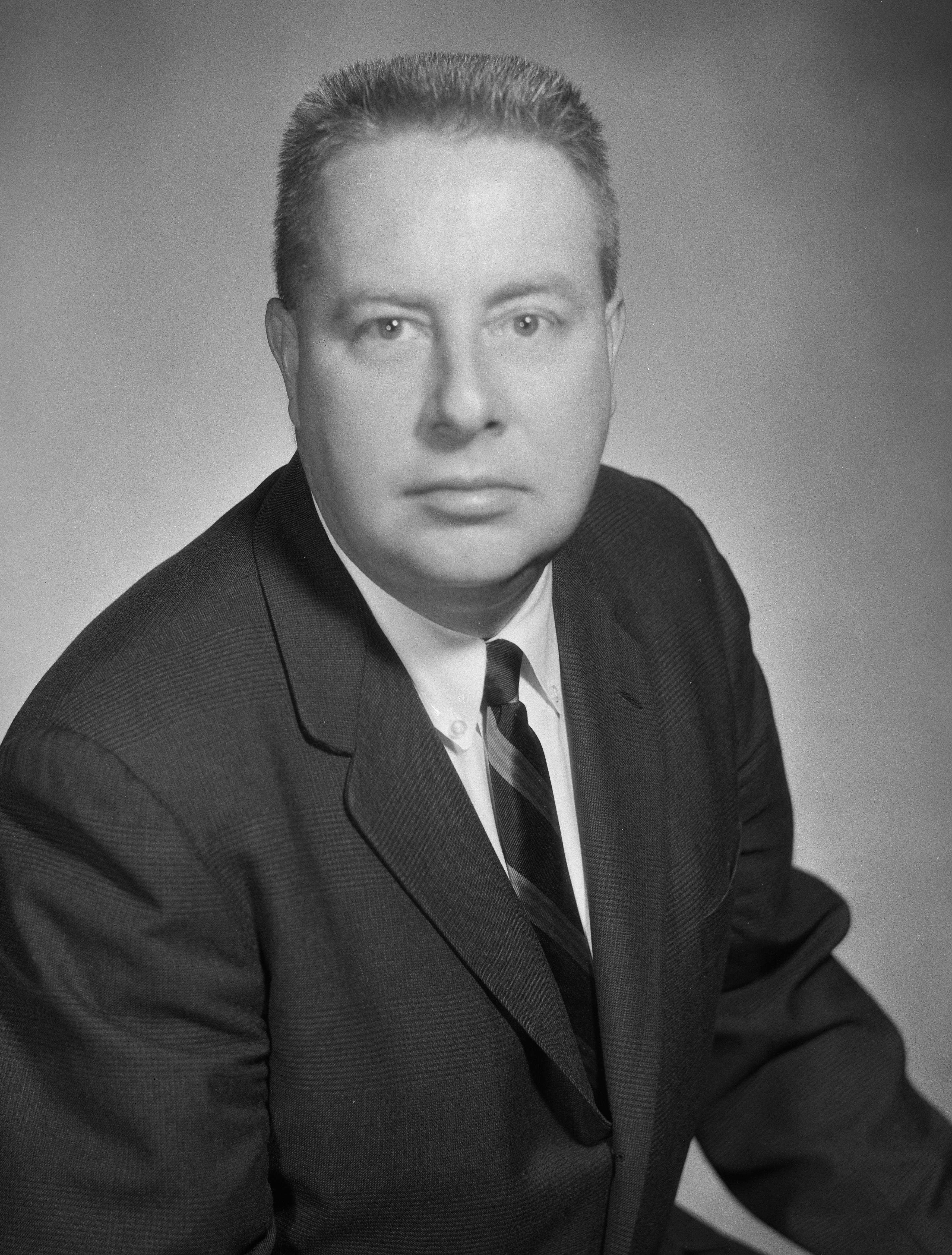
Samuel James Ervin III
Former Circuit Judge · U.S. Court of Appeals for the Fourth Circuit · 1980–1999 · Appointed by Jimmy Carter
Samuel James Ervin III served as a circuit judge of the U.S. Court of Appeals for the Fourth Circuit (1980–1999). III was appointed by Jimmy Carter.
Key facts
- Full name
- Samuel James Ervin III
- Court
- U.S. Court of Appeals for the Fourth Circuit
- Office
- Circuit Judge (U.S. Court of Appeals)
- Status
- Former circuit judge
- Duty status
- Not serving
- Appointment
- Senate-confirmed
- FJC seat
- CA41101
- Tenure
- 1980–1999
- Confirmed
- 1980-05-21
- Born
- 1926-03-02
- Died
- 1999-09-18
- First year on the bench
- 1980
- Dataset version
- 1.20260711
Appointment & service record
U.S. Court of Appeals for the Fourth Circuit · 1980–1999
- Seat
- CA41101
- Appointment
- Senate-confirmed
- Appointing president
- Jimmy Carter
- Confirmed
- 1980-05-21
- Commissioned
- 1980-05-23
- Senior status
- —
- Chief Judge
- 1989–1996
Court, FJC seat, appointment type (Senate-confirmed or recess), appointing president, confirmation and commission dates, and senior-status date are drawn from the Federal Judicial Center Biographical Directory and Wikidata.[1][2][3]
Sources
- [1]https://www.fjc.gov/node/1380526fjc · retrieved 2026-07-11
- [2]https://www.fjc.gov/history/judges/biographical-directory-article-iii-federal-judges-exportfjc-directory · retrieved 2026-07-11
- [3]https://www.wikidata.org/wiki/Q7411832Wikidata · retrieved 2026-07-11
Biographical narrative
1,414 words · sourced from the Wikipedia REST extract
Samuel James Ervin III was a United States circuit judge who served on the United States Court of Appeals for the Fourth Circuit from 1980 until his death in 1999. Appointed by President Jimmy Carter, a Democrat, he held the position of Chief Judge of the Fourth Circuit from 1989 to 1996. Born in North Carolina and educated at Davidson College and Harvard Law School, Ervin built a distinguished legal career that spanned private practice, state legislative service, and the state judiciary before his elevation to the federal bench. He was the son of United States Senator Sam Ervin, who gained national prominence during the Watergate hearings of the 1970s.
Early life and legal career
Samuel James Ervin III was born on March 2, 1926, in Morganton, North Carolina, a small city in the western part of the state. Growing up in a family deeply engaged in public service and the legal profession, he was exposed from an early age to the traditions of law and governance that would shape his career. His father, Sam Ervin, would later serve as a United States Senator and become a nationally recognized figure, providing a model of public service that influenced the younger Ervin's professional trajectory.
Ervin's education was interrupted by military service during World War II. He served in the United States Army from 1944 to 1946, a period that coincided with the final years of the war and the immediate postwar period. After completing his initial military service, he pursued his undergraduate education at Davidson College, a respected liberal arts institution in North Carolina, where he earned a Bachelor of Science degree in 1948. He then attended Harvard Law School, one of the nation's premier legal institutions, receiving his Bachelor of Laws degree in 1951. Following law school, Ervin was called back to military service during the Korean War era, serving in the Army from 1951 to 1952.
Upon completing his second period of military service, Ervin returned to his hometown of Morganton to begin his legal career. He entered private practice in 1952, establishing himself as a lawyer in the community where he had grown up. His private practice continued for fifteen years, during which time he handled a variety of legal matters and built a reputation within the local legal community. From 1954 to 1956, he served as solicitor for the Burke County Board of Commissioners, a position that gave him experience in local government law and public administration.
Ervin's career took a turn toward public service when he was elected to the North Carolina House of Representatives, where he served from 1965 to 1967. This legislative experience provided him with insight into the process of lawmaking and the broader policy considerations that inform statutory interpretation. In 1967, he transitioned to the judiciary when he became a judge of the Superior Court of North Carolina, the state's trial court of general jurisdiction. He served in this capacity for thirteen years, presiding over a wide range of civil and criminal matters and gaining substantial experience as a trial judge. This extended period on the state bench gave him a thorough grounding in courtroom procedure, evidence, and the practical application of law that would prove valuable in his later federal service.
Federal appellate service
President Jimmy Carter nominated Ervin to the United States Court of Appeals for the Fourth Circuit on April 2, 1980. The nomination was to fill a newly created seat on the court, authorized by federal legislation that expanded the judiciary to address growing caseloads. The Fourth Circuit has jurisdiction over appeals from federal district courts in Maryland, Virginia, West Virginia, North Carolina, and South Carolina, making it one of the geographically significant regional appellate courts in the federal system. The United States Senate confirmed Ervin's nomination on May 21, 1980, and he received his commission two days later, on May 23, 1980.
Ervin's appointment came during the final year of the Carter administration, which made a concerted effort to diversify and expand the federal judiciary. Carter appointed more federal judges than any previous single-term president, and his selections included increased numbers of women and minorities, as well as experienced state court judges like Ervin who brought practical judicial experience to the federal bench. Ervin's background as a state superior court judge made him well-suited for the transition to federal appellate work, as he already possessed substantial experience in applying legal principles and evaluating trial court records.
As a circuit judge, Ervin participated in the Fourth Circuit's work of reviewing decisions from federal district courts and certain administrative agencies within its jurisdiction. The court hears appeals in three-judge panels and occasionally sits en banc to resolve particularly significant questions or conflicts among panel decisions. Over his nearly two decades on the court, Ervin would have participated in thousands of cases covering the full spectrum of federal law, including constitutional questions, criminal appeals, civil rights matters, administrative law, and commercial disputes.
In 1989, Ervin was elevated to the position of Chief Judge of the Fourth Circuit, a role he held until 1996. As Chief Judge, he assumed administrative responsibilities for the court in addition to his judicial duties. The Chief Judge manages the court's operations, assigns cases, presides over en banc sessions, and represents the court in its relations with other branches of government and the public. Ervin served in this leadership capacity for seven years, a period during which he helped guide the court through its administrative and judicial functions. After stepping down as Chief Judge in 1996, he continued to serve as an active circuit judge.
Ervin remained on the bench until his death on September 18, 1999, in Morganton, the town where he had been born and where he had begun his legal career nearly half a century earlier. His service of nineteen years on the Fourth Circuit represented a substantial contribution to the federal judiciary. He was survived by his sons, Sam J. Ervin IV and Robert C. Ervin, both of whom followed their father and grandfather into the legal profession and themselves became judges, continuing the family's tradition of judicial service.
Jurisprudence and legacy
As a federal appellate judge, Ervin contributed to the development of federal law within the Fourth Circuit over a period spanning two decades. His work encompassed the wide range of legal issues that come before a federal court of appeals, and his opinions became part of the body of precedent that guides lower courts and litigants within the circuit. The Fourth Circuit during Ervin's tenure addressed significant questions in areas including criminal procedure, civil rights, employment law, environmental regulation, and constitutional interpretation.
Ervin's background as a state trial judge likely informed his approach to appellate review. Judges who have presided over trials often bring a practical perspective to appellate work, understanding the challenges of managing courtrooms, evaluating witness credibility, and applying law to complex factual situations. This experience can foster an appreciation for the discretion that must be afforded to trial judges and a careful approach to questions of procedural error and evidentiary rulings.
His seven-year tenure as Chief Judge represented a significant period of leadership for the Fourth Circuit. During this time, he would have been responsible for the administrative functioning of a busy appellate court serving five states, managing relationships among his judicial colleagues, and ensuring the efficient disposition of the court's substantial caseload. The role of Chief Judge requires not only legal acumen but also diplomatic and managerial skills, as the Chief must balance the independence of individual judges with the need for institutional coherence and efficiency.
The continuation of the Ervin family's judicial tradition through his sons represents a notable aspect of his legacy. Both Sam J. Ervin IV and Robert C. Ervin became judges, extending a family connection to the judiciary that began with their grandfather's service and continued through their father's nearly two decades on the federal bench. This multi-generational commitment to judicial service reflects the values of public service and dedication to law that characterized Ervin's career.
Ervin's service on the Fourth Circuit spanned a period of significant change in American law and society. From his appointment in 1980 through his death in 1999, the federal courts addressed evolving questions in numerous areas of law, and the Fourth Circuit played an important role in interpreting federal statutes and constitutional provisions for its region. His nearly twenty years of service contributed to the stability and continuity of the court during this period of legal development.
Sources & provenance
Every quantitative or attributable claim above carries a per-section [N] marker that resolves to the corresponding URL below. Each entry records the upstream provider, the canonical URL, and the timestamp at which the underlying source was retrieved.
Key facts
- https://www.fjc.gov/node/1380526fjc · retrieved 2026-07-11
- https://www.fjc.gov/history/judges/biographical-directory-article-iii-federal-judges-exportfjc-directory · retrieved 2026-07-11
- https://www.wikidata.org/wiki/Q7411832Wikidata · retrieved 2026-07-11
Biographical narrative
- https://en.wikipedia.org/wiki/Samuel_James_Ervin_IIIWikipedia · retrieved 2026-07-11
Explore the federal judiciary
The U.S. Courts of Appeals are the intermediate appellate courts of the federal judiciary — thirteen circuits sitting between the district courts and the Supreme Court. Browse the full roster of judges on the U.S. Court of Appeals for the Fourth Circuit, or explore how the appointed federal judiciary fits into the federal government.