
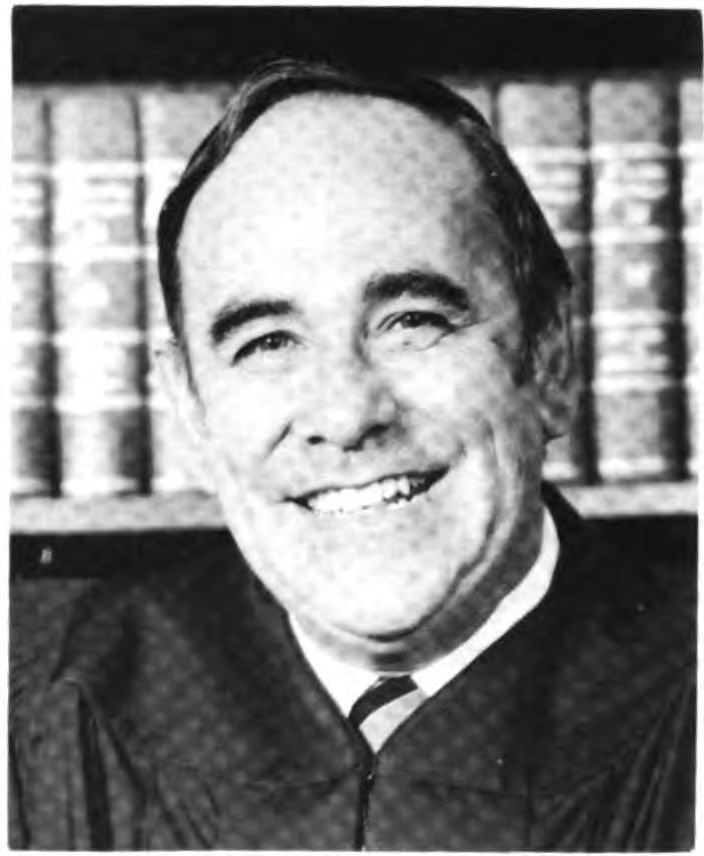
Historical · U.S. Court of Appeals for the Ninth Circuit
Arthur Lawrence Alarcón
Former Circuit Judge · U.S. Court of Appeals for the Ninth Circuit · 1979–2015 · Appointed by Jimmy Carter
Arthur Lawrence Alarcón served as a circuit judge of the U.S. Court of Appeals for the Ninth Circuit (1979–2015). Alarcón was appointed by Jimmy Carter.
Key facts
- Full name
- Arthur Lawrence Alarcón
- Court
- U.S. Court of Appeals for the Ninth Circuit
- Office
- Circuit Judge (U.S. Court of Appeals)
- Status
- Former circuit judge
- Duty status
- Not serving
- Appointment
- Senate-confirmed
- FJC seat
- CA91901
- Tenure
- 1979–2015
- Confirmed
- 1979-10-31
- Born
- 1925-08-14
- Died
- 2015-01-28
- First year on the bench
- 1979
- Dataset version
- 1.20260711
Appointment & service record
U.S. Court of Appeals for the Ninth Circuit · 1979–1992
- Seat
- CA91901
- Appointment
- Senate-confirmed
- Appointing president
- Jimmy Carter
- Confirmed
- 1979-10-31
- Commissioned
- 1979-11-02
- Senior status
- 1992-11-21
Court, FJC seat, appointment type (Senate-confirmed or recess), appointing president, confirmation and commission dates, and senior-status date are drawn from the Federal Judicial Center Biographical Directory and Wikidata.[1][2][3]
Sources
- [1]https://www.fjc.gov/node/1377066fjc · retrieved 2026-07-11
- [2]https://www.fjc.gov/history/judges/biographical-directory-article-iii-federal-judges-exportfjc-directory · retrieved 2026-07-11
- [3]https://www.wikidata.org/wiki/Q4799462Wikidata · retrieved 2026-07-11
Biographical narrative
1,088 words · sourced from the Wikipedia REST extract
Arthur Lawrence Alarcón was a United States circuit judge who served on the United States Court of Appeals for the Ninth Circuit from 1979 until he assumed senior status in 1992, continuing in that capacity until his death in 2015. Born in Los Angeles in 1925, he had a distinguished career in California's legal system before his appointment to the federal bench, serving as a prosecutor, gubernatorial adviser, state trial judge, and state appellate justice. His appointment by President Jimmy Carter, a Democrat, made him one of the early Hispanic American jurists to serve at the federal appellate level.
Early life and legal career
Arthur Lawrence Alarcón was born on August 14, 1925, in Los Angeles, California. His early adulthood was marked by military service during World War II, when he served as a staff sergeant in the United States Army from 1943 to 1946. Following his military discharge, he pursued higher education at the University of Southern California, where he earned a Bachelor of Arts degree in 1949. He continued his studies at USC Gould School of Law, receiving his Bachelor of Laws degree in 1951.
Alarcón began his legal career in public service as a deputy district attorney in Los Angeles County, California, a position he held from 1952 to 1961. During this nearly decade-long tenure, he gained extensive experience in criminal prosecution and trial advocacy. His work in the district attorney's office provided him with a foundation in criminal law that would inform his later judicial work.
In 1961, Alarcón transitioned from prosecution to a role in the executive branch of California state government. He served as legal adviser and clemency and extraditions secretary to the governor of California from 1961 to 1962. This position involved advising the governor on legal matters and handling sensitive issues related to pardons, commutations, and interstate extradition proceedings. From 1962 to 1964, he was promoted to executive assistant to the governor, a role that expanded his responsibilities and gave him broader exposure to state policy and administration.
In 1964, Alarcón briefly chaired the California parole board, overseeing decisions about the release and supervision of state prisoners. That same year, he was appointed as a judge of the Superior Court of California for the County of Los Angeles, beginning a judicial career that would span more than five decades. He served on the Los Angeles Superior Court for fourteen years, from 1964 to 1978, presiding over a wide variety of civil and criminal matters in one of the nation's largest and busiest trial court systems.
In 1978, Alarcón was elevated to the California Court of Appeal, Second Appellate District, where he served as an associate justice. This intermediate appellate court hears appeals from superior courts in Los Angeles, Ventura, and Santa Barbara counties. His service on the state appellate bench, though brief, provided him with experience in reviewing trial court decisions and writing appellate opinions before his nomination to the federal judiciary.
Federal appellate service
On August 28, 1979, President Jimmy Carter, a Democrat, nominated Alarcón to a seat on the United States Court of Appeals for the Ninth Circuit. The position was a newly created seat authorized by an act of Congress. The Ninth Circuit is the largest of the federal appellate circuits, with jurisdiction over federal appeals from district courts in Alaska, Arizona, California, Hawaii, Idaho, Montana, Nevada, Oregon, and Washington, as well as Guam and the Northern Mariana Islands. The United States Senate confirmed Alarcón's nomination on October 31, 1979, and he received his commission on November 2, 1979.
As a circuit judge, Alarcón participated in three-judge panels that reviewed appeals from federal district courts and certain administrative agencies. The Ninth Circuit handles a substantial and diverse caseload, including criminal appeals, civil rights cases, immigration matters, environmental disputes, and complex commercial litigation. Alarcón served in active status on the court for thirteen years, hearing arguments and writing opinions on a wide range of federal legal issues.
On November 21, 1992, Alarcón assumed senior status, a form of semi-retirement available to federal judges who meet certain age and service requirements. Senior judges continue to hear cases and contribute to the work of their courts, though typically with a reduced caseload. Alarcón remained active in senior status for more than two decades, continuing to participate in the work of the Ninth Circuit until his death.
Throughout his federal judicial service, Alarcón also maintained connections to legal education. He served as an adjunct professor at Southwestern University School of Law from 1985 to 2015, a tenure of three decades that ran concurrently with his judicial duties. He also taught as an adjunct professor at Loyola Marymount School of Law in 1993 and 1994. These academic appointments allowed him to share his extensive practical and judicial experience with law students and contribute to the training of future lawyers.
Jurisprudence and legacy
Alarcón's career spanned multiple levels of the American judicial system, from trial courts to intermediate appellate courts to one of the nation's federal circuit courts of appeals. His path from deputy district attorney to federal circuit judge reflected a progression through various aspects of the legal system, giving him a comprehensive perspective on both state and federal law.
His service on the Ninth Circuit during a period of significant growth in the federal judiciary contributed to the development of federal law in the western United States and Pacific territories. The Ninth Circuit during his tenure addressed numerous important legal questions arising from the diverse and rapidly changing region under its jurisdiction.
As one of the early Hispanic American federal appellate judges, Alarcón's appointment represented an important step in the diversification of the federal bench. His career demonstrated the possibilities for advancement in the legal profession and the judiciary for members of historically underrepresented communities.
Alarcón's long tenure in senior status, continuing to serve the court for more than twenty years after assuming that status, exemplified the ongoing contributions that senior judges make to the federal judiciary. His simultaneous commitment to legal education through his decades-long adjunct professorship at Southwestern University School of Law showed a dedication to mentoring the next generation of legal professionals even while maintaining his judicial responsibilities.
Arthur Lawrence Alarcón died on January 28, 2015, in Pacific Palisades, California, at the age of eighty-nine. His death ended a legal career that had spanned more than six decades and touched multiple branches of government and levels of the judiciary. His service left a mark on both the California state courts and the federal appellate system.
Sources & provenance
Every quantitative or attributable claim above carries a per-section [N] marker that resolves to the corresponding URL below. Each entry records the upstream provider, the canonical URL, and the timestamp at which the underlying source was retrieved.
Key facts
- https://www.fjc.gov/node/1377066fjc · retrieved 2026-07-11
- https://www.fjc.gov/history/judges/biographical-directory-article-iii-federal-judges-exportfjc-directory · retrieved 2026-07-11
- https://www.wikidata.org/wiki/Q4799462Wikidata · retrieved 2026-07-11
Biographical narrative
- https://en.wikipedia.org/wiki/Arthur_Alarc%C3%B3nWikipedia · retrieved 2026-07-11
Explore the federal judiciary
The U.S. Courts of Appeals are the intermediate appellate courts of the federal judiciary — thirteen circuits sitting between the district courts and the Supreme Court. Browse the full roster of judges on the U.S. Court of Appeals for the Ninth Circuit, or explore how the appointed federal judiciary fits into the federal government.