
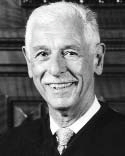
Currently serving · U.S. Court of Appeals for the Ninth Circuit
Carlos T. Bea
Currently servingSenior status
Senior Circuit Judge · U.S. Court of Appeals for the Ninth Circuit · 2003–present · Appointed by George W Bush
Carlos T. Bea serves as a senior circuit judge of the U.S. Court of Appeals for the Ninth Circuit (2003–present). Bea was appointed by George W Bush. Bea assumed senior status in 2019 and continues to hear cases.
Key facts
- Full name
- Carlos T. Bea
- Court
- U.S. Court of Appeals for the Ninth Circuit
- Office
- Circuit Judge (U.S. Court of Appeals)
- Status
- Senior circuit judge (still serving)
- Duty status
- Senior
- Appointment
- Senate-confirmed
- FJC seat
- CA92502
- Tenure
- 2003–present
- Confirmed
- 2003-09-29
- Born
- 1934
- Died
- —
- First year on the bench
- 2003
- Dataset version
- 1.20260705
Appointment & service record
U.S. Court of Appeals for the Ninth Circuit · 2003–present
- Seat
- CA92502
- Appointment
- Senate-confirmed
- Appointing president
- George W Bush
- Confirmed
- 2003-09-29
- Commissioned
- 2003-10-01
- Senior status
- 2019-12-12 (still serving)
Court, FJC seat, appointment type (Senate-confirmed or recess), appointing president, confirmation and commission dates, and senior-status date are drawn from the Federal Judicial Center Biographical Directory and Wikidata.[1][2][3]
Sources
- [1]https://www.fjc.gov/node/1392016fjc · retrieved 2026-07-05
- [2]https://www.fjc.gov/history/judges/biographical-directory-article-iii-federal-judges-exportfjc-directory · retrieved 2026-07-05
- [3]https://www.wikidata.org/wiki/Q5041824Wikidata · retrieved 2026-07-05
Biographical narrative
1,086 words · sourced from the Wikipedia REST extract
Carlos Tiburcio Bea (born April 18, 1934) is a senior United States circuit judge on the Ninth Circuit Court of Appeals. Appointed by President George W. Bush in 2003, he filled the vacancy left by Judge Charles Edward Wiggins and served as an active‑service judge until assuming senior status at the end of 2019. Throughout his career Bea has combined a transnational upbringing with extensive experience in private practice, state trial courts, and federal appellate adjudication, making him one of the longest‑serving members of the Ninth Circuit.
Early life and legal career
Bea was born in San Sebastián, Spain, during a period of political upheaval that prompted his family to leave Europe. In 1939 the family emigrated to Cuba, where Bea spent his formative years. While still a Cuban resident he entered the United States on a non‑immigrant visa to pursue higher education at Stanford University in California. He completed a Bachelor of Arts degree there in 1956 and joined the Delta Tau Delta International Fraternity during his undergraduate studies.
In addition to his academic pursuits, Bea distinguished himself as an athlete. In 1952 he represented Cuba on its basketball team at the Helsinki Summer Olympics, an experience that underscored his early international connections. After returning from the Games, Bea faced deportation proceedings initiated by U.S. authorities who alleged that he had avoided military conscription. He proposed to the immigration judge that a draft could be arranged to remedy the perceived violation; however, the judge declined because the Korean War had already concluded. Bea appealed the decision to the Board of Immigration Appeals, which ruled in his favor on the ground that the lower court had abused its discretion. The board’s decision restored his residency status and allowed him to satisfy the physical‑presence requirements for naturalization. He became a United States citizen in 1959.
Following his naturalization, Bea returned to Stanford for legal studies, earning a Juris Doctor in 1958. After law school he entered private practice in California, where he built a reputation as a competent litigator and advisor on a range of civil matters. His practice continued for more than three decades, providing him with extensive exposure to the state’s commercial and regulatory environment.
In 1990 Bea transitioned from private practice to the judiciary when he was appointed a trial judge on the San Francisco County Superior Court. Over the next thirteen years he presided over a broad docket that included criminal, civil, family, and probate cases. His tenure on the superior court bench contributed to his reputation for thorough case management and adherence to procedural fairness.
Federal appellate service
Bea’s first federal judicial nomination came in 1991 when President George H. W. Bush selected him for a seat on the United States District Court for the Northern District of California. The Senate, however, never held a confirmation vote on that nomination, and Bea remained on the state bench.
A decade later, President George W. Bush nominated Bea to the United States Court of Appeals for the Ninth Circuit on April 11, 2003, designating him to fill the vacancy created by Judge Charles Edward Wiggins. The Senate confirmed his appointment unanimously on September 29, 2003, with an 86–0 vote, and he received his commission two days later, on October 1, 2003. Bea’s confirmation placed him on a circuit that encompasses nine western states and territories, making it the nation’s largest federal appellate court in terms of geographic scope and caseload.
During his active service, Judge Bea contributed to the development of Ninth Circuit jurisprudence across a wide array of legal issues, ranging from immigration and civil rights to environmental regulation and commercial disputes. His decisions were rendered as part of panels typically composed of three judges, reflecting the collaborative nature of appellate adjudication. In June 2019 he announced his intention to assume senior status once a successor had been nominated, confirmed, and appointed, thereby facilitating an orderly transition for the court.
Bea formally entered senior status on December 12, 2019. Under senior status, a judge retains the authority to hear cases, often with a reduced workload, while creating a vacancy for a new full‑time appointment. Bea continues to sit on Ninth Circuit panels, contributing his extensive experience to the resolution of pending appeals and maintaining an active role in the court’s ongoing work.
Jurisprudence and legacy
Judge Carlos Bea’s career reflects a blend of personal perseverance, professional versatility, and long‑term public service. His early life—spanning Spain, Cuba, and the United States—provided him with a multicultural perspective that is relatively uncommon among federal judges. This background aligns with his inclusion on lists of Hispanic and Latino American jurists, underscoring the growing diversity within the federal judiciary.
While specific opinions authored by Judge Bea are not detailed in the available source material, his tenure on both the state superior court and the Ninth Circuit spanned periods of significant legal development. On the superior court, he adjudicated matters that directly affected the daily lives of Californians, ranging from family law to criminal prosecutions. His transition to the appellate level placed him at the forefront of interpreting federal statutes and constitutional principles for a circuit covering diverse populations and economies.
Bea’s service on the Ninth Circuit coincided with an era marked by heightened attention to immigration policy, environmental protection, and technology‑related disputes—issues that are particularly salient in the western United States. As a senior judge, he continues to participate in panels that shape precedent within these domains, ensuring continuity of judicial expertise even as new judges join the bench.
Beyond his professional contributions, Judge Bea’s personal life reflects connections to both athletics and historic preservation. His son, Sebastian Bea, achieved distinction as an Olympic rower, echoing the elder Bea’s own experience representing a nation in international sport. The family resided for many years in San Francisco’s Cow Hollow neighborhood, occupying the historic Casebolt House, a structure dating to approximately 1865. This residence situates Judge Bea within a broader narrative of civic engagement and stewardship of local heritage.
In sum, Carlos Tiburcio Bea’s trajectory—from an immigrant student-athlete to a senior federal appellate judge—exemplifies a sustained commitment to the rule of law across multiple jurisdictions. His long service on the Ninth Circuit, combined with his earlier state‑court experience, contributes to the institutional memory and jurisprudential stability of one of the nation’s most influential courts. As he continues to hear cases in senior status, Judge Bea remains an active participant in the ongoing development of federal appellate doctrine, reinforcing the judiciary’s role as a cornerstone of American governance.
Sources & provenance
Every quantitative or attributable claim above carries a per-section [N] marker that resolves to the corresponding URL below. Each entry records the upstream provider, the canonical URL, and the timestamp at which the underlying source was retrieved.
Key facts
- https://www.fjc.gov/node/1392016fjc · retrieved 2026-07-05
- https://www.fjc.gov/history/judges/biographical-directory-article-iii-federal-judges-exportfjc-directory · retrieved 2026-07-05
- https://www.wikidata.org/wiki/Q5041824Wikidata · retrieved 2026-07-05
Biographical narrative
- https://en.wikipedia.org/wiki/Carlos_BeaWikipedia · retrieved 2026-07-05
Explore the federal judiciary
The U.S. Courts of Appeals are the intermediate appellate courts of the federal judiciary — thirteen circuits sitting between the district courts and the Supreme Court. Browse the full roster of judges on the U.S. Court of Appeals for the Ninth Circuit, or explore how the appointed federal judiciary fits into the federal government.