
Historical · U.S. Court of Appeals for the Ninth Circuit
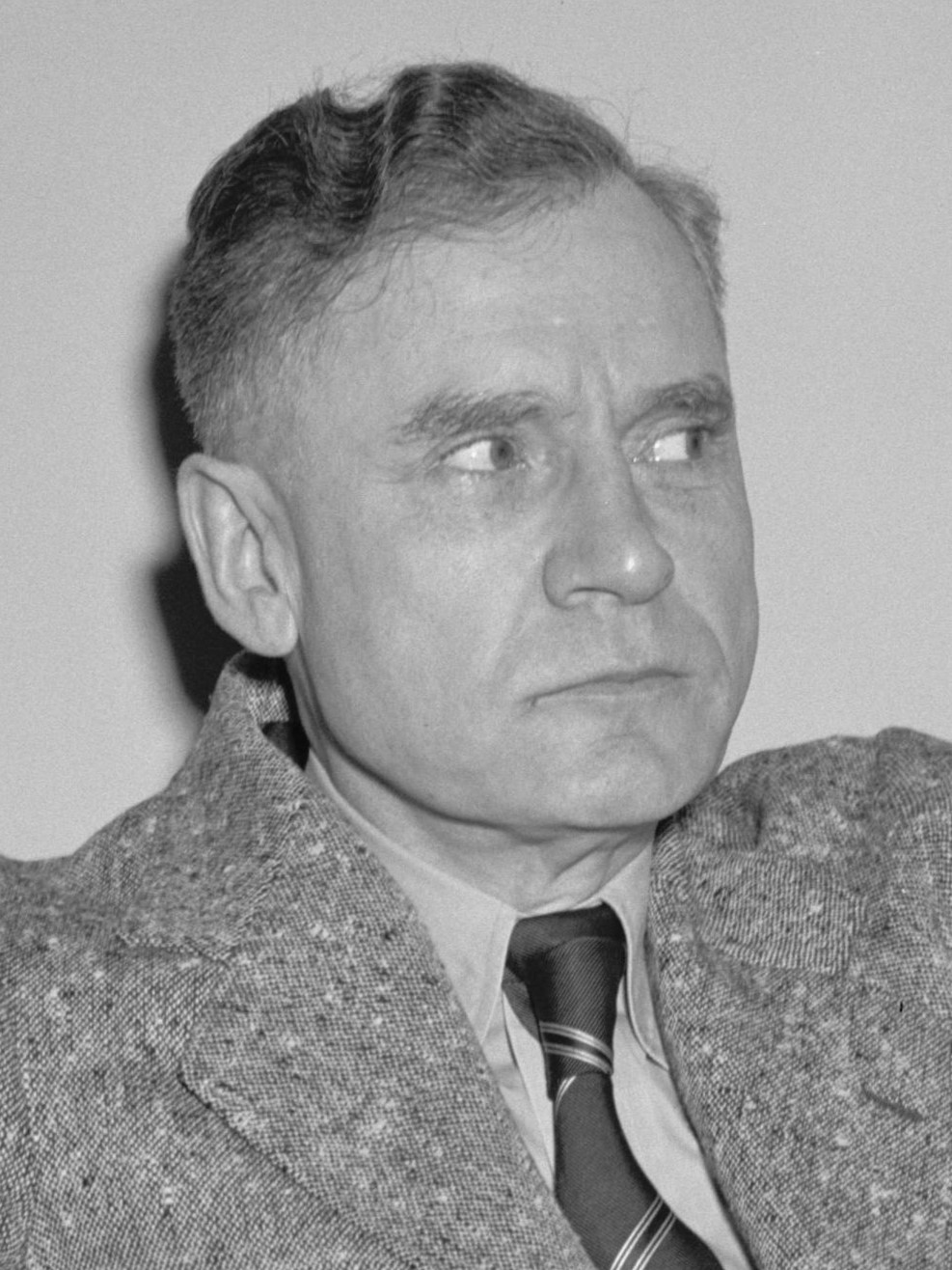
Homer Truett Bone
Former Circuit Judge · U.S. Court of Appeals for the Ninth Circuit · 1944–1970 · Appointed by Franklin D Roosevelt
Homer Truett Bone served as a circuit judge of the U.S. Court of Appeals for the Ninth Circuit (1944–1970). Bone was appointed by Franklin D Roosevelt.
Key facts
- Full name
- Homer Truett Bone
- Court
- U.S. Court of Appeals for the Ninth Circuit
- Office
- Circuit Judge (U.S. Court of Appeals)
- Status
- Former circuit judge
- Duty status
- Not serving
- Appointment
- Senate-confirmed
- FJC seat
- CA90602
- Tenure
- 1944–1970
- Confirmed
- 1944-04-01
- Born
- 1883-01-25
- Died
- 1970-03-11
- First year on the bench
- 1944
- Dataset version
- 1.20260711
Appointment & service record
U.S. Court of Appeals for the Ninth Circuit · 1944–1956
- Seat
- CA90602
- Appointment
- Senate-confirmed
- Appointing president
- Franklin D Roosevelt
- Confirmed
- 1944-04-01
- Commissioned
- 1944-04-01
- Senior status
- 1956-01-01
Court, FJC seat, appointment type (Senate-confirmed or recess), appointing president, confirmation and commission dates, and senior-status date are drawn from the Federal Judicial Center Biographical Directory and Wikidata.[1][2][3]
Sources
- [1]https://www.fjc.gov/node/1378006fjc · retrieved 2026-07-11
- [2]https://www.fjc.gov/history/judges/biographical-directory-article-iii-federal-judges-exportfjc-directory · retrieved 2026-07-11
- [3]https://www.wikidata.org/wiki/Q1626006Wikidata · retrieved 2026-07-11
Biographical narrative
1,311 words · sourced from the Wikipedia REST extract
Homer Truett Bone was a United States Circuit Judge of the U.S. Court of Appeals for the Ninth Circuit who served from 1944 until his death in 1970. Before his appointment to the federal bench, he had a diverse political career in Washington state, serving in the state legislature and representing Washington in the United States Senate for more than a decade. His path to the federal judiciary was unusual in that he had been affiliated with multiple political parties throughout his career before joining the Democratic Party in the early 1930s, ultimately receiving his judicial appointment from President Franklin D. Roosevelt, a Democrat, in 1944.
Early life and legal career
Born on January 25, 1883, in Franklin, Indiana, Bone received his education in the public school system. His early working life began in practical pursuits far removed from the law: he was employed by the United States postal service and also worked in the accounting and credit department of a furniture company. These early experiences in business and government service would later inform his understanding of both commercial matters and public administration.
In 1899, when Bone was sixteen years old, he relocated with his parents and family from Indiana to Tacoma, Washington. This move came after Washington had achieved statehood, during a period when the Pacific Northwest was experiencing significant growth and development. Tacoma would become his permanent home and the base for his legal and political activities for decades to come.
Bone pursued his legal education at Tacoma Law School, an institution that has since ceased operations. He graduated in 1911 and was admitted to the Washington state bar the same year. Upon admission to practice, he immediately entered private practice in Tacoma, where he would continue to work as an attorney for more than two decades, from 1911 to 1932. During this period, he also took on public legal roles. In 1912, he served as a special deputy prosecutor for Pierce County, Washington, gaining experience in criminal prosecution. From 1918 to 1932, he held the position of corporation counsel for the Port of Tacoma, a role that involved him in maritime commerce, municipal law, and the development of port infrastructure—matters of considerable importance to the regional economy.
Bone's political involvement began early in his legal career and was marked by an unusual willingness to shift party affiliations in pursuit of his policy goals. Initially, he belonged to the Socialist Party of America, reflecting the progressive and labor-oriented politics that had a significant presence in the Pacific Northwest during the early twentieth century. Under this affiliation, he ran unsuccessfully for prosecuting attorney and for Mayor of Tacoma. He later became associated with the Farmer-Labor movement, which represented agricultural and working-class interests. Running as a Farmer-Laborite, he was elected to the Washington House of Representatives, where he served one term from 1923 to 1925.
During his tenure in the state legislature, Bone became a vocal advocate for expanding public ownership of utilities. He championed the cause of allowing county governments to establish public utility districts, a reform that faced significant opposition from private utility companies. His advocacy extended beyond the legislative chamber; he helped spearhead an initiative campaign that eventually succeeded when voters approved the measure, fundamentally changing the landscape of utility provision in Washington state.
Bone's ambitions extended to federal office. In 1920, he ran for the United States House of Representatives as the Farmer-Labor Party candidate but was unsuccessful. In 1928, demonstrating his political flexibility, he ran again for Congress, this time as a Republican, but lost in the primary election. The onset of the Great Depression and the resulting shift in the political climate led Bone to join the Democratic Party. In 1932, he ran for the United States Senate and achieved a significant victory, defeating the multi-term Republican incumbent, Wesley L. Jones. He was reelected in 1938, and his Senate service spanned from March 4, 1933, until his resignation on November 13, 1944, when he left to assume his position on the federal bench.
As a senator, Bone continued his advocacy for publicly owned power, supporting major infrastructure projects including the construction of the Bonneville Dam and the Grand Coulee Dam in eastern Washington. These projects were critical for hydropower generation, flood control, and irrigation, and represented significant federal investment in the development of the Pacific Northwest. He served as Chairman of the Committee on Patents during the 76th through 78th Congresses. Notably, Bone also worked on health policy; along with Senator Matthew Neely and Representative Warren Magnuson, he wrote legislation that created the National Cancer Institute, which became one of the components of the National Institutes of Health. His Senate record also included opposition to American involvement in World War II, a position that placed him at odds with the Roosevelt administration on foreign policy even as he supported many of its domestic initiatives.
Federal appellate service
On April 1, 1944, President Franklin D. Roosevelt nominated Bone to a seat on the United States Court of Appeals for the Ninth Circuit. The vacancy had been created by the departure of Judge Bert E. Haney. The Senate confirmed Bone on the same day he was nominated, and he received his commission immediately, reflecting the rapid pace at which the appointment proceeded. He resigned from the Senate on November 13, 1944, to take up his judicial duties.
Bone served as an active circuit judge for the Ninth Circuit for twelve years. On January 1, 1956, he assumed senior status, a form of semi-retirement that allows federal judges to continue hearing cases on a reduced schedule while making their seat available for a successor. His transition to senior status did not end his professional activities; from 1956 to 1968, while maintaining his senior judge status, he engaged in private legal practice in San Francisco, California, where he had lived since his appointment to the federal bench.
In 1968, Bone returned to Tacoma, the city where he had built his legal career and political base. He continued in senior status until his death on March 11, 1970, in Tacoma, having served on the Ninth Circuit for a total of twenty-six years. Following his death, he was cremated and his ashes were interred in Oakwood Cemetery.
Jurisprudence and legacy
Bone's tenure on the Ninth Circuit spanned a significant period in American legal history, from the final years of World War II through the civil rights era and into the early years of the Warren Court's transformative jurisprudence. His background as a legislator and advocate for progressive causes, particularly public power and public health initiatives, brought a distinctive perspective to the federal bench. The transition from an active political career to the judiciary required adapting from the role of policy advocate to that of neutral arbiter, a shift that many former legislators must navigate upon assuming judicial office.
The Ninth Circuit during Bone's years of service had jurisdiction over a vast and diverse region, encompassing the western states and territories, and the court addressed a wide range of legal issues including natural resources, labor relations, immigration, and federal regulatory matters. His prior experience as corporation counsel for a major port and his work on patent legislation in the Senate likely informed his approach to commercial and intellectual property matters that came before the court.
Bone's lengthy service, including fourteen years in senior status during which he maintained an active practice, reflects the dual nature of senior status as both a form of continued service and a transition toward full retirement. His decision to return to Tacoma near the end of his life suggests an enduring connection to the community where he had begun his legal career more than half a century earlier. His career arc—from socialist organizer to Democratic senator to federal appellate judge—illustrates the diverse pathways through which individuals reached the federal bench during the mid-twentieth century.
Sources & provenance
Every quantitative or attributable claim above carries a per-section [N] marker that resolves to the corresponding URL below. Each entry records the upstream provider, the canonical URL, and the timestamp at which the underlying source was retrieved.
Key facts
- https://www.fjc.gov/node/1378006fjc · retrieved 2026-07-11
- https://www.fjc.gov/history/judges/biographical-directory-article-iii-federal-judges-exportfjc-directory · retrieved 2026-07-11
- https://www.wikidata.org/wiki/Q1626006Wikidata · retrieved 2026-07-11
Biographical narrative
- https://en.wikipedia.org/wiki/Homer_BoneWikipedia · retrieved 2026-07-11
Explore the federal judiciary
The U.S. Courts of Appeals are the intermediate appellate courts of the federal judiciary — thirteen circuits sitting between the district courts and the Supreme Court. Browse the full roster of judges on the U.S. Court of Appeals for the Ninth Circuit, or explore how the appointed federal judiciary fits into the federal government.