
Historical · U.S. Court of Appeals for the Ninth Circuit
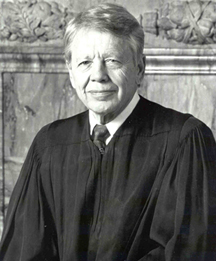
James Robert Browning
Former Circuit Judge · U.S. Court of Appeals for the Ninth Circuit · 1961–2012 · Appointed by John F Kennedy
James Robert Browning served as a circuit judge of the U.S. Court of Appeals for the Ninth Circuit (1961–2012). Browning was appointed by John F Kennedy.
Key facts
- Full name
- James Robert Browning
- Court
- U.S. Court of Appeals for the Ninth Circuit
- Office
- Circuit Judge (U.S. Court of Appeals)
- Status
- Former circuit judge
- Duty status
- Not serving
- Appointment
- Senate-confirmed
- FJC seat
- CA90107
- Tenure
- 1961–2012
- Confirmed
- 1961-09-14
- Born
- 1918-10-01
- Died
- 2012-05-06
- First year on the bench
- 1961
- Dataset version
- 1.20260711
Appointment & service record
U.S. Court of Appeals for the Ninth Circuit · 1961–2000
- Seat
- CA90107
- Appointment
- Senate-confirmed
- Appointing president
- John F Kennedy
- Confirmed
- 1961-09-14
- Commissioned
- 1961-09-18
- Senior status
- 2000-09-01
- Chief Judge
- 1976–1988
Court, FJC seat, appointment type (Senate-confirmed or recess), appointing president, confirmation and commission dates, and senior-status date are drawn from the Federal Judicial Center Biographical Directory and Wikidata.[1][2][3]
Sources
- [1]https://www.fjc.gov/node/1378416fjc · retrieved 2026-07-11
- [2]https://www.fjc.gov/history/judges/biographical-directory-article-iii-federal-judges-exportfjc-directory · retrieved 2026-07-11
- [3]https://www.wikidata.org/wiki/Q6141576Wikidata · retrieved 2026-07-11
Biographical narrative
1,185 words · sourced from the Wikipedia REST extract
James Robert Browning was a United States circuit judge who served on the United States Court of Appeals for the Ninth Circuit from 1961 to 2012, including a tenure as Chief Judge from 1976 to 1988. Appointed by President John F. Kennedy, a Democrat, Browning had a distinguished career spanning more than five decades on the federal bench. Before his judicial appointment, he held significant positions in the United States Department of Justice and served as Clerk of the Supreme Court of the United States. His lengthy service and contributions to the federal judiciary were recognized through multiple honors, including the naming of the main Ninth Circuit courthouse in San Francisco in his honor.
Early life and legal career
James Robert Browning was born on October 1, 1918, in Great Falls, Montana. He spent his formative years in Belt, Montana, a small community where he attended high school. Browning pursued his legal education at the Alexander Blewett III School of Law at the University of Montana, where he distinguished himself as a founding member of the Montana Law Review, the law school's scholarly publication. He earned his Bachelor of Laws degree in 1941, completing his legal education on the eve of American entry into World War II.
Following law school, Browning began his professional career with the United States Department of Justice, joining the Antitrust Division as a special attorney in Denver, Colorado in 1941. His initial work with the Justice Department was interrupted by military service during World War II, when he served as a lieutenant in the United States Army from 1943 to 1946. After completing his military obligations, Browning returned to the Antitrust Division in 1946, this time working in Washington, D.C. as a special attorney.
Browning's career in the Antitrust Division advanced steadily over the following years. In 1948, he was appointed Chief of the Northwest Regional Office of the Antitrust Division in Seattle, Washington, a position he held until 1949. He then returned to Washington, D.C. to serve as Assistant Chief of the General Litigation Section of the Antitrust Division from 1949 to 1951. His responsibilities expanded beyond antitrust work when he became First Assistant of the Civil Division of the United States Department of Justice, serving in that capacity from 1951 to 1952.
In 1952, Browning moved to the Office of the Attorney General, where he served as Executive Assistant. The following year, he was appointed Chief of the Executive Office for United States Attorneys in 1953, a position that involved coordination and oversight of federal prosecutors across the country. After this extensive government service, Browning entered private practice in Washington, D.C., where he worked from 1953 to 1958.
In 1958, Browning was appointed to the prestigious position of Clerk of the Supreme Court of the United States, serving in that role until 1961. As Clerk, he performed various ceremonial and administrative duties for the nation's highest court. Notably, he held the Bible during the oath of office at President John F. Kennedy's inauguration in January 1961, continuing a tradition in which the Supreme Court Clerk had historically performed this function at presidential inaugurations. This tradition would later change when President Lyndon Johnson requested that his wife hold the Bible for his swearing-in ceremony in 1965, establishing a new custom that has continued with subsequent First Ladies.
Federal appellate service
President Kennedy nominated Browning to the United States Court of Appeals for the Ninth Circuit on September 6, 1961. The nomination was to fill a seat that had been vacated by Judge Walter Lyndon Pope. The Senate confirmed Browning on September 14, 1961, and he received his commission on September 18, 1961, beginning what would become one of the longest tenures in the history of the federal appellate courts.
Browning served as an active circuit judge for nearly four decades. On July 1, 1976, he became Chief Judge of the Ninth Circuit, the largest of the federal circuit courts in terms of geographic jurisdiction. As Chief Judge, Browning held administrative responsibilities for the circuit in addition to his judicial duties. His position as Chief Judge also made him a member of the Judicial Conference of the United States, the principal policy-making body for the federal court system. He served in these leadership roles until June 15, 1988, completing a twelve-year tenure as Chief Judge.
After stepping down from the chief judgeship, Browning continued to serve as an active circuit judge for another twelve years. On September 1, 2000, he assumed senior status, a form of semi-retirement that allows federal judges to continue hearing cases with a reduced caseload. At the time he took senior status, Browning held the distinction of being the last federal appeals court judge in active service who had been appointed by President Kennedy, a testament to both his longevity and the historical significance of his appointment.
Browning's service on the Ninth Circuit continued until his death on May 6, 2012, in Marin County, California. His total service of more than fifty years on the federal bench represented an extraordinary commitment to the federal judiciary and placed him among the longest-serving federal appellate judges in American history.
Jurisprudence and legacy
Throughout his lengthy judicial career, Browning contributed to the development of federal law across the wide range of issues that came before the Ninth Circuit. The circuit's jurisdiction encompasses nine western states and two Pacific territories, presenting judges with diverse legal questions spanning multiple areas of federal law. Browning's decades of service allowed him to participate in the evolution of legal doctrine across multiple eras of American jurisprudence.
Browning's contributions to the federal judiciary were recognized through several significant honors. In 1992, he received the Edward J. Devitt Award for Distinguished Service to Justice, an annual award presented to a federal judge in recognition of outstanding service. The award, named after a distinguished federal district judge, is considered one of the most prestigious honors in the federal judiciary. In 2001, the Montana State Bar Association presented Browning with the Jameson Award, the organization's highest honor, recognizing his achievements and his connection to the state where he received his legal education and began his career.
Perhaps the most prominent recognition of Browning's legacy came in 2005, when the main courthouse of the United States Court of Appeals for the Ninth Circuit in San Francisco was officially named in his honor. This naming represented an acknowledgment of his long service and leadership of the circuit, and ensured that his name would remain associated with the Ninth Circuit's work for future generations. The courthouse naming is a rare honor reserved for judges who have made exceptional contributions to their courts.
Browning's career spanned a remarkable period in American legal history, from his early work in antitrust enforcement during and after World War II, through the transformative legal developments of the latter half of the twentieth century, and into the early twenty-first century. His service connected multiple generations of the federal bench and the legal profession, and his longevity provided continuity and institutional memory for the Ninth Circuit through decades of change in American law and society.
Sources & provenance
Every quantitative or attributable claim above carries a per-section [N] marker that resolves to the corresponding URL below. Each entry records the upstream provider, the canonical URL, and the timestamp at which the underlying source was retrieved.
Key facts
- https://www.fjc.gov/node/1378416fjc · retrieved 2026-07-11
- https://www.fjc.gov/history/judges/biographical-directory-article-iii-federal-judges-exportfjc-directory · retrieved 2026-07-11
- https://www.wikidata.org/wiki/Q6141576Wikidata · retrieved 2026-07-11
Biographical narrative
- https://en.wikipedia.org/wiki/James_R._BrowningWikipedia · retrieved 2026-07-11
Explore the federal judiciary
The U.S. Courts of Appeals are the intermediate appellate courts of the federal judiciary — thirteen circuits sitting between the district courts and the Supreme Court. Browse the full roster of judges on the U.S. Court of Appeals for the Ninth Circuit, or explore how the appointed federal judiciary fits into the federal government.