
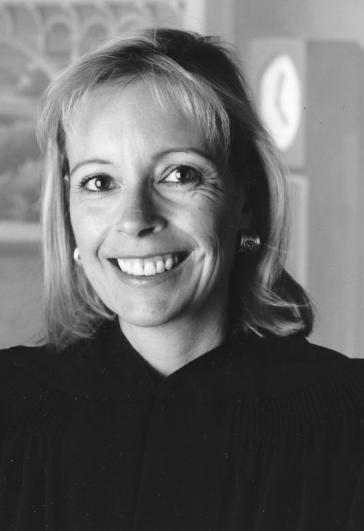
Currently serving · U.S. Court of Appeals for the Ninth Circuit
Kim McLane Wardlaw
Currently serving
Circuit Judge · U.S. Court of Appeals for the Ninth Circuit · 1998–present · Appointed by Bill Clinton
Kim McLane Wardlaw serves as a circuit judge of the U.S. Court of Appeals for the Ninth Circuit (1998–present). Wardlaw was appointed by Bill Clinton.
Key facts
- Full name
- Kim McLane Wardlaw
- Court
- U.S. Court of Appeals for the Ninth Circuit
- Office
- Circuit Judge (U.S. Court of Appeals)
- Status
- Active circuit judge
- Duty status
- Active
- Appointment
- Senate-confirmed
- FJC seat
- CA90905
- Tenure
- 1998–present
- Confirmed
- 1998-07-31
- Born
- 1954
- Died
- —
- First year on the bench
- 1998
- Dataset version
- 1.20260705
Appointment & service record
U.S. Court of Appeals for the Ninth Circuit · 1998–present
- Seat
- CA90905
- Appointment
- Senate-confirmed
- Appointing president
- Bill Clinton
- Confirmed
- 1998-07-31
- Commissioned
- 1998-08-03
- Senior status
- —
Court, FJC seat, appointment type (Senate-confirmed or recess), appointing president, confirmation and commission dates, and senior-status date are drawn from the Federal Judicial Center Biographical Directory and Wikidata.[1][2][3]
Sources
- [1]https://www.fjc.gov/node/1389371fjc · retrieved 2026-07-05
- [2]https://www.fjc.gov/history/judges/biographical-directory-article-iii-federal-judges-exportfjc-directory · retrieved 2026-07-05
- [3]https://www.wikidata.org/wiki/Q6409114Wikidata · retrieved 2026-07-05
Biographical narrative
1,060 words · sourced from the Wikipedia REST extract
Kim McLane Wardlaw is an American attorney and jurist who has served as a United States circuit judge on the Ninth Circuit Court of Appeals since 1998. Appointed by President William J. Clinton, she became the first Hispanic American woman to sit on a federal appellate bench. Her career spans private practice, federal district‑court service, and a record of opinions that address constitutional rights, immigration law, and civil rights. She was later mentioned as a potential nominee for the United States Supreme Court during the Obama administration.
Early life and legal career
Kim Anita McLane was born in 1954 in San Francisco, California. Her father worked as a salesman and traced his ancestry to Scotch‑Irish roots, while her mother, Soledad Jiménez, was an accountant of Mexican heritage. The multicultural background of her family has been noted as part of the broader diversity she later brought to the federal judiciary.
Wardlaw pursued higher education at the University of California, Los Angeles. She earned a Bachelor of Arts in communications in 1976, graduating summa cum laude and gaining membership in Phi Beta Kappa, an honor society recognizing academic excellence in the liberal arts and sciences. Continuing at UCLA, she obtained her Juris Doctor from the School of Law in 1979.
Following law school, Wardlaw entered the federal judicial system as a clerk for Judge William P. Gray of the United States District Court for the Central District of California. She also completed a legal externship with Judge Joseph Tyree Sneed III of the Ninth Circuit Court of Appeals, gaining early exposure to appellate practice.
In 1980 she joined the Los Angeles law firm O'Melveny & Myers as an associate. Over sixteen years at the firm, Wardlaw advanced to partnership and spent a decade leading litigation matters within the firm's litigation department. Her work in private practice focused on complex civil disputes, providing her with extensive courtroom experience before transitioning to public service.
Wardlaw’s involvement in political campaigns began during the 1991–1992 presidential election cycle, when she volunteered for Bill Clinton’s campaign in California. After Clinton’s election, she served on the Clinton‑Gore transition team, working with the United States Department of Justice on matters related to the incoming administration. She was elected as a delegate from California’s 27th congressional district to the 1992 Democratic National Convention. In 1993 she contributed to the Executive Committee on Debate Preparation for Richard Riordan’s mayoral campaign in Los Angeles; following Riordan’s victory, Wardlaw acted as his Government Liaison during the transition period.
Federal appellate service
President Clinton first nominated Wardlaw to the United States District Court for the Central District of California on August 10, 1995. The Senate Judiciary Committee gave the nomination unanimous approval, and the full Senate confirmed her by unanimous consent on December 22, 1995. She received her commission four days later, on December 26, 1995, and served as a district judge until her elevation to the appellate bench in August 1998.
The President’s subsequent nomination of Wardlaw to the United States Court of Appeals for the Ninth Circuit occurred on January 27, 1998. The Judiciary Committee reported the nomination favorably with a vote of seventeen to one. The Senate again confirmed the appointment by unanimous consent on July 31, 1998, and she received her commission on August 3, 1998. Since that date, Wardlaw has remained an active circuit judge on the Ninth Circuit, participating in panels that address a wide range of federal legal issues.
During her tenure on the appellate court, Judge Wardlaw has contributed to numerous opinions that have shaped the development of law within the nation’s largest circuit. Her service includes both majority and concurring opinions, as well as participation in en banc rehearings when the full complement of Ninth Circuit judges convenes to resolve particularly significant matters.
Jurisprudence and legacy
Judge Wardlaw’s judicial record reflects a focus on constitutional protections, civil liberties, and the rights of marginalized groups. In 2006 she authored an opinion allowing homeless plaintiffs to challenge a municipal ordinance that prohibited sleeping in public spaces. The decision affirmed that individuals could bring standing‑based claims against regulations affecting their fundamental right to shelter.
A landmark Fourth Amendment case came before her in July 2008 when she ruled on the strip search of Savannah Redding, a thirteen‑year‑old student suspected—without sufficient evidence—of possessing contraband. Wardlaw held that the search violated the Fourth Amendment and denied qualified immunity to the officials who conducted it. The Supreme Court later affirmed the constitutional finding while granting qualified immunity to the individual officers, underscoring the significance of her analysis on unreasonable searches.
In a case involving law‑enforcement use of force, Wardlaw authored the majority opinion in Bryan v. McPherson, where police officers deployed a taser against a motorist who was not wearing a seatbelt. Her opinion concluded that the taser deployment constituted an excessive‑force violation of the Fourth Amendment. She also wrote a concurrence defending her decision when the panel’s en banc rehearing was denied.
Wardlaw has addressed immigration and asylum issues as well. In March 2017 she authored an opinion granting protection to Carlos Bringas‑Rodriguez, a gay Mexican national who faced persecution based on sexual orientation. The ruling overruled prior precedent and emphasized that past abuse and the likelihood of future harm warranted relief under U.S. asylum law.
Another notable decision came in January 2019 when Wardlaw ruled that Dr. Rahinah Ibrahim had experienced sex discrimination by the Department of Homeland Security, ordering a recalculation of attorney fees and suggesting possible bad‑faith conduct by the agency. The panel’s opinion was partially dissenting, reflecting a complex statutory interpretation, but the Supreme Court declined to review the case later that year.
Beyond individual opinions, Wardlaw’s broader impact includes her status as a trailblazer for Hispanic American women in the federal judiciary. Her appointment broke new ground and has been cited as an example of increasing diversity on the bench. Moreover, her consideration as a potential nominee for the United States Supreme Court during President Barack Obama’s tenure highlighted the national recognition of her legal acumen and experience.
Throughout her career, Judge Wardlaw has combined extensive private‑practice litigation expertise with a record of public service that spans district‑court adjudication, appellate decision‑making, and involvement in high‑profile constitutional matters. Her contributions continue to influence jurisprudence within the Ninth Circuit and beyond, reinforcing principles of due process, equal protection, and individual rights under the Constitution.
Sources & provenance
Every quantitative or attributable claim above carries a per-section [N] marker that resolves to the corresponding URL below. Each entry records the upstream provider, the canonical URL, and the timestamp at which the underlying source was retrieved.
Key facts
- https://www.fjc.gov/node/1389371fjc · retrieved 2026-07-05
- https://www.fjc.gov/history/judges/biographical-directory-article-iii-federal-judges-exportfjc-directory · retrieved 2026-07-05
- https://www.wikidata.org/wiki/Q6409114Wikidata · retrieved 2026-07-05
Biographical narrative
- https://en.wikipedia.org/wiki/Kim_McLane_WardlawWikipedia · retrieved 2026-07-05
Explore the federal judiciary
The U.S. Courts of Appeals are the intermediate appellate courts of the federal judiciary — thirteen circuits sitting between the district courts and the Supreme Court. Browse the full roster of judges on the U.S. Court of Appeals for the Ninth Circuit, or explore how the appointed federal judiciary fits into the federal government.