
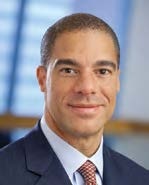
Historical · U.S. Court of Appeals for the Ninth Circuit
Paul Jeffrey Watford
Former Circuit Judge · U.S. Court of Appeals for the Ninth Circuit · 2012–2023 · Appointed by Barack Obama
Paul Jeffrey Watford served as a circuit judge of the U.S. Court of Appeals for the Ninth Circuit (2012–2023). Watford was appointed by Barack Obama.
Key facts
- Full name
- Paul Jeffrey Watford
- Court
- U.S. Court of Appeals for the Ninth Circuit
- Office
- Circuit Judge (U.S. Court of Appeals)
- Status
- Former circuit judge
- Duty status
- Not serving
- Appointment
- Senate-confirmed
- FJC seat
- CA90805
- Tenure
- 2012–2023
- Confirmed
- 2012-05-21
- Born
- 1967
- Died
- —
- First year on the bench
- 2012
- Dataset version
- 1.20260711
Appointment & service record
U.S. Court of Appeals for the Ninth Circuit · 2012–2023
- Seat
- CA90805
- Appointment
- Senate-confirmed
- Appointing president
- Barack Obama
- Confirmed
- 2012-05-21
- Commissioned
- 2012-05-22
- Senior status
- —
Court, FJC seat, appointment type (Senate-confirmed or recess), appointing president, confirmation and commission dates, and senior-status date are drawn from the Federal Judicial Center Biographical Directory and Wikidata.[1][2][3]
Sources
- [1]https://www.fjc.gov/node/1393991fjc · retrieved 2026-07-11
- [2]https://www.fjc.gov/history/judges/biographical-directory-article-iii-federal-judges-exportfjc-directory · retrieved 2026-07-11
- [3]https://www.wikidata.org/wiki/Q7151519Wikidata · retrieved 2026-07-11
Biographical narrative
1,640 words · sourced from the Wikipedia REST extract
Paul Jeffrey Watford is an American lawyer and former federal appellate judge who served on the United States Court of Appeals for the Ninth Circuit from 2012 to 2023. Born in 1967, he was appointed to the federal bench by President Barack Obama, a Democrat, and confirmed by the Senate in May 2012. During his tenure, Watford gained national attention as a potential nominee to the Supreme Court of the United States and authored significant opinions on constitutional law. After more than a decade of federal judicial service, he resigned from the bench in 2023 to return to private legal practice in Los Angeles.
Early life and legal career
Watford was born on August 25, 1967, in Garden Grove, California. He pursued his undergraduate education at the University of California, Berkeley, where he earned a Bachelor of Arts degree in 1989. Following his graduation from Berkeley, Watford worked for two years as a legal interviewer for the San Francisco Bar Association's lawyer referral service, a position he held from 1989 to 1991. This early exposure to the legal profession preceded his formal legal education.
In 1991, Watford enrolled at the UCLA School of Law, where he distinguished himself academically. During his time at UCLA, he served as an editor of the UCLA Law Review, gaining valuable experience in legal scholarship and writing. He graduated in 1994 with a Juris Doctor degree and was inducted into the Order of the Coif, an honor society recognizing academic excellence in law school.
Following law school, Watford embarked on a prestigious clerkship career that would shape his future legal trajectory. From 1994 to 1995, he clerked for Judge Alex Kozinski of the United States Court of Appeals for the Ninth Circuit, the same court on which he would later serve as a judge. He then advanced to clerk for Justice Ruth Bader Ginsburg of the United States Supreme Court during the 1995-1996 term. This clerkship was historically significant, as Watford became the only African American law clerk Justice Ginsburg hired during her twenty-seven years on the Supreme Court.
After completing his Supreme Court clerkship in 1996, Watford joined the law firm Munger, Tolles & Olson. His career in private practice was interrupted by a significant period of public service when, from 1997 to 2000, he served as an Assistant United States Attorney in the Major Frauds Section of the Criminal Division for the Central District of California. In this prosecutorial role, he handled a diverse array of federal criminal cases, with particular emphasis on white-collar criminal matters. This experience provided him with valuable trial and litigation experience from the government's perspective.
In 2000, Watford briefly joined the Los Angeles office of Sidley Austin, a major Chicago-based law firm, but returned to Munger, Tolles & Olson in 2001. He became a partner at Munger in 2003 and remained with the firm until his confirmation to the federal bench. During his years as a partner, Watford concentrated his practice on appellate litigation, regularly appearing before state and federal courts to argue cases on behalf of his clients. His appellate expertise was demonstrated through his work on Supreme Court matters, where he authored or edited nearly twenty briefs submitted to the nation's highest court.
Beyond his litigation practice, Watford was actively engaged in the legal community through various professional and educational activities. He served as Co-Chair of the American Bar Association Litigation Section's Appellate Practice Committee from 2005 to 2008, and as a member of the ABA's Amicus Curiae Committee from 2007 to 2010. From 2007 to 2009, he taught an upper-level course in judicial opinion writing at the University of Southern California's Gould School of Law, sharing his expertise with the next generation of lawyers. Beginning in June 2012, he took on the role of treasurer and board member for Neighborhood Legal Services of Los Angeles County, a nonprofit organization dedicated to providing pro bono legal services to low-income individuals. He later became a trustee of the Norton Simon Museum in 2019.
Federal appellate service
On October 17, 2011, President Barack Obama nominated Watford to serve as a circuit judge on the United States Court of Appeals for the Ninth Circuit. The vacancy to which he was nominated had been created by the death of Judge Pamela Ann Rymer, who passed away from cancer on September 21, 2011. The nomination was met with strong professional endorsement, as the American Bar Association Standing Committee on the Federal Judiciary unanimously rated Watford as "well-qualified," the highest possible rating the committee awards to judicial nominees.
The Senate Judiciary Committee conducted a hearing on Watford's nomination on December 13, 2011. During the proceedings, Senator Patrick Leahy observed that Watford had garnered support from across the political spectrum, including endorsements from prominent conservative legal scholars such as Orin Kerr and Eugene Volokh. On February 2, 2012, the Judiciary Committee voted to report Watford's nomination to the full Senate floor by a vote of 10 to 6.
The confirmation process proceeded through the spring of 2012. On May 17, 2012, Senate Majority Leader Harry Reid filed a cloture motion on the nomination, a procedural step designed to end debate and move toward a final vote. The cloture vote had been scheduled for May 21, 2012. However, on that same day, Reid requested that the cloture motion be withdrawn and that the Senate instead proceed directly to an up-or-down vote on the nomination. The Senate confirmed Watford on May 21, 2012, and he received his commission the following day, on May 22, 2012.
During his tenure on the Ninth Circuit, Watford participated in numerous cases and authored opinions on a range of legal issues. One of his most significant decisions came in the en banc case of City of Los Angeles v. Patel, decided in 2014. Writing for a 7-4 majority of the full court, Watford authored an opinion striking down a Los Angeles city ordinance that had authorized police officers to conduct surprise inspections of hotel and motel guest registries without obtaining either the consent of the property owners or a search warrant. Watford's opinion held that this ordinance violated the Fourth Amendment's protections against unreasonable searches and seizures. The significance of this decision was underscored the following year when the United States Supreme Court affirmed the Ninth Circuit's ruling in a 5-4 decision, validating Watford's constitutional analysis.
In November 2021, Watford authored a dissenting opinion when a three-judge panel of the Ninth Circuit, by a 2-1 vote, dismissed a wrongful death lawsuit that had been filed by the son of a woman who died while in police custody. This dissent demonstrated his willingness to stake out independent positions on matters involving civil rights and government accountability.
Beyond his judicial work, Watford attracted national attention as a potential nominee to the Supreme Court of the United States. As early as late 2012, multiple national news organizations identified him as a possible Supreme Court nominee during President Obama's second term. This speculation intensified following the death of Justice Antonin Scalia in February 2016. Watford was among those who interviewed with President Obama for consideration to fill the vacancy, and The New York Times specifically identified him as a potential nominee for the seat. Ultimately, President Obama nominated Merrick Garland, though that nomination was not acted upon by the Senate.
Watford resigned from his position on the Ninth Circuit on May 31, 2023, concluding more than eleven years of federal judicial service. Following his resignation, he returned to private legal practice, initially joining the law firm Wilson Sonsini Goodrich & Rosati as a partner in their Los Angeles office. In February 2025, he moved to King & Spalding, where he joined the Business Litigation practice group as a partner in the firm's Los Angeles office.
Jurisprudence and legacy
Throughout his judicial career, Watford demonstrated a commitment to rigorous legal analysis and careful application of constitutional principles. His opinion in City of Los Angeles v. Patel exemplified his approach to Fourth Amendment jurisprudence, balancing law enforcement interests against individual privacy rights and ultimately concluding that warrantless, non-consensual inspections exceeded constitutional bounds. The Supreme Court's subsequent affirmance of his reasoning validated his constitutional interpretation and extended the impact of his analysis nationwide.
Watford also contributed to legal scholarship during and after his time on the bench. In December 2017, he co-authored an article titled "Crafting Precedent" published in the Harvard Law Review, examining the process by which appellate courts develop binding legal principles. In 2014, he published "Screws v. United States and the Birth of Federal Civil Rights Enforcement" in the Marquette Law Review, exploring the historical development of federal civil rights law. Earlier in his career, while still a law student in 1993, he published an article in the Columbia-VLA Journal of Law & the Arts analyzing contractual liability issues in intellectual property disputes through a case study of Buchwald v. Paramount Pictures Corp.
His service on the Ninth Circuit represented a significant milestone in the representation of African Americans in the federal judiciary. As someone who had been Justice Ginsburg's only African American law clerk during her entire Supreme Court tenure, Watford's elevation to the federal appellate bench and subsequent consideration for the Supreme Court reflected both his individual accomplishments and broader questions about diversity in the federal judiciary.
Watford's relatively brief tenure of eleven years on the federal bench, while substantial, was shorter than that of many circuit judges, who often serve for decades or until senior status. His decision to return to private practice in 2023 represented a choice to apply his judicial experience and legal expertise in a different professional context. His transition to major law firms specializing in business litigation suggests a focus on complex commercial disputes and appellate advocacy in the private sector, building upon the skills he developed both before and during his judicial service.
Sources & provenance
Every quantitative or attributable claim above carries a per-section [N] marker that resolves to the corresponding URL below. Each entry records the upstream provider, the canonical URL, and the timestamp at which the underlying source was retrieved.
Key facts
- https://www.fjc.gov/node/1393991fjc · retrieved 2026-07-11
- https://www.fjc.gov/history/judges/biographical-directory-article-iii-federal-judges-exportfjc-directory · retrieved 2026-07-11
- https://www.wikidata.org/wiki/Q7151519Wikidata · retrieved 2026-07-11
Biographical narrative
- https://en.wikipedia.org/wiki/Paul_J._WatfordWikipedia · retrieved 2026-07-11
Explore the federal judiciary
The U.S. Courts of Appeals are the intermediate appellate courts of the federal judiciary — thirteen circuits sitting between the district courts and the Supreme Court. Browse the full roster of judges on the U.S. Court of Appeals for the Ninth Circuit, or explore how the appointed federal judiciary fits into the federal government.