
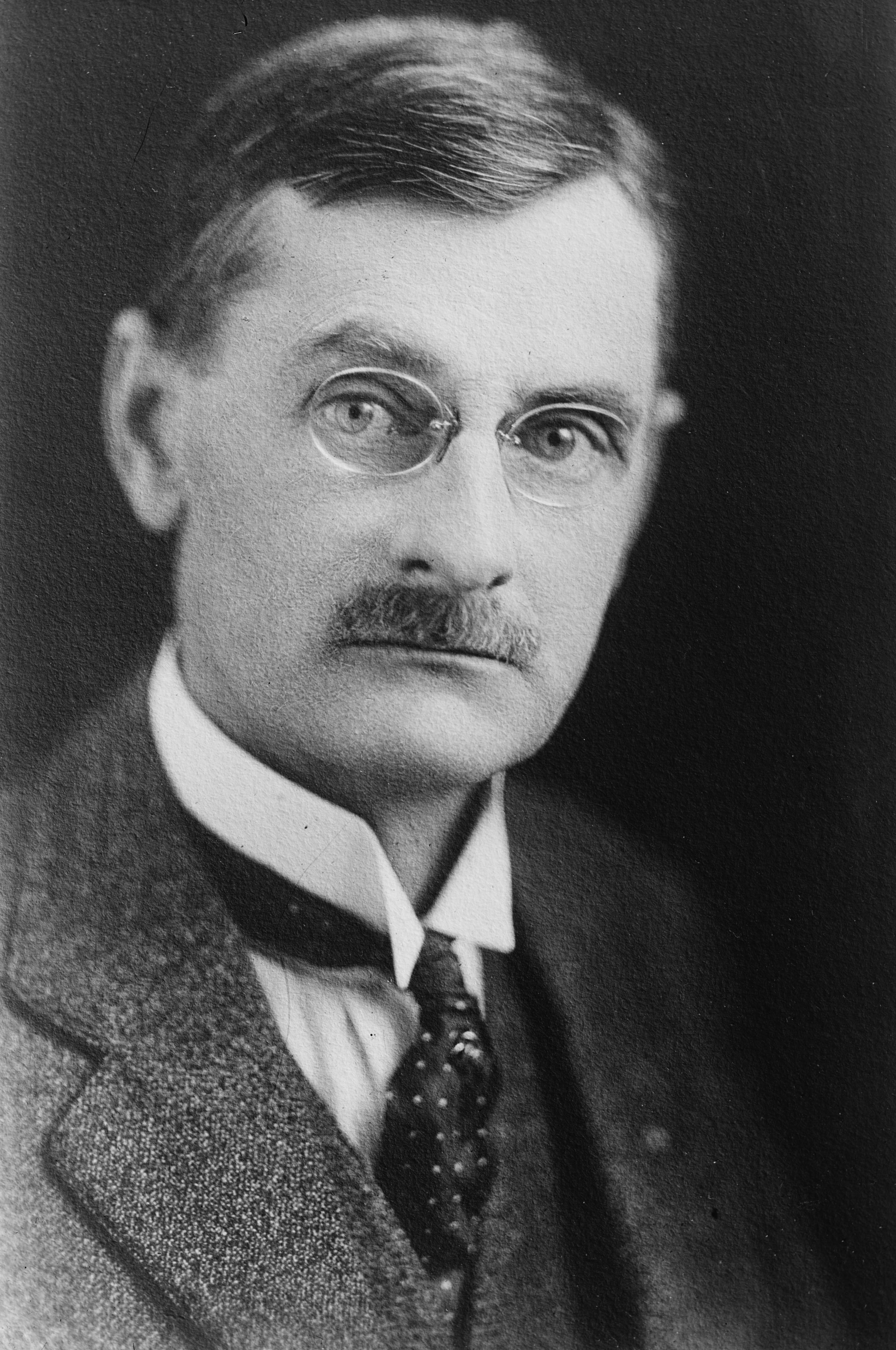
Historical · U.S. Court of Appeals for the Ninth Circuit
Wallace McCamant
Former Circuit Judge · U.S. Court of Appeals for the Ninth Circuit · 1925–1926 · Appointed by Calvin Coolidge
Wallace McCamant served as a circuit judge of the U.S. Court of Appeals for the Ninth Circuit (1925–1926). McCamant was appointed by Calvin Coolidge.
Key facts
- Full name
- Wallace McCamant
- Court
- U.S. Court of Appeals for the Ninth Circuit
- Office
- Circuit Judge (U.S. Court of Appeals)
- Status
- Former circuit judge
- Duty status
- Not serving
- Appointment
- Recess appointment
- FJC seat
- CA90302
- Tenure
- 1925–1926
- Confirmed
- —
- Born
- 1867-09-22
- Died
- 1944-12-17
- First year on the bench
- 1925
- Dataset version
- 1.20260711
Appointment & service record
U.S. Court of Appeals for the Ninth Circuit · 1925–1926
- Seat
- CA90302
- Appointment
- Recess appointment
- Appointing president
- Calvin Coolidge
- Confirmed
- Recess appointment
- Commissioned
- —
- Senior status
- —
Court, FJC seat, appointment type (Senate-confirmed or recess), appointing president, confirmation and commission dates, and senior-status date are drawn from the Federal Judicial Center Biographical Directory and Wikidata.[1][2][3]
Sources
- [1]https://www.fjc.gov/node/1384526fjc · retrieved 2026-07-11
- [2]https://www.fjc.gov/history/judges/biographical-directory-article-iii-federal-judges-exportfjc-directory · retrieved 2026-07-11
- [3]https://www.wikidata.org/wiki/Q7962849Wikidata · retrieved 2026-07-11
Biographical narrative
1,196 words · sourced from the Wikipedia REST extract
Wallace McCamant was a United States circuit judge who served briefly on the United States Court of Appeals for the Ninth Circuit during the mid-1920s. Born in Pennsylvania in 1867, he built a distinguished legal career in Oregon that included service on the Oregon Supreme Court and a prominent role in national Republican politics. He is perhaps best remembered for his unexpected nomination of Calvin Coolidge for Vice President at the 1920 Republican National Convention, a decision that would have profound consequences for American history when Coolidge ascended to the presidency following Warren G. Harding's death. McCamant's federal judicial service was cut short when the Senate rejected his nomination, making him the first recess appointee to a United States Court of Appeals to be denied confirmation.
Early life and legal career
Wallace McCamant was born on September 22, 1867, in Hollidaysburg, Pennsylvania, to Thomas McCamant and Delia Robbins. He spent his formative years in Harrisburg, Pennsylvania, where he attended the local public schools. In 1888, he earned a Bachelor of Philosophy degree from Lafayette College, located in Easton, Pennsylvania. Following his undergraduate education, McCamant pursued legal training through the traditional method of reading law, and in 1890 he gained admission to the Pennsylvania bar.
Shortly after his admission to practice, McCamant relocated to Oregon, where he would spend the remainder of his professional life. He established himself in private practice in Portland, joining what would eventually become the firm now known as Miller Nash Graham & Dunn LLP. In 1893, he married Katherine S. Davis, with whom he had two sons. His private practice flourished over the following decades, and he became involved in significant litigation, including appearing before the United States Supreme Court in the case of Ross v. State of Oregon in 1913.
Beyond his legal practice, McCamant held several notable positions that demonstrated his standing in both the legal community and civic organizations. In 1904, he was appointed as a Master in Chancery for the United States District Court for the District of Oregon, a position he held until 1917. This role involved assisting the district court with complex equity matters and demonstrated the respect he commanded among federal judicial officers. McCamant was also active in patriotic organizations, serving as president of the Portland chapter of the Sons of the American Revolution in 1909. His involvement with this organization continued to grow, and he eventually served as President General of the Sons of the American Revolution from 1921 to 1922, leading the national organization during the post-World War I period.
McCamant's judicial career at the state level began on January 8, 1917, when Oregon Governor James Withycombe appointed him to the Oregon Supreme Court to fill the vacancy created by the departure of Robert Eakin. He served as the 46th justice of that court, though his tenure was relatively brief. After approximately eighteen months on the state's highest court, McCamant resigned on June 4, 1918, and was succeeded by Charles A. Johns. The reasons for his resignation from this prestigious position are not detailed in the available records, but he returned to private practice and continued his involvement in Republican Party politics.
Federal appellate service
McCamant's connection to President Calvin Coolidge proved instrumental in his appointment to the federal bench. At the 1920 Republican National Convention, McCamant served as a delegate and made a decision that would reverberate through American political history. When the Republican leadership moved to nominate Senator Irvine Lenroot of Wisconsin for the vice-presidential slot on the ticket, McCamant surprised party leaders by instead placing Coolidge's name into nomination. This unexpected move led to Coolidge's selection as the vice-presidential nominee, and subsequently, following President Warren G. Harding's death in 1923, Coolidge became the 30th President of the United States.
On May 25, 1925, President Coolidge granted McCamant a recess appointment to the United States Court of Appeals for the Ninth Circuit. This appointment filled a seat that had been vacated by Judge Erskine Mayo Ross. A recess appointment allowed McCamant to begin serving immediately without waiting for Senate confirmation, a constitutional provision that permits the president to fill vacancies when the Senate is not in session. McCamant assumed his duties on the circuit court and began hearing cases as a full member of the appellate panel.
President Coolidge formally nominated McCamant to the same position on December 8, 1925, submitting his name to the Senate for confirmation. However, the nomination encountered significant opposition. On March 17, 1926, the United States Senate rejected McCamant's nomination, declining to confirm him for the position he had been occupying under the recess appointment. The rejection was influenced in part by political tensions stemming from the 1920 Republican Convention. McCamant's support for Coolidge had come at the expense of Senator Hiram Johnson, a powerful California Republican who had his own presidential ambitions and supporters in the Senate. The lingering resentment over McCamant's role in elevating Coolidge over other candidates appears to have contributed to the Senate's decision to deny confirmation.
Following the Senate's rejection, McCamant resigned from the court on May 2, 1926. Under the constitutional provisions governing recess appointments, he could have continued serving until the sine die adjournment of the first session of the 69th United States Congress, which occurred on July 3, 1926, but he chose to step down earlier. His departure from the bench marked a historic moment: McCamant became the first individual to receive a recess appointment to a United States Court of Appeals and subsequently be rejected by the Senate.
Jurisprudence and legacy
McCamant's brief tenure on the Ninth Circuit, lasting less than a year, limited the scope of his contribution to federal appellate jurisprudence. The available records do not detail specific cases he decided or particular legal doctrines he helped develop during his time on the court. His service was cut short before he could establish a substantial body of written opinions or significantly influence the development of circuit law in the western states under the Ninth Circuit's jurisdiction.
Following his departure from the federal bench, McCamant returned to private life in Portland. He remained active in civic affairs and continued his involvement with patriotic organizations. In 1922, he participated in the dedication of the Theodore Roosevelt Rough Rider statue located in Portland's South Park Blocks, reflecting his continued prominence in the community and his connection to Republican political traditions.
McCamant's historical significance rests less on his judicial output than on his political influence and his unique position in the history of federal judicial appointments. His role in nominating Calvin Coolidge for vice president had far-reaching consequences that extended well beyond his own career, affecting the course of American governance during the 1920s. His failed confirmation represents an important precedent in the relationship between the executive and legislative branches regarding judicial appointments, particularly concerning the limits of recess appointment power and the Senate's prerogative to reject nominees even when they have already begun serving.
Wallace McCamant died on December 17, 1944, and was interred at River View Cemetery in Portland, Oregon. He was seventy-seven years old at the time of his death, having lived through significant transformations in American law and politics during his lifetime.
Sources & provenance
Every quantitative or attributable claim above carries a per-section [N] marker that resolves to the corresponding URL below. Each entry records the upstream provider, the canonical URL, and the timestamp at which the underlying source was retrieved.
Key facts
- https://www.fjc.gov/node/1384526fjc · retrieved 2026-07-11
- https://www.fjc.gov/history/judges/biographical-directory-article-iii-federal-judges-exportfjc-directory · retrieved 2026-07-11
- https://www.wikidata.org/wiki/Q7962849Wikidata · retrieved 2026-07-11
Biographical narrative
- https://en.wikipedia.org/wiki/Wallace_McCamantWikipedia · retrieved 2026-07-11
Explore the federal judiciary
The U.S. Courts of Appeals are the intermediate appellate courts of the federal judiciary — thirteen circuits sitting between the district courts and the Supreme Court. Browse the full roster of judges on the U.S. Court of Appeals for the Ninth Circuit, or explore how the appointed federal judiciary fits into the federal government.