
Historical · U.S. Court of Appeals for the Ninth Circuit
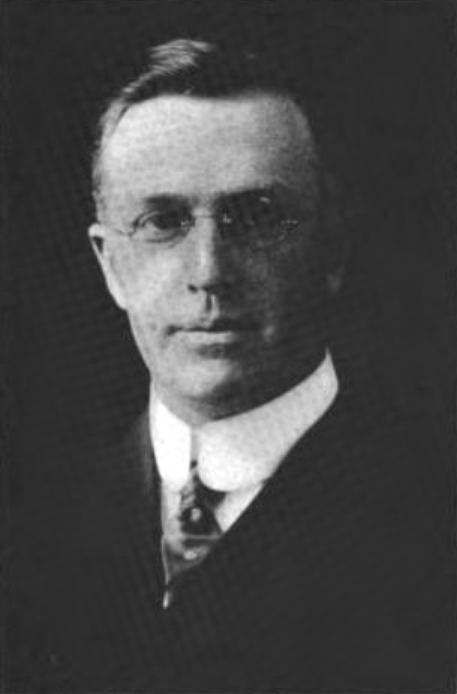
William Denman
Former Circuit Judge · U.S. Court of Appeals for the Ninth Circuit · 1935–1959 · Appointed by Franklin D Roosevelt
William Denman served as a circuit judge of the U.S. Court of Appeals for the Ninth Circuit (1935–1959). Denman was appointed by Franklin D Roosevelt.
Key facts
- Full name
- William Denman
- Court
- U.S. Court of Appeals for the Ninth Circuit
- Office
- Circuit Judge (U.S. Court of Appeals)
- Status
- Former circuit judge
- Duty status
- Not serving
- Appointment
- Senate-confirmed
- FJC seat
- CA90202
- Tenure
- 1935–1959
- Confirmed
- 1935-01-29
- Born
- 1872-11-07
- Died
- 1959-03-09
- First year on the bench
- 1935
- Dataset version
- 1.20260711
Appointment & service record
U.S. Court of Appeals for the Ninth Circuit · 1935–1957
- Seat
- CA90202
- Appointment
- Senate-confirmed
- Appointing president
- Franklin D Roosevelt
- Confirmed
- 1935-01-29
- Commissioned
- 1935-02-01
- Senior status
- 1957-07-03
- Chief Judge
- 1948–1957
Court, FJC seat, appointment type (Senate-confirmed or recess), appointing president, confirmation and commission dates, and senior-status date are drawn from the Federal Judicial Center Biographical Directory and Wikidata.[1][2][3]
Sources
- [1]https://www.fjc.gov/node/1379971fjc · retrieved 2026-07-11
- [2]https://www.fjc.gov/history/judges/biographical-directory-article-iii-federal-judges-exportfjc-directory · retrieved 2026-07-11
- [3]https://www.wikidata.org/wiki/Q8007761Wikidata · retrieved 2026-07-11
Biographical narrative
1,007 words · sourced from the Wikipedia REST extract
William Denman was a United States circuit judge who served on the United States Court of Appeals for the Ninth Circuit from 1935 until his death in 1959. Appointed by President Franklin D. Roosevelt, a Democrat, Denman served as Chief Judge of the Ninth Circuit from 1948 to 1957, a period during which he also participated in the Judicial Conference of the United States. His judicial career spanned more than two decades and included service during some of the most consequential periods in American legal history, including World War II and its aftermath. He is particularly remembered for his dissenting opinion in a case involving the wartime internment of Japanese Americans.
Early life and legal career
William Denman was born on November 7, 1872, in San Francisco, California. He received his secondary education at Lowell High School in his native city before pursuing higher education at the University of California, Berkeley, where he earned a Bachelor of Letters degree in 1894. Following his undergraduate studies, Denman attended Harvard Law School, one of the nation's premier legal institutions, and obtained his Bachelor of Laws degree in 1897.
After completing his legal education, Denman returned to San Francisco and entered private practice in 1898. He established himself in the legal community of the Bay Area during a period of significant growth and development in California. In addition to his private practice, Denman contributed to legal education by joining the faculty at the University of California, Hastings College of the Law. From 1902 to 1906, he served as both an assistant professor and lecturer at the institution, helping to train the next generation of California attorneys. This combination of practical legal work and academic engagement provided Denman with a broad foundation in both the theoretical and applied aspects of law. His years in private practice and legal education in San Francisco, spanning more than three decades before his appointment to the federal bench, gave him extensive experience in the legal landscape of the western United States.
Federal appellate service
Denman's appointment to the federal judiciary came in January 1935, when President Franklin D. Roosevelt nominated him to fill a vacancy on the United States Court of Appeals for the Ninth Circuit. The vacancy had been created by the departure of Judge William Ball Gilbert. Roosevelt submitted Denman's nomination on January 10, 1935, and the United States Senate moved swiftly to consider the appointment. The Senate confirmed Denman on January 29, 1935, and he received his commission on February 1, 1935, formally beginning his service on the court.
Denman served as an active circuit judge for more than two decades. On September 1, 1948, he assumed the position of Chief Judge of the Ninth Circuit, the administrative and ceremonial leader of one of the largest and most geographically expansive federal appellate courts in the nation. As Chief Judge, Denman also became a member of the Judicial Conference of the United States, the principal policymaking body for the federal court system. He held both positions until July 3, 1957, when he assumed senior status, a form of semi-retirement that allows federal judges to continue hearing cases with a reduced caseload. Denman continued to serve in senior status until his death on March 9, 1959, having devoted nearly a quarter-century to federal appellate service.
During his tenure on the Ninth Circuit, Denman participated in numerous cases that came before the court during a transformative era in American history. His service encompassed the latter years of the Great Depression, the entirety of World War II, and the early Cold War period. The Ninth Circuit's jurisdiction covered the western states, and the court addressed a wide range of legal questions arising from this diverse and rapidly developing region.
Jurisprudence and legacy
Among the cases in which Denman participated, his dissent in a 1943 case concerning the wartime treatment of Japanese Americans stands as particularly significant. The case, which was later reviewed by the Supreme Court in 1944, involved the government's authority to relocate and confine Japanese Americans during World War II. The Ninth Circuit panel permitted the government to proceed with forcing Japanese Americans into internment camps, a decision that was subsequently affirmed by the Supreme Court.
Denman dissented from his colleagues' position, expressing strong objections to the proceedings. In his dissenting opinion, he acknowledged the unusual nature of his disagreement with his fellow judges on a procedural matter, noting that the circumstances themselves were extraordinary. He characterized the government's actions as threatening penitentiary sentences against tens of thousands of American citizens who believed they possessed constitutional protections against such treatment. Denman emphasized that the government was removing not only men but entire families—wives and children—from their homes and forcing them into internment camps, denying even the option to remain in their residences. He drew parallels to actions taken by hostile powers in wartime Europe, comparing the treatment of these American citizens to that of enemy aliens. Denman further observed that the destruction of business connections and livelihoods would effectively prevent many of those interned from returning to their communities, resulting in a form of permanent displacement.
This dissenting opinion reflected Denman's willingness to take positions at odds with prevailing wartime sentiment and demonstrated his concern for constitutional protections even during a period of national emergency. His dissent has been noted by legal historians and scholars examining the internment cases and the judicial response to civil liberties questions during World War II.
Denman's long tenure as Chief Judge of the Ninth Circuit, spanning nine years, placed him in a position of significant influence over the administration and development of federal appellate jurisprudence in the western United States during the postwar period. His service on the Judicial Conference of the United States during the same period gave him a role in shaping policies affecting the entire federal judiciary. He continued his judicial work into his eighties, remaining engaged with the court until his death at age eighty-six, demonstrating a sustained commitment to public service that extended across multiple generations of American legal development.
Sources & provenance
Every quantitative or attributable claim above carries a per-section [N] marker that resolves to the corresponding URL below. Each entry records the upstream provider, the canonical URL, and the timestamp at which the underlying source was retrieved.
Key facts
- https://www.fjc.gov/node/1379971fjc · retrieved 2026-07-11
- https://www.fjc.gov/history/judges/biographical-directory-article-iii-federal-judges-exportfjc-directory · retrieved 2026-07-11
- https://www.wikidata.org/wiki/Q8007761Wikidata · retrieved 2026-07-11
Biographical narrative
- https://en.wikipedia.org/wiki/William_Denman_(judge)Wikipedia · retrieved 2026-07-11
Explore the federal judiciary
The U.S. Courts of Appeals are the intermediate appellate courts of the federal judiciary — thirteen circuits sitting between the district courts and the Supreme Court. Browse the full roster of judges on the U.S. Court of Appeals for the Ninth Circuit, or explore how the appointed federal judiciary fits into the federal government.