
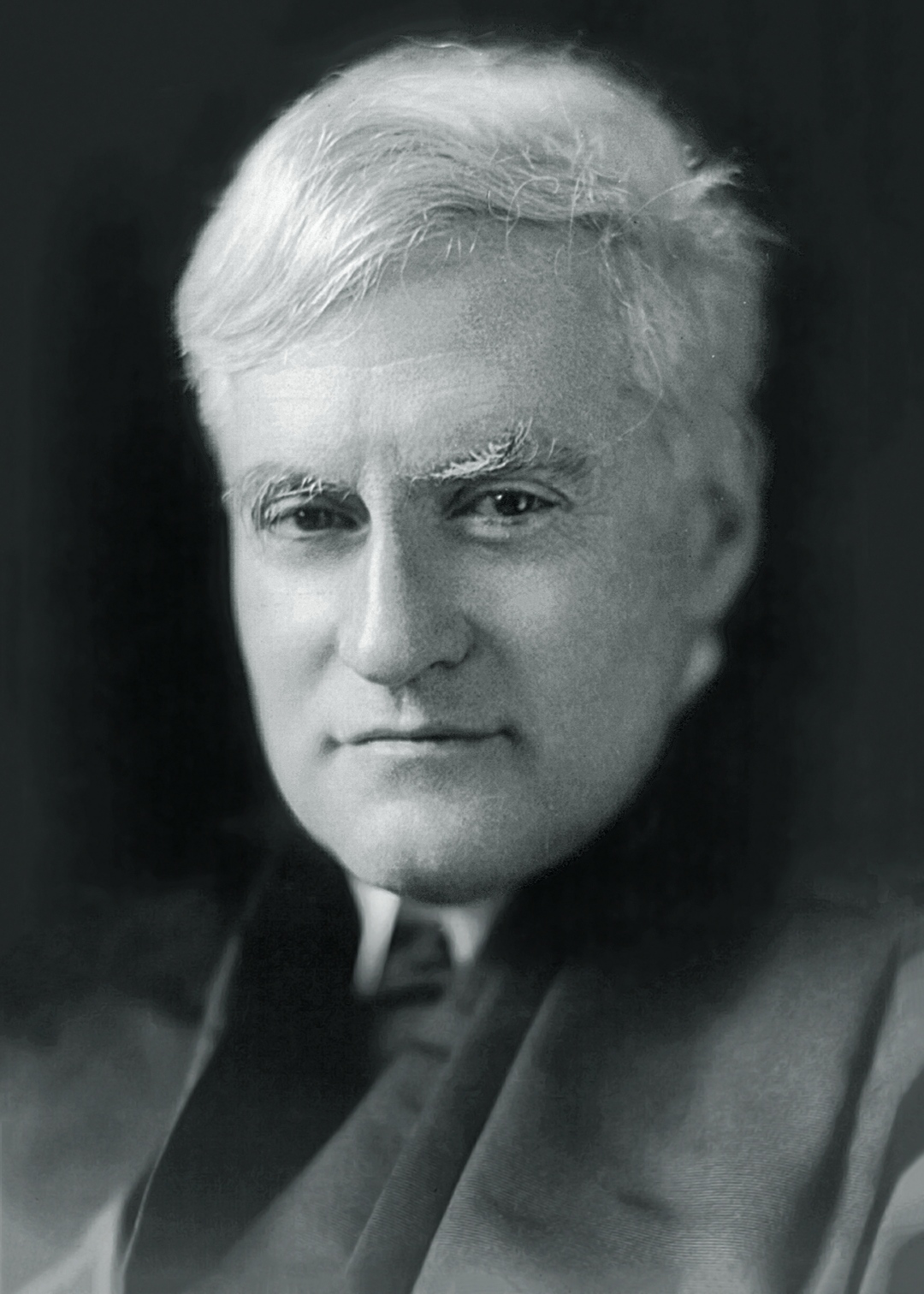
Historical · Supreme Court of the United States
Benjamin Nathan Cardozo
Former justice
Former Associate Justice · Supreme Court of the United States · 1932–1938 · Appointed by Herbert Hoover
Benjamin Nathan Cardozo served as an Associate Justice of the Supreme Court of the United States (1932–1938) was appointed by Herbert Hoover. The page below collects sourced biographical facts, the appointment record, and provenance for Cardozo.
FJC ID: 1378836
Key facts
- Full name
- Benjamin Nathan Cardozo
- Court
- Supreme Court of the United States
- Role
- Associate Justice
- Status
- Former justice
- Seat
- SCT0308
- Appointed by
- Herbert Hoover
- Appointment
- Senate-confirmed
- Confirmed
- 1932-02-24
- Supreme Court service
- 1932–1938
- Took seat
- 1932
- Born
- 1870
- Died
- 1938
- Dataset version
- 1.20260711
Appointment & service record
Associate Justice of the Supreme Court of the United States · 1932–1938
- Seat
- SCT0308
- Appointing president
- Herbert Hoover
- Appointment
- Senate-confirmed
- Confirmed
- February 24, 1932
Seat, appointing president, appointment type, confirmation date, and service dates are drawn from the Federal Judicial Center Biographical Directory and the Supreme Court's own members roster.[1][2][3]
Sources
- [1]https://www.fjc.gov/node/1378836fjc · retrieved 2026-06-16
- [2]https://www.supremecourt.gov/about/members_text.aspxsupremecourt.gov · retrieved 2026-06-16
- [3]https://www.fjc.gov/history/judges/biographical-directory-article-iii-federal-judges-exportfjc-directory · retrieved 2026-06-16
Biographical narrative
890 words · sourced from the Wikipedia REST extract
Benjamin Nathan Cardozo was an American jurist whose career spanned the late nineteenth and early twentieth centuries. After earning a law degree from Columbia University, he entered private practice before being elected to the New York Supreme Court in 1913. In 1914 he joined the state’s highest court, the Court of Appeals, where he served until 1932, becoming chief judge in 1926. President Herbert Hoover appointed him as an associate justice of the United States Supreme Court that same year, a position he held until his death in 1938. Cardozo is remembered for his clear and influential writing style, his contributions to American common law, and his role within the liberal bloc of justices known as the Three Musketeers.
Early life and legal career
Benjamin Nathan Cardozo was born on May 24, 1870, in New York City. His parents were Rebecca Washington (née Nathan) and Albert Jacob Cardozo. The family traced its ancestry to Western Sephardic Jews of Portuguese origin who had settled in the British colonies after leaving Iberia during the Inquisition. Cardozo’s early religious life included a bar mitzvah at Congregation Shearith Israel in June 1883, reflecting his family's long association with that historic Manhattan synagogue.
Cardozo entered Columbia University at age fifteen and earned a Bachelor of Arts degree in 1889, followed by a Master’s degree in 1890. In 1889 he also enrolled in Columbia Law School; however, during that era New York required only two years of legal study to sit for the bar examination. Accordingly, Cardozo passed the bar exam in 1891 and began practicing appellate law in New York City, initially working alongside his older brother. His practice was conducted with the firm Simpson, Warren and Cardozo until the end of 1913.
In November 1913, Cardozo ran for a judgeship on the New York Supreme Court, the state’s general trial court. He won the election by a large margin and took office at the start of 1914. Shortly thereafter he was designated to the New York Court of Appeals under the amendment of 1899, becoming the first Jewish person to serve on that body. In January 1917 Governor Al Smith appointed him to fill a vacancy caused by the resignation of Samuel Seabury; later that year Cardozo was elected on both Democratic and Republican tickets to a fourteen‑year term.
Cardozo’s reputation as an articulate and principled jurist grew during his tenure on the Court of Appeals. In 1926 he was again elected, on both major party tickets, to a fourteen‑year term and was chosen by his peers as chief judge. His majority opinions in that period included landmark decisions such as *Palsgraf v. Long Island Railroad Co.*, which has become a foundational text in tort law for its analysis of foreseeability and proximate cause.
Supreme Court tenure
President Herbert Hoover, a Republican, nominated Cardozo to fill the vacancy left by the death of Associate Justice Oliver Wendell Holmes Jr. The United States Senate confirmed his appointment on February 24, 1932, and he took his seat as an associate justice that same year. Cardozo served on the Supreme Court from 1932 until his passing in 1938. He was a member of the liberal bloc of justices commonly referred to as the Three Musketeers, alongside Justices Louis Brandeis and Benjamin H. Morrison.
During his six years on the federal bench, Cardozo authored majority opinions that reflected his commitment to clear legal reasoning and the protection of individual rights. Among these were *Nixon v. Condon* (1932), which addressed issues related to state regulation of public utilities, and *Steward Machine Co. v. Davis* (1937), a case concerning labor relations and collective bargaining. His opinions are noted for their lucid prose and thoughtful analysis, qualities that have made his writings enduring references in legal scholarship.
Cardozo’s tenure on the Supreme Court was marked by his willingness to engage with complex constitutional questions and his dedication to ensuring that the law served the public interest. He participated in a number of landmark decisions during a period of significant social and economic change in the United States, contributing to the development of modern American jurisprudence.
Jurisprudence and legacy
Cardozo’s influence on American common law is widely acknowledged by scholars and practitioners alike. His writing style—characterized by clarity, precision, and an engaging narrative tone—has been praised for making complex legal concepts accessible to a broad audience. This approach helped shape the way judicial opinions are composed and has inspired subsequent generations of judges.
In addition to his stylistic contributions, Cardozo’s jurisprudence emphasized the importance of balancing individual rights with societal needs. His opinions often reflected a nuanced understanding of statutory interpretation and constitutional principles, demonstrating a commitment to both legal precedent and evolving social contexts. The decisions he authored on the Supreme Court continue to be cited in contemporary cases, underscoring his lasting impact on American law.
Cardozo’s legacy extends beyond the specific opinions he wrote; it includes his role as a mentor to younger jurists and his influence on the broader judicial culture of the twentieth century. His tenure exemplified a dedication to the rule of law and the pursuit of justice through thoughtful, well‑reasoned adjudication. As such, Benjamin Nathan Cardozo remains a significant figure in the history of the United States judiciary, remembered for both his intellectual contributions and his exemplary service on the nation’s highest court.
Sources & provenance
Every quantitative or attributable claim above carries a per-section [N] marker that resolves to the corresponding URL below. Each entry records the upstream provider, the canonical URL, and the timestamp at which the underlying source was retrieved.
Key facts
- https://www.fjc.gov/node/1378836fjc · retrieved 2026-06-16
- https://www.supremecourt.gov/about/members_text.aspxsupremecourt.gov · retrieved 2026-06-16
- https://www.fjc.gov/history/judges/biographical-directory-article-iii-federal-judges-exportfjc-directory · retrieved 2026-06-16
Biographical narrative
- https://en.wikipedia.org/wiki/Benjamin_N._CardozoWikipedia · retrieved 2026-06-16
Explore the federal judiciary
Fewer than 120 people have served on the Supreme Court of the United States in its history. Browse the full roster of current and former justices, or explore how the appointed federal judiciary fits into the federal government.