
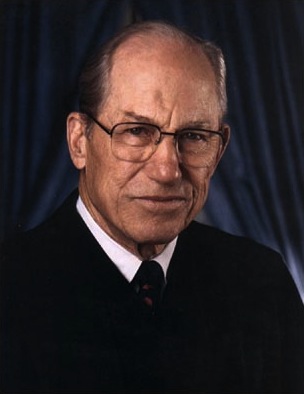
Historical · Supreme Court of the United States
Byron Raymond White
Former justice
Former Associate Justice · Supreme Court of the United States · 1962–1993 · Appointed by John F Kennedy
Byron Raymond White served as an Associate Justice of the Supreme Court of the United States (1962–1993) was appointed by John F Kennedy. The page below collects sourced biographical facts, the appointment record, and provenance for White.
FJC ID: 1389691
Key facts
- Full name
- Byron Raymond White
- Court
- Supreme Court of the United States
- Role
- Associate Justice
- Status
- Former justice
- Seat
- SCT0712
- Appointed by
- John F Kennedy
- Appointment
- Senate-confirmed
- Confirmed
- 1962-04-11
- Supreme Court service
- 1962–1993
- Took seat
- 1962
- Born
- 1917
- Died
- 2002
- Dataset version
- 1.20260711
Appointment & service record
Associate Justice of the Supreme Court of the United States · 1962–1993
- Seat
- SCT0712
- Appointing president
- John F Kennedy
- Appointment
- Senate-confirmed
- Confirmed
- April 11, 1962
Seat, appointing president, appointment type, confirmation date, and service dates are drawn from the Federal Judicial Center Biographical Directory and the Supreme Court's own members roster.[1][2][3]
Sources
- [1]https://www.fjc.gov/node/1389691fjc · retrieved 2026-06-17
- [2]https://www.supremecourt.gov/about/members_text.aspxsupremecourt.gov · retrieved 2026-06-17
- [3]https://www.fjc.gov/history/judges/biographical-directory-article-iii-federal-judges-exportfjc-directory · retrieved 2026-06-17
Biographical narrative
972 words · sourced from the Wikipedia REST extract
Byron Raymond White (June 8 1917 – April 15 2002) was an American lawyer who served as an associate justice of the Supreme Court of the United States from 1962 to 1993. Appointed by President John F. Kennedy, he became the first member of the Court to hail from Colorado and, at the time of his retirement, remained the only sitting justice appointed by a Democratic president. White’s tenure spanned three decades of significant constitutional development, during which he was noted for a pragmatic approach that often positioned him near the ideological center of the Court.
Early life and legal career
White was born in Wellington, Colorado, to parents who had not completed high school but emphasized education within their farming community. Growing up on a modest homestead, he worked various manual jobs—harvesting beets, shoveling coal, and construction labor—to support his family during the town’s economic decline in the 1920s. Despite these early hardships, White excelled academically, graduating as class valedictorian from Wellington High School in 1934.
He entered the University of Colorado Boulder on a scholarship awarded to all state high‑school valedictorians. Initially intending to pursue medicine and chemistry, he eventually shifted his focus to economics and joined the Phi Gamma Delta fraternity. While at university, White distinguished himself as a football player, earning All‑American honors as a halfback for the Colorado Buffaloes. His athletic prowess earned him the nickname “Whizzer” from campus reporters. In 1937 he finished as the runner‑up for the Heisman Trophy and was selected in the 1938 NFL Draft by the Pittsburgh Pirates (now the Steelers). During his rookie season, he led the league in rushing yards.
After graduating from Colorado in 1938 with a Bachelor of Arts degree and being named valedictorian, White received a Rhodes Scholarship to study at Oxford University. He deferred the scholarship for a year to play professional football before traveling to England. While at Oxford, he studied law at Hertford College; however, the outbreak of World War II prompted his return to the United States. He enrolled in Yale Law School, where he continued to play professional football with the Detroit Lions during the 1940 and 1941 seasons while still a student.
White’s legal education was interrupted by military service. He served as an officer in the United States Navy in the Pacific Theatre during World War II. After the war, he completed his law degree at Yale in 1946, graduating with honors. That same year, he clerked for Chief Justice Fred M. Vinson of the Supreme Court.
Following his clerkship, White chose to practice privately rather than join a white‑shoe firm. He returned to Denver and established himself as a transactional attorney in private practice. His involvement in politics grew when he served as Colorado state chair of President John F. Kennedy’s 1960 presidential campaign. In 1961, his political engagement led to an appointment as United States Deputy Attorney General. The following year, President Kennedy nominated him to the Supreme Court; White was confirmed by the Senate on April 11, 1962, and took the oath of office that same month.
Supreme Court tenure
White’s service on the Supreme Court extended from 1962 until his retirement in 1993, a period during which he participated in numerous landmark decisions. He was known for a pragmatic, non‑doctrinaire judicial style that often placed him near the ideological center of the Court. Throughout his tenure, White emphasized strengthening federal governmental authority and supported measures aimed at promoting equality.
He consistently advocated for the desegregation of public schools and upheld affirmative action policies. In contrast to expectations based on his appointment by a Democratic president, White was an outspoken opponent of substantive due process. He authored dissents in cases such as *Miranda v. Arizona* (addressing police interrogation rights) and *Roe v. Wade* (concerning abortion rights). His majority opinion in *Bowers v. Hardwick* upheld the ability of states to restrict homosexual conduct, while he dissented in *Runyon v. McCrary*, opposing governmental restrictions on racial discrimination in private schools, and in *Planned Parenthood v. Casey*, which reaffirmed aspects of abortion rights.
White’s judicial philosophy was characterized by a willingness to cross traditional ideological lines; his decisions reflected a focus on the practical implications of constitutional interpretation rather than strict adherence to any particular doctrinal school. This balanced approach contributed to his reputation as a centrist voice within the Court, often serving as a swing vote in closely divided cases.
Jurisprudence and legacy
Throughout his three decades on the bench, White authored opinions that reflected a careful consideration of constitutional principles and their application to contemporary societal issues. His pragmatic stance allowed him to address complex legal questions without rigidly aligning with either liberal or conservative blocs. This middle‑ground perspective helped shape several important rulings related to civil rights, federal power, and individual liberties.
White’s legacy is marked by his contributions to the evolution of constitutional law during a transformative era in American history. He was the last living member of the Warren Court and remained the sole justice appointed by a Democratic president at the time of his retirement. His decisions continue to be cited for their balanced approach to federal authority, civil rights protections, and due process considerations.
Beyond his judicial work, White’s earlier life as an All‑American football player and Rhodes Scholar exemplifies a trajectory that combined athletic excellence with academic achievement. His service in World War II, private legal practice, and political involvement prior to joining the Court illustrate a multifaceted career that extended well beyond the judiciary.
White passed away on April 15 2002 after a long period of health challenges. His death marked the end of an era for the Supreme Court, closing the chapter on a justice whose tenure bridged significant shifts in American jurisprudence and who left a lasting imprint through his measured, centrist approach to constitutional interpretation.
Sources & provenance
Every quantitative or attributable claim above carries a per-section [N] marker that resolves to the corresponding URL below. Each entry records the upstream provider, the canonical URL, and the timestamp at which the underlying source was retrieved.
Key facts
- https://www.fjc.gov/node/1389691fjc · retrieved 2026-06-17
- https://www.supremecourt.gov/about/members_text.aspxsupremecourt.gov · retrieved 2026-06-17
- https://www.fjc.gov/history/judges/biographical-directory-article-iii-federal-judges-exportfjc-directory · retrieved 2026-06-17
Biographical narrative
- https://en.wikipedia.org/wiki/Byron_WhiteWikipedia · retrieved 2026-06-17
Explore the federal judiciary
Fewer than 120 people have served on the Supreme Court of the United States in its history. Browse the full roster of current and former justices, or explore how the appointed federal judiciary fits into the federal government.