
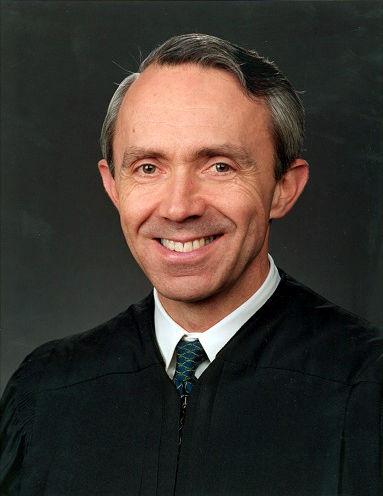
Historical · Supreme Court of the United States
David Hackett Souter
Former justice
Former Associate Justice · Supreme Court of the United States · 1990–2009 · Appointed by George H W Bush
David Hackett Souter served as an Associate Justice of the Supreme Court of the United States (1990–2009) was appointed by George H W Bush. The page below collects sourced biographical facts, the appointment record, and provenance for Souter.
FJC ID: 1388096
Key facts
- Full name
- David Hackett Souter
- Court
- Supreme Court of the United States
- Role
- Associate Justice
- Status
- Former justice
- Seat
- SCT0416
- Appointed by
- George H W Bush
- Appointment
- Senate-confirmed
- Confirmed
- 1990-10-02
- Supreme Court service
- 1990–2009
- Took seat
- 1990
- Born
- 1939
- Died
- 2025
- Dataset version
- 1.20260711
Appointment & service record
Associate Justice of the Supreme Court of the United States · 1990–2009
- Seat
- SCT0416
- Appointing president
- George H W Bush
- Appointment
- Senate-confirmed
- Confirmed
- October 2, 1990
Seat, appointing president, appointment type, confirmation date, and service dates are drawn from the Federal Judicial Center Biographical Directory and the Supreme Court's own members roster.[1][2][3]
Sources
- [1]https://www.fjc.gov/node/1388096fjc · retrieved 2026-06-17
- [2]https://www.supremecourt.gov/about/members_text.aspxsupremecourt.gov · retrieved 2026-06-17
- [3]https://www.fjc.gov/history/judges/biographical-directory-article-iii-federal-judges-exportfjc-directory · retrieved 2026-06-17
Biographical narrative
999 words · sourced from the Wikipedia REST extract
David Hackett Souter served as an Associate Justice of the United States Supreme Court for nearly two decades, from 1990 to 2009. Appointed by President George H.W. Bush to fill the seat vacated by William J. Brennan Jr., he participated in both the Rehnquist and Roberts courts. Prior to his elevation to the nation’s highest court, Souter built a distinguished career in New Hampshire public service, including roles as state attorney general, trial‑court judge, appellate judge, and federal appellate judge on the First Circuit. After retiring from the Supreme Court, he continued to hear cases by designation at the circuit level until his death in 2025.
Early life and legal career
Souter was born on September 17, 1939, in Melrose, Massachusetts, as the only child of Joseph Alexander Souter and Helen Adams (Hackett) Souter. When he was eleven years old, his family relocated to a farm in Weare, New Hampshire, where he would spend his formative years. He graduated from Concord High School in 1957, earning second place in his graduating class.
He entered Harvard College the same year, completing a Bachelor of Arts degree in 1961 with magna cum laude honors in philosophy. His senior thesis examined the legal positivism of Supreme Court Justice Oliver Wendell Holmes Jr., and he was inducted into Phi Beta Kappa during his undergraduate tenure. In recognition of his academic achievements, Souter was selected as a Rhodes Scholar, which led him to Magdalen College at Oxford University. There he earned a Bachelor of Arts degree in jurisprudence in 1963; the degree was later elevated to a Master of Arts in accordance with Oxford tradition.
Souter returned to Harvard Law School and obtained his Bachelor of Laws (LL.B.) in 1966. After graduation, he spent two years as an associate at the law firm Orr & Reno in Concord, New Hampshire. In 1968, he transitioned from private practice to public service by accepting a position as assistant attorney general for the state of New Hampshire. Three years later, in 1971, he was appointed deputy attorney general under Warren Rudman. When Rudman left office, Souter succeeded him as the state’s attorney general, serving from 1976 until 1978.
In 1978, Governor John H. Sununu named Souter to the New Hampshire Superior Court as an associate justice. After four years of trial‑court experience, he was elevated in 1983 to the New Hampshire Supreme Court, where he served for seven years. His judicial record at both state levels provided a foundation for his subsequent federal appointment.
Shortly after President George H.W. Bush took office, Souter was nominated to the United States Court of Appeals for the First Circuit. He had accumulated ten years in the attorney general’s office and eleven years on the state bench, including seven years at the appellate level. The Senate confirmed his nomination by unanimous consent on April 27, 1990, after which he served as a federal appellate judge until his elevation to the Supreme Court later that year.
Supreme Court tenure
President George H.W. Bush nominated Souter to the United States Supreme Court on July 25, 1990, to fill the seat left vacant by William J. Brennan Jr. The nomination process began with hearings before the Senate Judiciary Committee on September 13, 1990. During the proceedings, organizations such as the National Organization for Women and the NAACP voiced opposition; members of these groups urged their senators to oppose the nomination. In his opening statement before the committee, Souter emphasized the human impact of judicial decisions, noting that whether a judge works in trial or appellate court, “some human being is going to be affected” by the rulings.
Souter’s confirmation was ultimately approved by the Senate, and he took his seat on the Supreme Court in 1990. He served as an Associate Justice for nineteen years, participating in both the Rehnquist and Roberts courts. In mid‑2009, following the inauguration of President Barack Obama, Souter announced his retirement from the Supreme Court. His departure was filled by Sonia Sotomayor. Even after stepping down, he remained active on the federal bench, hearing cases by designation at the First Circuit.
Jurisprudence and legacy
During his tenure on the Supreme Court, Souter earned a reputation as a “stealth justice.” Prior to his appointment, his judicial record in New Hampshire did not reveal a pronounced stance on many constitutional issues, which contributed to a perception that he possessed a broad, uncommitted approach. This lack of an extensive written record on controversial matters was viewed by some as an asset during the confirmation process, particularly after the Senate’s rejection of a nominee with a substantial body of contentious opinions.
Souter’s judicial philosophy, as inferred from his statements and conduct, emphasized the responsibility of courts to address pressing social concerns within the framework of the Constitution. He articulated that judges must recognize their role in shaping a just society, suggesting an openness to considering broader societal implications when interpreting legal texts. While he was initially perceived by some observers as leaning toward liberal principles during confirmation hearings—particularly in his discussion of judicial activism and government intervention—his decisions on the bench reflected a nuanced approach rather than strict adherence to any single ideological line.
Over the course of his service, Souter authored opinions and participated in numerous cases that contributed to the development of constitutional law. Although specific case names or holdings are beyond the scope of this summary, his influence is evident in the breadth of issues addressed by the Court during his tenure, ranging from individual rights to federal powers. His willingness to engage with complex legal questions earned him respect among colleagues and scholars alike.
After retiring from the Supreme Court, Souter continued to serve the judiciary by hearing cases at the First Circuit level, thereby extending his impact on federal jurisprudence beyond his time on the nation’s highest court. He passed away on May 8, 2025, leaving behind a legacy of thoughtful adjudication and a record that exemplifies the careful deliberation expected of the Court’s justices.
Sources & provenance
Every quantitative or attributable claim above carries a per-section [N] marker that resolves to the corresponding URL below. Each entry records the upstream provider, the canonical URL, and the timestamp at which the underlying source was retrieved.
Key facts
- https://www.fjc.gov/node/1388096fjc · retrieved 2026-06-17
- https://www.supremecourt.gov/about/members_text.aspxsupremecourt.gov · retrieved 2026-06-17
- https://www.fjc.gov/history/judges/biographical-directory-article-iii-federal-judges-exportfjc-directory · retrieved 2026-06-17
Biographical narrative
- https://en.wikipedia.org/wiki/David_SouterWikipedia · retrieved 2026-06-17
Explore the federal judiciary
Fewer than 120 people have served on the Supreme Court of the United States in its history. Browse the full roster of current and former justices, or explore how the appointed federal judiciary fits into the federal government.