
Historical · Supreme Court of the United States
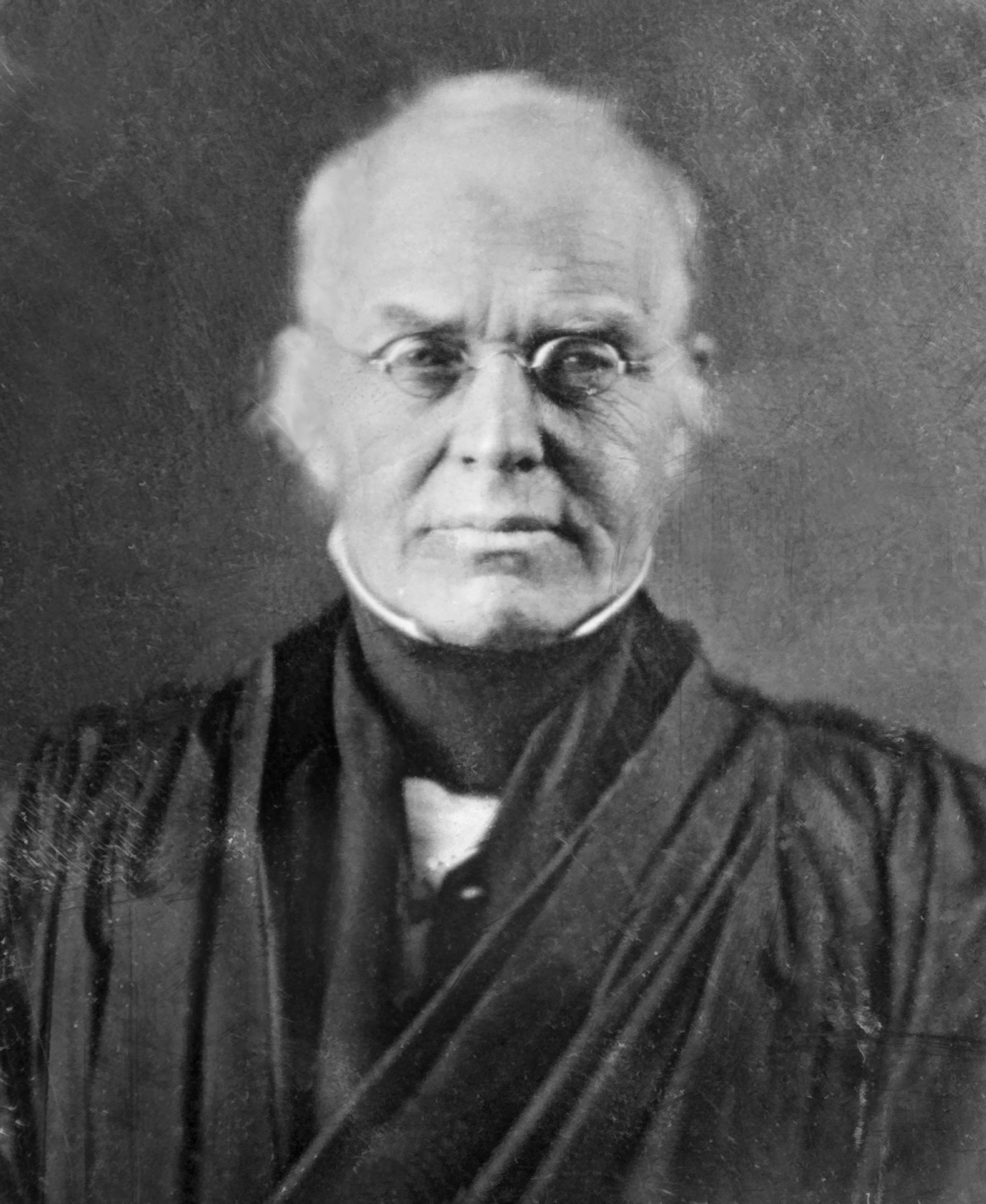
Joseph Story
Former justice
Former Associate Justice · Supreme Court of the United States · 1811–1845 · Appointed by James Madison
Joseph Story served as an Associate Justice of the Supreme Court of the United States (1811–1845) was appointed by James Madison. The page below collects sourced biographical facts, the appointment record, and provenance for Story.
FJC ID: 1388386
Key facts
- Full name
- Joseph Story
- Court
- Supreme Court of the United States
- Role
- Associate Justice
- Status
- Former justice
- Seat
- SCT0302
- Appointed by
- James Madison
- Appointment
- Senate-confirmed
- Confirmed
- 1811-11-18
- Supreme Court service
- 1811–1845
- Took seat
- 1811
- Born
- 1779
- Died
- 1845
- Dataset version
- 1.20260711
Appointment & service record
Associate Justice of the Supreme Court of the United States · 1811–1845
- Seat
- SCT0302
- Appointing president
- James Madison
- Appointment
- Senate-confirmed
- Confirmed
- November 18, 1811
Seat, appointing president, appointment type, confirmation date, and service dates are drawn from the Federal Judicial Center Biographical Directory and the Supreme Court's own members roster.[1][2][3]
Sources
- [1]https://www.fjc.gov/node/1388386fjc · retrieved 2026-06-16
- [2]https://www.supremecourt.gov/about/members_text.aspxsupremecourt.gov · retrieved 2026-06-16
- [3]https://www.fjc.gov/history/judges/biographical-directory-article-iii-federal-judges-exportfjc-directory · retrieved 2026-06-16
Biographical narrative
840 words · sourced from the Wikipedia REST extract
Joseph Story was an American lawyer, jurist, and politician who served as an associate justice of the Supreme Court of the United States from his appointment in 1811 until his death in 1845. During that time he authored opinions that shaped early federal jurisprudence, most notably in *Martin v. Hunter's Lessee* and *United States v. The Amistad*, and produced a foundational treatise on constitutional interpretation with his *Commentaries on the Constitution of the United States*. His legal scholarship and judicial philosophy influenced the development of American law well into the nineteenth century.
Early life and legal career
Joseph Story was born on September 18, 1779, in Marblehead, Massachusetts. He was the first child of eleven from the second marriage of his father, Dr. Elisha Story, a physician who had participated in the Boston Tea Party as a member of the Sons of Liberty during the American Revolution. The family relocated to Marblehead while the war was ongoing, and Joseph grew up in that New England community.
His early education took place at the Marblehead Academy until the fall of 1794, where he studied under schoolmaster William Harris, who would later become president of Columbia University. In January 1795, Story entered Harvard University, joining the student literary review Adelphi and earning membership in Phi Beta Kappa upon graduation. After completing his undergraduate studies, he pursued legal training by reading law with Samuel Sewall and Samuel Putnam, gaining admission to the bar in July 1801. He established a practice in Salem, Massachusetts.
Story’s public service began at the state level. As a member of the Democratic-Republican Party, he served in the Massachusetts House of Representatives from 1805 to 1807. From 1807 to 1809 he held the position of state attorney for Essex County. In 1808 he was elected to the United States House of Representatives to fill the vacancy left by the death of Jacob Crowninshield; his term lasted until March 3, 1809. Choosing not to seek a full term, he returned to private practice and continued his involvement in state politics. In 1811 he rejoined the Massachusetts legislature and was chosen as Speaker of the House.
Beyond his legal and political work, Story received recognition from several scholarly societies. He was elected a Fellow of the American Academy of Arts and Sciences in 1810 and became a member of the American Antiquarian Society in 1814, later serving as its vice‑president from 1831 to 1845. In 1844 he was elected to the American Philosophical Society.
Supreme Court tenure
On November 15, 1811, President James Madison nominated Story to fill the vacancy on the Supreme Court left by the death of Justice William Cushing. At the time of his nomination, Story was 32 years and 58 days old, making him the youngest individual ever appointed to the Court as of 2026. The Senate confirmed his appointment on November 18, 1811, and he took the oath of office on February 3, 1812.
During his tenure, which spanned more than three decades, Story contributed significantly to the Court’s jurisprudence. His opinion in *Martin v. Hunter's Lessee* (1816) addressed the scope of federal appellate jurisdiction over state courts, emphasizing the importance of national oversight for maintaining legal consistency across the states. In *United States v. The Amistad* he participated in a case that dealt with issues of international law and slavery, further demonstrating his engagement with complex constitutional questions.
Story’s influence extended beyond individual opinions through his scholarly work. In 1833 he published the first volume of his *Commentaries on the Constitution of the United States*, a comprehensive analysis of the Constitution’s provisions. The treatise became a cornerstone reference for legal scholars and practitioners, offering detailed commentary that helped shape early American constitutional interpretation.
Jurisprudence and legacy
Joseph Story is remembered as a jurist who sought to preserve property rights and uphold a stable legal framework in an era of rapid political change. He expressed opposition to the Jacksonian democratic movement, arguing that its emphasis on popular majorities threatened established property protections. Historians have characterized him as a “Statesman of the Old Republic,” aligning his legal philosophy with the republican ideals championed by Alexander Hamilton and John Marshall, as well as with contemporary New England Whigs such as Daniel Webster.
His conservative approach to law emphasized the protection of individual rights within the bounds of the Constitution. Through both his judicial opinions and his extensive commentaries, Story helped shape a body of American jurisprudence that balanced federal authority with respect for state sovereignty and private property. The *Commentaries* remain an important historical resource, offering insight into how early twentieth‑century legal scholars understood the founding document.
Story’s impact on the Supreme Court is measured not only by the cases he decided but also by his lasting contribution to constitutional scholarship. His writings continue to be cited in discussions of federalism, judicial review, and property rights, underscoring the enduring relevance of his work within American legal history. He died on September 10, 1845, leaving behind a legacy that bridged practical adjudication and rigorous academic analysis.
Sources & provenance
Every quantitative or attributable claim above carries a per-section [N] marker that resolves to the corresponding URL below. Each entry records the upstream provider, the canonical URL, and the timestamp at which the underlying source was retrieved.
Key facts
- https://www.fjc.gov/node/1388386fjc · retrieved 2026-06-16
- https://www.supremecourt.gov/about/members_text.aspxsupremecourt.gov · retrieved 2026-06-16
- https://www.fjc.gov/history/judges/biographical-directory-article-iii-federal-judges-exportfjc-directory · retrieved 2026-06-16
Biographical narrative
- https://en.wikipedia.org/wiki/Joseph_StoryWikipedia · retrieved 2026-06-16
Explore the federal judiciary
Fewer than 120 people have served on the Supreme Court of the United States in its history. Browse the full roster of current and former justices, or explore how the appointed federal judiciary fits into the federal government.