
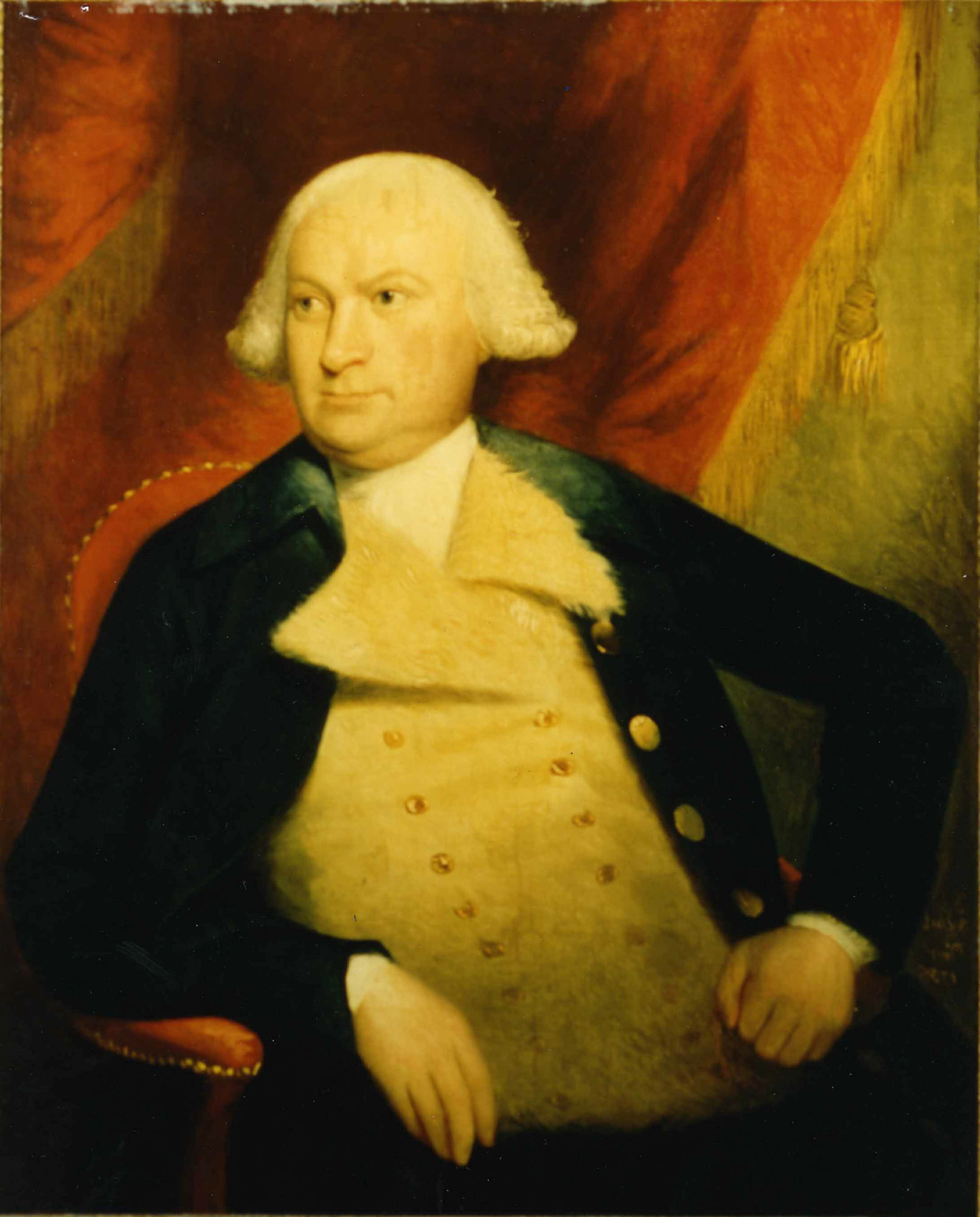
Historical · Supreme Court of the United States
Oliver Ellsworth
Former justice
Former Chief Justice · Supreme Court of the United States · 1796–1800 · Appointed by George Washington
Oliver Ellsworth served as the Chief Justice of the Supreme Court of the United States (1796–1800) was appointed by George Washington. The page below collects sourced biographical facts, the appointment record, and provenance for Ellsworth.
FJC ID: 1380476
Key facts
- Full name
- Oliver Ellsworth
- Court
- Supreme Court of the United States
- Role
- Chief Justice
- Status
- Former justice
- Seat
- SCT0103
- Appointed by
- George Washington
- Appointment
- Senate-confirmed
- Confirmed
- 1796-03-04
- Supreme Court service
- 1796–1800
- Took seat
- 1796
- Born
- 1745
- Died
- 1807
- Dataset version
- 1.20260711
Appointment & service record
Chief Justice of the United States · 1796–1800
- Seat
- SCT0103
- Appointing president
- George Washington
- Appointment
- Senate-confirmed
- Confirmed
- March 4, 1796
Seat, appointing president, appointment type, confirmation date, and service dates are drawn from the Federal Judicial Center Biographical Directory and the Supreme Court's own members roster.[1][2][3]
Sources
- [1]https://www.fjc.gov/node/1380476fjc · retrieved 2026-06-16
- [2]https://www.supremecourt.gov/about/members_text.aspxsupremecourt.gov · retrieved 2026-06-16
- [3]https://www.fjc.gov/history/judges/biographical-directory-article-iii-federal-judges-exportfjc-directory · retrieved 2026-06-16
Biographical narrative
923 words · sourced from the Wikipedia REST extract
Oliver Ellsworth was an influential Founding Father who served as the third chief justice of the United States Supreme Court and one of Connecticut’s first senators. Born in Windsor, Connecticut, he played a key role in drafting the Constitution, shaping the federal judiciary through the Judiciary Act of 1789, and representing the nation abroad as an envoy to France. His career spanned law, politics, and diplomacy, culminating in a brief but notable tenure on the nation’s highest court.
Early life and legal career
Oliver Ellsworth entered the world on April 29, 1745, in Windsor, Connecticut, the son of Captain David Ellsworth and Jemima (née Leavitt) Ellsworth. His family had long roots in the colony; ancestors who settled in Windsor during the mid‑17th century helped establish the community’s early civic life. Ellsworth pursued higher education at the College of New Jersey—now Princeton University—where he earned an A.B. degree in 1766 and became a founding member of the American Whig–Cliosophic Society, the institution that would evolve into one of the nation’s oldest debating clubs.
After completing his studies, Ellsworth turned to the law, spending four years preparing for admission to the bar. He was admitted in 1771 and quickly built a successful practice in Connecticut. In 1777 he was appointed state attorney for Hartford County, a position that placed him at the center of legal affairs during the Revolutionary War. That same year, he was selected as one of Connecticut’s delegates to the Continental Congress, where he served on several committees—including the Marine Committee and the Board of Treasury—throughout the remainder of the war and into the early post‑war period.
Ellsworth’s legal acumen also earned him a judgeship in his home state during the 1780s. His reputation as a thoughtful jurist led to his selection as a delegate to the Philadelphia Convention of 1787, where he participated in drafting the United States Constitution. He contributed significantly to the Connecticut Compromise that balanced representation between populous and less populous states and served on the Committee of Detail, responsible for preparing the first draft of the document. Although he left the convention before its final signing, his influence helped secure Connecticut’s ratification of the Constitution.
Following the adoption of the new government, Ellsworth was elected as one of Connecticut’s inaugural U.S. senators in 1789, a position he held until 1796. During this time he became the chief author of the Judiciary Act of 1789, which established the federal judiciary and granted the Supreme Court authority to review state supreme court decisions that conflicted with the Constitution. His legislative work also included strong support for Alexander Hamilton’s proposals—such as the Funding Act of 1790 and the Bank Bill of 1791—and advocacy for the United States Bill of Rights and the Jay Treaty.
Supreme Court tenure
Ellsworth’s judicial career reached its apex when President George Washington nominated him to serve as chief justice on March 4, 1796. The nomination followed the Senate’s rejection of John Rutledge, and Ellsworth was confirmed by a near‑unanimous vote. He served as chief justice from 1796 until his resignation in 1800 due to declining health.
During his four years on the Court, relatively few cases reached the bench, but Ellsworth left an imprint on its procedural practices. He is remembered for discouraging the then‑common practice of writing seriatim opinions—individual opinions issued by each justice—in favor of a more unified approach. In addition to his judicial responsibilities, Ellsworth served as the United States’ envoy to France from 1799 to 1800, where he signed the Convention of 1800 that ended hostilities between the two nations during the Quasi‑War.
Ellsworth’s service on the Supreme Court concluded in 1800 when he stepped down and was succeeded by John Marshall. He returned to Connecticut and continued public service as a member of the Governor’s Council until his death on November 26, 1807.
Jurisprudence and legacy
Oliver Ellsworth’s contributions to American law and governance are multifaceted. As chief author of the Judiciary Act of 1789, he helped lay the groundwork for the federal judiciary’s structure and authority, ensuring that the Supreme Court could exercise its role as a check on state courts. His legislative support for Hamiltonian economic policies reflected his commitment to establishing a stable national financial system.
On the bench, Ellsworth’s preference for consolidated opinions over seriatim writing influenced the Court’s procedural evolution, encouraging a more cohesive and efficient decision‑making process. Although the number of cases heard during his tenure was limited, his leadership helped shape early Supreme Court practice.
Ellsworth’s diplomatic service in France demonstrated his versatility beyond domestic affairs. By negotiating the Convention of 1800, he contributed to the resolution of an international conflict that had threatened U.S. neutrality and security at the close of the 18th century.
Beyond his public roles, Ellsworth was a family man; he married Abigail Wolcott in 1772, and together they raised nine children, including twins William Wolcott Ellsworth—who later served as governor of Connecticut—and Henry Leavitt Ellsworth, who became the first commissioner of the United States Patent Office. His descendants continued to play significant roles in American public life.
Ellsworth’s death on November 26, 1807 marked the end of a career that spanned the formative years of the United States. While his time as chief justice was brief, his earlier legislative and diplomatic achievements left an enduring imprint on the nation’s legal and political institutions. His work helped shape the early Supreme Court’s procedural norms, established the federal judiciary’s authority, and contributed to the resolution of international conflict—all foundational elements that continue to influence American governance today.
Sources & provenance
Every quantitative or attributable claim above carries a per-section [N] marker that resolves to the corresponding URL below. Each entry records the upstream provider, the canonical URL, and the timestamp at which the underlying source was retrieved.
Key facts
- https://www.fjc.gov/node/1380476fjc · retrieved 2026-06-16
- https://www.supremecourt.gov/about/members_text.aspxsupremecourt.gov · retrieved 2026-06-16
- https://www.fjc.gov/history/judges/biographical-directory-article-iii-federal-judges-exportfjc-directory · retrieved 2026-06-16
Biographical narrative
- https://en.wikipedia.org/wiki/Oliver_EllsworthWikipedia · retrieved 2026-06-16
Explore the federal judiciary
Fewer than 120 people have served on the Supreme Court of the United States in its history. Browse the full roster of current and former justices, or explore how the appointed federal judiciary fits into the federal government.