
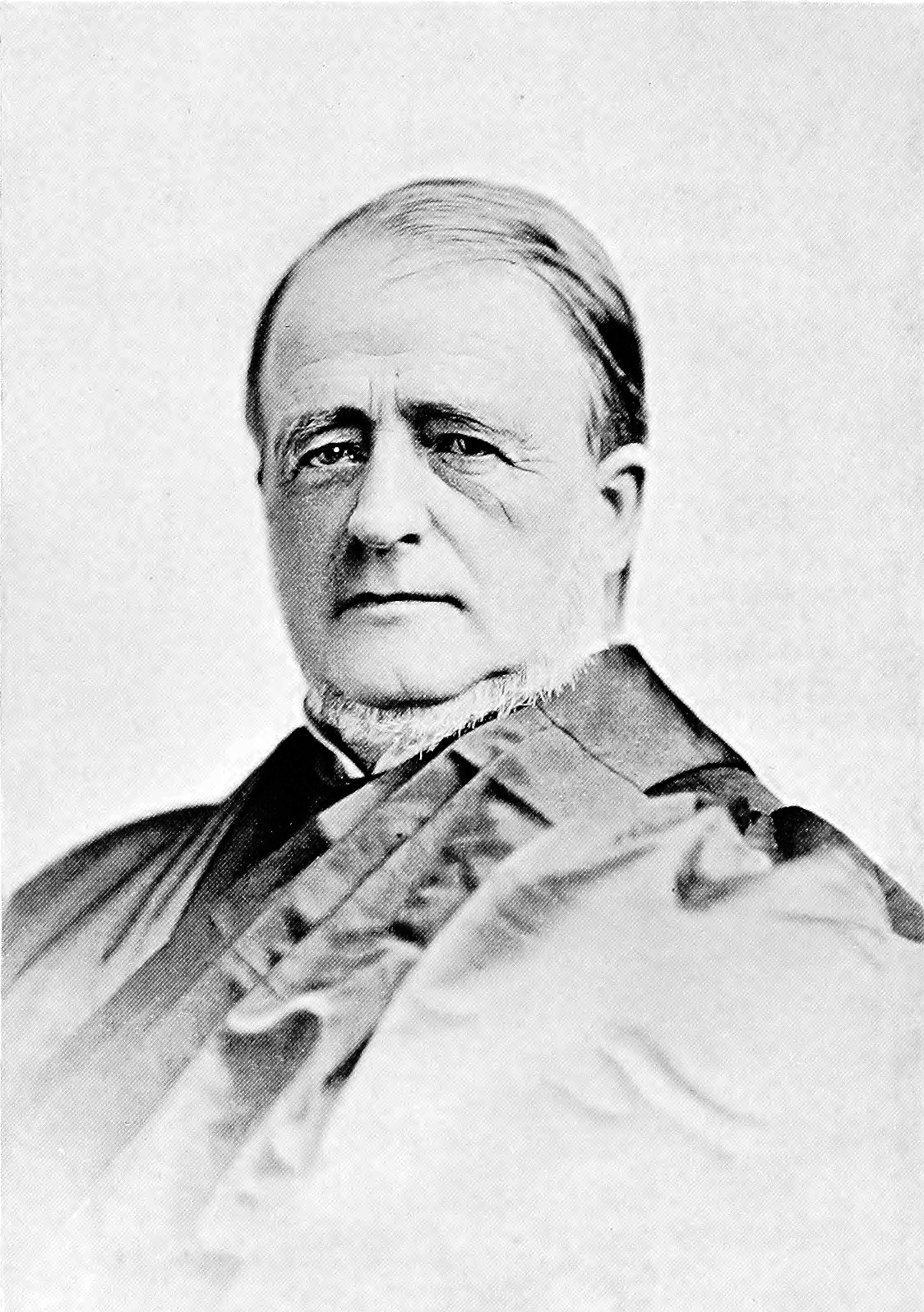
Historical · Supreme Court of the United States
Samuel M. Blatchford
Former justice
Former Associate Justice · Supreme Court of the United States · 1882–1893 · Appointed by Chester A Arthur
Samuel M. Blatchford served as an Associate Justice of the Supreme Court of the United States (1882–1893) was appointed by Chester A Arthur. The page below collects sourced biographical facts, the appointment record, and provenance for Blatchford.
FJC ID: 1377926
Key facts
- Full name
- Samuel M. Blatchford
- Court
- Supreme Court of the United States
- Role
- Associate Justice
- Status
- Former justice
- Seat
- SCT0208
- Appointed by
- Chester A Arthur
- Appointment
- Senate-confirmed
- Confirmed
- 1882-03-22
- Supreme Court service
- 1882–1893
- Took seat
- 1882
- Born
- 1820
- Died
- 1893
- Dataset version
- 1.20260711
Appointment & service record
Associate Justice of the Supreme Court of the United States · 1882–1893
- Seat
- SCT0208
- Appointing president
- Chester A Arthur
- Appointment
- Senate-confirmed
- Confirmed
- March 22, 1882
Seat, appointing president, appointment type, confirmation date, and service dates are drawn from the Federal Judicial Center Biographical Directory and the Supreme Court's own members roster.[1][2][3]
Sources
- [1]https://www.fjc.gov/node/1377926fjc · retrieved 2026-06-16
- [2]https://www.supremecourt.gov/about/members_text.aspxsupremecourt.gov · retrieved 2026-06-16
- [3]https://www.fjc.gov/history/judges/biographical-directory-article-iii-federal-judges-exportfjc-directory · retrieved 2026-06-16
Biographical narrative
856 words · sourced from the Wikipedia REST extract
Samuel M. Blatchford (March 9, 1820 – July 7, 1893) was an American lawyer and judge who served as an Associate Justice of the United States Supreme Court from 1882 until his death in 1893. A native of Auburn, New York, he rose through the federal judiciary to become the first individual to hold positions at all three levels—district court, appellate court, and the High Court—during a career marked by expertise in admiralty and patent law.
Early life and legal career
Samuel M. Blatchford was born on March 9, 1820, in Auburn, New York, the eldest of five children to Julia Ann Blatchford (née Mumford) and Richard Milford Blatchford. His family had a strong legal tradition; his father was an established attorney who maintained close ties with prominent figures such as Daniel Webster. A cousin of Major General Richard M. Blatchford, Samuel grew up in an environment steeped in public service.
He pursued his legal education by reading law under the guidance of William H. Seward, later a U.S. Senator and Secretary of State. After completing his studies, Blatchford entered private practice with his father and uncle. In 1854 he relocated to New York City, where he co‑founded the firm Blatchford, Seward & Griswold—an enterprise that would evolve into the modern law firm Cravath, Swaine & Moore. His reputation as a meticulous scholar of circuit court decisions led him to serve as reporter of decisions for the United States Circuit Court in New York and to cultivate a lucrative practice in admiralty law.
Blatchford’s judicial career began with a recess appointment by President Andrew Johnson on May 3, 1867, to the United States District Court for the Southern District of New York. The seat had been vacated by Samuel Betts. He was formally nominated on July 13, 1867; after Senate confirmation and receipt of his commission three days later, he served as a district judge until 1878.
On February 15, 1878 President Rutherford B. Hayes elevated Blatchford to the United States Court of Appeals for the Second Circuit, filling the vacancy created by the death of Alexander S. Johnson. After Senate confirmation and commissioning on March 4, 1878, he presided over appellate cases until his appointment to the Supreme Court in 1882.
Supreme Court tenure
President Chester A. Arthur nominated Blatchford to the U.S. Supreme Court on March 13, 1882, to fill the vacancy left by Associate Justice Ward Hunt. The nomination came after Senator George F. Edmunds and former Senator Roscoe Conkling declined consideration for the seat. The Senate confirmed the appointment on March 22, 1882, and Blatchford was sworn in on April 3, 1882.
During his eleven years on the High Court, Blatchford authored 430 opinions and two dissents. His judicial output reflected a deep familiarity with admiralty and patent matters, areas in which he had already established authority through both practice and scholarship—most notably as co‑author of *Blatchford and Howland's Admiralty Cases*, regarded at the time as the most comprehensive treatment of the subject.
Two opinions written by Blatchford attracted particular attention for their divergent conclusions regarding due process under the Fourteenth Amendment. In *Chicago, Milwaukee & St. Paul Railway Co. v. Minnesota* he reached one conclusion, while in *Budd v. People of New York* he arrived at another, prompting criticism that his reasoning appeared contradictory on the same constitutional issue.
Blatchford’s tenure was also distinguished by his personal wealth, which at the time of his nomination exceeded $3 million—a figure that would be equivalent to roughly $100 million in 2025 dollars—largely derived from real estate holdings. His financial acumen was demonstrated earlier in life when he sold all his shares of stock on the eve of the Battle of Fort Sumter, thereby preserving his fortune during the market downturn that followed the outbreak of the Civil War.
Jurisprudence and legacy
Blatchford’s jurisprudential contributions are most closely associated with admiralty law. His scholarly work on maritime cases provided a foundational reference for practitioners and judges alike. In addition to his written opinions, he served as a trustee of Columbia College, reflecting an ongoing commitment to legal education.
He died at his home in Newport, Rhode Island, after suffering paralysis in June 1893; he passed away on July 7, 1893, at the age of 73. His funeral was held at All Saints' Chapel in Newport and conducted by Bishop Henry C. Potter, who was a brother-in-law to Edward Tuckerman Potter. After burial in Greenwood Cemetery in Brooklyn, his legacy continued through various memorials, including the naming of the World War II Liberty Ship *SS Samuel Blatchford* in his honor.
Blatchford’s will, drafted on June 15, 1876, allocated portions of his estate to relatives and friends: $100,000 to Rachel Bliss Beckwith, $20,000 to Cordelia F. Green, and the remainder was divided between his widow and son. Upon his wife’s death, her share of realty was apportioned among Beckwith, Julia Maria Potter, and Blatchford’s sister Sophia Ethelinda Blatchford.
Through his service at every tier of the federal judiciary, his scholarly contributions to admiralty law, and his participation in landmark Supreme Court decisions, Samuel M. Blatchford left an enduring imprint on American legal history.
Sources & provenance
Every quantitative or attributable claim above carries a per-section [N] marker that resolves to the corresponding URL below. Each entry records the upstream provider, the canonical URL, and the timestamp at which the underlying source was retrieved.
Key facts
- https://www.fjc.gov/node/1377926fjc · retrieved 2026-06-16
- https://www.supremecourt.gov/about/members_text.aspxsupremecourt.gov · retrieved 2026-06-16
- https://www.fjc.gov/history/judges/biographical-directory-article-iii-federal-judges-exportfjc-directory · retrieved 2026-06-16
Biographical narrative
- https://en.wikipedia.org/wiki/Samuel_BlatchfordWikipedia · retrieved 2026-06-16
Explore the federal judiciary
Fewer than 120 people have served on the Supreme Court of the United States in its history. Browse the full roster of current and former justices, or explore how the appointed federal judiciary fits into the federal government.