
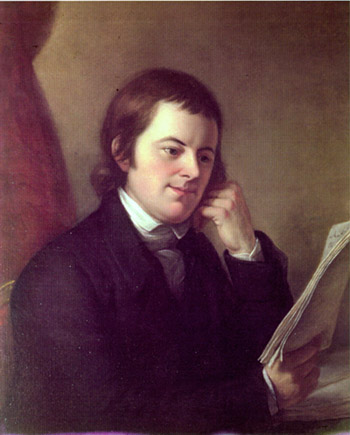
Historical · Supreme Court of the United States
Thomas Johnson
Former justice
Former Associate Justice · Supreme Court of the United States · 1791–1793 · Appointed by George Washington
Thomas Johnson served as an Associate Justice of the Supreme Court of the United States (1791–1793) was appointed by George Washington. The page below collects sourced biographical facts, the appointment record, and provenance for Johnson.
FJC ID: 1382861
Key facts
- Full name
- Thomas Johnson
- Court
- Supreme Court of the United States
- Role
- Associate Justice
- Status
- Former justice
- Seat
- SCT0202
- Appointed by
- George Washington
- Appointment
- Senate-confirmed
- Confirmed
- 1791-11-07
- Supreme Court service
- 1791–1793
- Took seat
- 1791
- Born
- 1732
- Died
- 1819
- Dataset version
- 1.20260711
Appointment & service record
Associate Justice of the Supreme Court of the United States · 1791–1793
- Seat
- SCT0202
- Appointing president
- George Washington
- Appointment
- Senate-confirmed
- Confirmed
- November 7, 1791
Seat, appointing president, appointment type, confirmation date, and service dates are drawn from the Federal Judicial Center Biographical Directory and the Supreme Court's own members roster.[1][2][3]
Sources
- [1]https://www.fjc.gov/node/1382861fjc · retrieved 2026-06-16
- [2]https://www.supremecourt.gov/about/members_text.aspxsupremecourt.gov · retrieved 2026-06-16
- [3]https://www.fjc.gov/history/judges/biographical-directory-article-iii-federal-judges-exportfjc-directory · retrieved 2026-06-16
Biographical narrative
983 words · sourced from the Wikipedia REST extract
Thomas Johnson was an American lawyer, politician, and patriot who served as the first associate justice of the United States Supreme Court. Born in colonial Maryland, he played a prominent role in the early governance of his state, participated in the Continental Congress during the Revolution, and briefly sat on the nation’s highest court before resigning due to ill health.
Early life and legal career
Thomas Johnson entered the world on November 4, 1732, in Calvert County, Maryland. He was the fourth child among ten siblings born to Thomas Johnson (1702–1777) and Dorcas Sedgwick Johnson (1705–1770). His family traced its roots back to a London lawyer who had emigrated to Maryland before 1700; this legal heritage influenced young Thomas’s own career path. The children were educated at home, after which he pursued the study of law under an established firm in the colony. In 1753, Johnson was admitted to the Maryland bar and began practicing as a solicitor.
By 1760, Johnson had relocated his practice to Frederick County, where he quickly became involved in local politics. The following year, in 1761, he secured election to the Maryland provincial assembly for the first time. His legal acumen and growing reputation earned him respect among his peers. On February 16, 1766, he married Ann Jennings, daughter of a judge under whom Johnson had apprenticed; the couple would go on to have eight children, though one died in infancy and another at a young age.
Johnson’s public service intensified as tensions with Britain escalated. In 1774 and again in 1775, the Maryland assembly sent him as a delegate to the First Continental Congress. There he aligned himself with those advocating for separation from Great Britain. During that session, he was named to the Committee of Secret Correspondence—alongside figures such as Benjamin Franklin and Benjamin Harrison V—to seek foreign assistance for the colonial cause.
After returning to Maryland, Johnson continued his legislative work while the Declaration of Independence was adopted. In 1775, he drafted a declaration of rights that the Maryland assembly later incorporated into the first part of the state’s constitution; this document would be adopted by the Annapolis convention in 1776. His commitment to the revolutionary effort extended beyond the legislature: from January 1776 to February 1777, Johnson served as a senior brigadier general in the Maryland militia. He commanded troops that aided General Washington during the army’s retreat through New Jersey in the harsh winter of 1776–77 and later delivered supplies to the Continental Army encampment at Valley Forge.
In early 1777, the state legislature elected Johnson as Maryland’s first governor following independence. He held that office until 1779, overseeing a nascent state government during a period of great uncertainty. Throughout the 1780s, he continued to hold judicial positions in Maryland and served again in the assembly in 1780, 1786, and 1787. In 1786, he championed legislation that would appoint commissioners from both Maryland and Virginia to negotiate regulations concerning navigation and jurisdiction on the Potomac River; although not a commissioner himself, Johnson’s advocacy helped bring about an agreement that served as a precursor to the Constitutional Convention of 1787.
Johnson attended the Maryland convention in 1788, where he successfully persuaded the state legislature to ratify the United States Constitution. That same year, he ran for governor again but was defeated by John Eager Howard.
Supreme Court tenure
In September 1789, President George Washington nominated Johnson to become the first federal judge for the District of Maryland; Johnson declined this appointment. The following year, he served as senior justice in the Maryland General Court system and later that year joined a commission tasked with laying out the federal capital under the Residence Act of 1790. In September 1791, the commissioners named the new city “The City of Washington” and the surrounding district “The Territory of Columbia.”
On August 5, 1791, President Washington gave Johnson a recess appointment as an associate justice of the Supreme Court to fill the vacancy left by John Rutledge. He was sworn into office on September 19, 1791. The formal nomination followed on October 31, and the United States Senate confirmed his appointment on November 7, 1791. During his brief tenure, Johnson authored the Court’s first written opinion in the case of Georgia v. Brailsford in 1792.
Johnson’s health had long been a concern; he cited poor condition as the reason for resigning from the Supreme Court on January 16, 1793. His resignation marked one of the shortest periods of service among all justices who have sat on the Court.
After leaving the bench, Johnson continued to be consulted by national leaders. In 1795, President Washington offered him a nomination for Secretary of State; Johnson declined, again citing health reasons. He delivered a eulogy for Washington at a memorial service in February 1800 and was later named Chief Judge for the District of Columbia by President John Adams on February 28, 1801, but he again refused the appointment.
Jurisprudence and legacy
Thomas Johnson’s judicial career on the Supreme Court was brief, yet it included the authorship of the Court’s first opinion. His tenure reflected the early challenges faced by a nascent federal judiciary as it sought to establish precedent and authority in a new nation. Though limited in duration, his service contributed to the foundational jurisprudence that would guide subsequent generations.
In his later years, Johnson lived at Rose Hill Manor in Frederick, Maryland—a home he shared with his daughter Ann and son‑in‑law John Colin Grahame. The manor has since been preserved as a county park, and part of its grounds now houses Governor Thomas Johnson High School, bearing his name in honor of his contributions to state governance.
Thomas Johnson passed away on October 26, 1819, at Rose Hill Manor. His legacy endures through the institutions that carry his name and through the early chapters of American legal history in which he played a pivotal role.
Sources & provenance
Every quantitative or attributable claim above carries a per-section [N] marker that resolves to the corresponding URL below. Each entry records the upstream provider, the canonical URL, and the timestamp at which the underlying source was retrieved.
Key facts
- https://www.fjc.gov/node/1382861fjc · retrieved 2026-06-16
- https://www.supremecourt.gov/about/members_text.aspxsupremecourt.gov · retrieved 2026-06-16
- https://www.fjc.gov/history/judges/biographical-directory-article-iii-federal-judges-exportfjc-directory · retrieved 2026-06-16
Biographical narrative
- https://en.wikipedia.org/wiki/Thomas_Johnson_(judge)Wikipedia · retrieved 2026-06-16
Explore the federal judiciary
Fewer than 120 people have served on the Supreme Court of the United States in its history. Browse the full roster of current and former justices, or explore how the appointed federal judiciary fits into the federal government.