
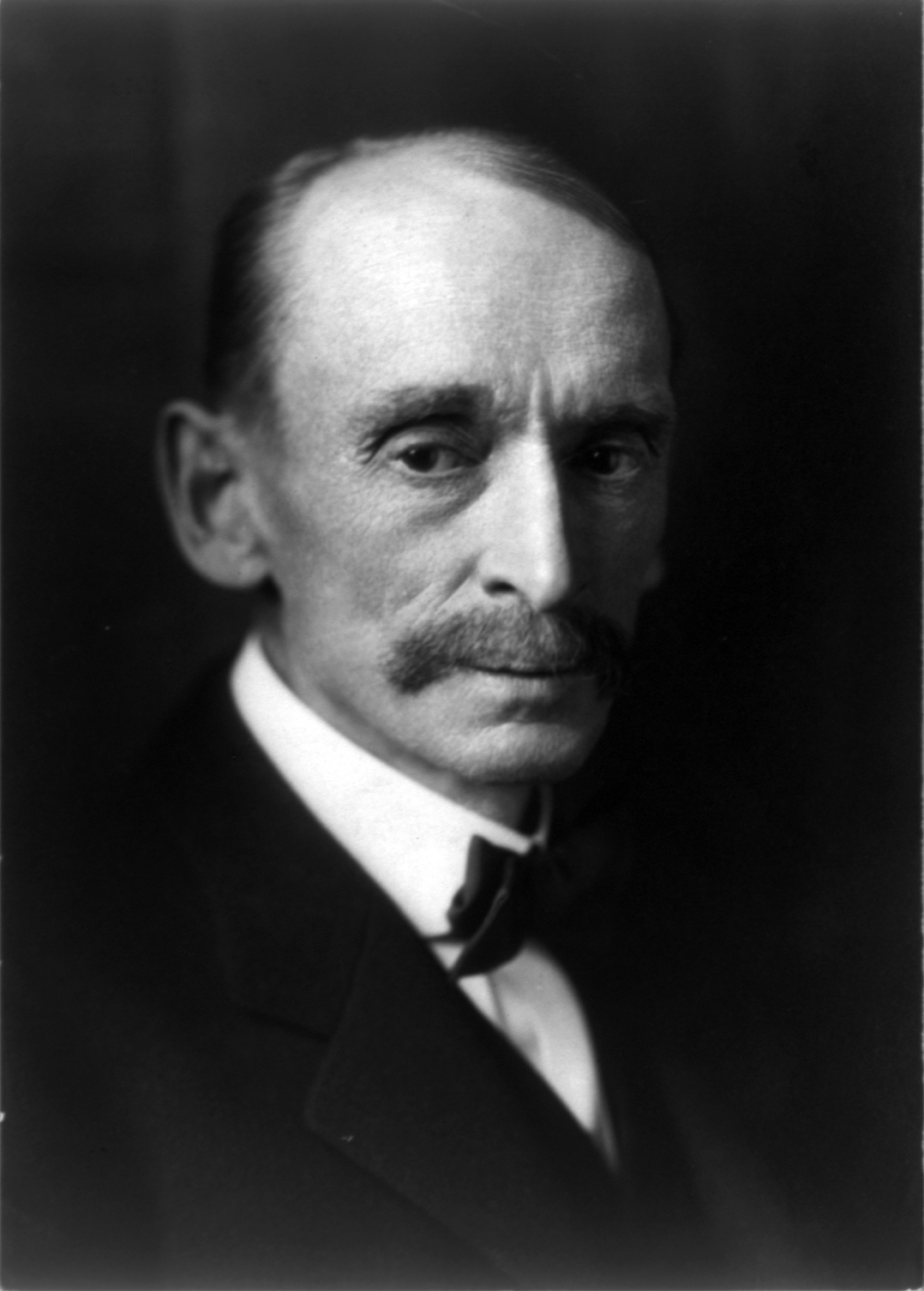
Historical · Supreme Court of the United States
William Rufus Day
Former justice
Former Associate Justice · Supreme Court of the United States · 1903–1922 · Appointed by Theodore Roosevelt
William Rufus Day served as an Associate Justice of the Supreme Court of the United States (1903–1922) was appointed by Theodore Roosevelt. The page below collects sourced biographical facts, the appointment record, and provenance for Day.
FJC ID: 1379896
Key facts
- Full name
- William Rufus Day
- Court
- Supreme Court of the United States
- Role
- Associate Justice
- Status
- Former justice
- Seat
- SCT1103
- Appointed by
- Theodore Roosevelt
- Appointment
- Senate-confirmed
- Confirmed
- 1903-02-23
- Supreme Court service
- 1903–1922
- Took seat
- 1903
- Born
- 1849
- Died
- 1923
- Dataset version
- 1.20260711
Appointment & service record
Associate Justice of the Supreme Court of the United States · 1903–1922
- Seat
- SCT1103
- Appointing president
- Theodore Roosevelt
- Appointment
- Senate-confirmed
- Confirmed
- February 23, 1903
Seat, appointing president, appointment type, confirmation date, and service dates are drawn from the Federal Judicial Center Biographical Directory and the Supreme Court's own members roster.[1][2][3]
Sources
- [1]https://www.fjc.gov/node/1379896fjc · retrieved 2026-06-16
- [2]https://www.supremecourt.gov/about/members_text.aspxsupremecourt.gov · retrieved 2026-06-16
- [3]https://www.fjc.gov/history/judges/biographical-directory-article-iii-federal-judges-exportfjc-directory · retrieved 2026-06-16
Biographical narrative
1,072 words · sourced from the Wikipedia REST extract
William Rufus Day was an American jurist and diplomat who served as an associate justice of the Supreme Court of the United States from 1903 until his retirement in 1922. Prior to his appointment to the nation's highest court, he held prominent positions in federal government, including Secretary of State under President William McKinley and judge on the United States Court of Appeals for the Sixth Circuit. His career spanned law practice, political advising, diplomatic negotiations, and judicial decision‑making, reflecting a broad engagement with the legal and governmental affairs of his era.
Early life and legal career
Born on April 17, 1849, in Ravenna, Ohio, Day was raised in a family deeply rooted in the legal profession. His father, Judge Luther Day, served on the Ohio Supreme Court, while his maternal grandfather, Rufus P. Spalding, also held that same position. The influence of these judicial relatives likely shaped Day’s early interest in law.
Day completed his undergraduate studies at the University of Michigan, earning a Bachelor of Science degree in 1870. He pursued legal training through a combination of apprenticeship and formal education: one year studying under attorney and judge George F. Robinson followed by a year at the university’s law school. He was admitted to the bar on July 5, 1872, and established his practice in Canton, Ohio. For twenty‑five years he worked primarily as a criminal defense lawyer and corporate counsel, partnering with William A. Lynch. During this period, Day became actively involved in Republican politics, which provided the foundation for his later federal appointments.
A close friendship developed between Day and William McKinley during McKinley’s political campaigns for Congress, the Ohio governorship, and ultimately the presidency. Day served as a legal and political adviser to McKinley throughout these contests. After McKinley assumed office in 1897, Day was appointed Assistant Secretary of State under John Sherman. When Sherman’s health declined, President McKinley replaced him with Day in 1898.
Shortly thereafter, Day left the cabinet to head the United States Peace Commission tasked with negotiating an end to the Spanish–American War. He advocated for returning most Spanish colonies—except Cuba—to Spain, a position that contrasted with McKinley’s preference for retaining control over the Philippines, Puerto Rico, and Guam. Despite his reservations about the harsh terms imposed by McKinley, Day negotiated a treaty with Spain in which the United States secured its wartime objectives. He later led the commission to Paris to sign the final peace agreement.
Day’s judicial career began with a recess appointment from President Benjamin Harrison to the United States District Court for the Northern District of Ohio on May 24, 1889; he declined this appointment. In February 1899, President McKinley nominated him to a newly created joint seat on the United States Court of Appeals for the Sixth Circuit and the United States Circuit Courts for the Sixth Circuit. The Senate confirmed the nomination on February 28, 1899, and Day received his commission that same day. He served on these courts until February 23, 1903, when he was elevated to the Supreme Court.
Supreme Court tenure
On February 19, 1903, President Theodore Roosevelt nominated Day as an associate justice of the Supreme Court to fill the vacancy left by George Shiras Jr. The Senate confirmed the nomination on February 23, and Day took his judicial oath on March 2, 1903. He occupied seat SCT1103 for nearly two decades.
During his tenure, Day served as Circuit Justice for the Seventh Circuit from March 9, 1903, to March 17, 1912, and subsequently for the Sixth Circuit from March 18, 1912, until November 13, 1922. He retired from active service on that date but briefly acted as an umpire of the Mixed Claims Commission adjudicating war claims against Germany.
Day’s judicial output was substantial: he authored 439 opinions, with only 18 dissents. His decisions reflected a cautious stance toward large corporations; he frequently sided with antitrust majorities and supported government actions in cases involving Standard Oil, American Tobacco, Union Pacific (1911–12), and Southern Pacific (1922). In the landmark case of *Weeks v. United States*, Day delivered the Court’s opinion that the warrantless seizure of documents from a private home violated the Fourth Amendment’s prohibition against unreasonable searches and seizures, thereby excluding such evidence from federal criminal prosecutions.
After Chief Justice Edward Douglass White died in 1910, Day proposed to President Warren G. Harding—a fellow Ohioan—that he be appointed chief justice for a six‑month term before retiring, allowing former president William Howard Taft to assume the position. Harding considered the suggestion, but Taft declined, arguing that a short tenure would not serve the office well.
Day’s service concluded with his retirement on November 13, 1922. He passed away the following year on July 9, 1923, at his home on Mackinac Island, Michigan, and was interred in West Lawn Cemetery in Canton, Ohio.
Jurisprudence and legacy
William Rufus Day’s jurisprudential record is notable for its consistency in addressing corporate power. His 439 opinions demonstrate a pattern of skepticism toward large business enterprises, often aligning with the Court’s antitrust majority. The relatively small number of dissents—only eighteen—suggests that he was generally willing to join prevailing judicial reasoning when it aligned with his principles.
The *Weeks v. United States* decision remains an enduring example of Day’s commitment to constitutional protections; by affirming the exclusionary rule for evidence obtained without a warrant, the opinion reinforced Fourth Amendment safeguards against unreasonable searches and seizures. This case continues to be cited in discussions of search‑and‑seizure jurisprudence.
Beyond his written opinions, Day’s influence extended into diplomatic history through his role in negotiating peace terms after the Spanish–American War. His advocacy for returning most colonies to Spain, despite ultimately accepting harsher U.S. conditions, reflects a nuanced approach to foreign policy that balanced national interests with considerations of international dignity.
In personal pursuits, Day was an avid baseball fan, often attending games at Boundary Field during his tenure on the Court. He reportedly requested updates from his clerk during bench hearings about the outcome of the 1912 World Series, illustrating his engagement with contemporary culture outside the courtroom.
Day’s legacy is that of a jurist who combined legal acumen with diplomatic experience, contributing to both domestic constitutional law and international treaty negotiations. His career trajectory—from local attorney in Ohio to Secretary of State and ultimately Supreme Court justice—embodies the breadth of public service roles available within the United States federal system during the late nineteenth and early twentieth centuries.
Sources & provenance
Every quantitative or attributable claim above carries a per-section [N] marker that resolves to the corresponding URL below. Each entry records the upstream provider, the canonical URL, and the timestamp at which the underlying source was retrieved.
Key facts
- https://www.fjc.gov/node/1379896fjc · retrieved 2026-06-16
- https://www.supremecourt.gov/about/members_text.aspxsupremecourt.gov · retrieved 2026-06-16
- https://www.fjc.gov/history/judges/biographical-directory-article-iii-federal-judges-exportfjc-directory · retrieved 2026-06-16
Biographical narrative
- https://en.wikipedia.org/wiki/William_R._DayWikipedia · retrieved 2026-06-16
Explore the federal judiciary
Fewer than 120 people have served on the Supreme Court of the United States in its history. Browse the full roster of current and former justices, or explore how the appointed federal judiciary fits into the federal government.