
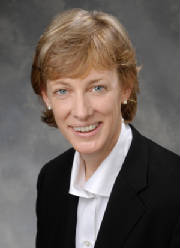
Currently serving · U.S. Court of Appeals for the Second Circuit
Debra Ann Livingston
Currently servingSenior status
Senior Circuit Judge · U.S. Court of Appeals for the Second Circuit · 2007–present · Appointed by George W Bush
Debra Ann Livingston serves as a senior circuit judge of the U.S. Court of Appeals for the Second Circuit (2007–present). Livingston was appointed by George W Bush. Livingston assumed senior status in 2026 and continues to hear cases.
Key facts
- Full name
- Debra Ann Livingston
- Court
- U.S. Court of Appeals for the Second Circuit
- Office
- Circuit Judge (U.S. Court of Appeals)
- Status
- Senior circuit judge (still serving)
- Duty status
- Senior
- Appointment
- Senate-confirmed
- FJC seat
- CA20903
- Tenure
- 2007–present
- Confirmed
- 2007-05-09
- Born
- 1959
- Died
- —
- First year on the bench
- 2007
- Dataset version
- 1.20260705
Appointment & service record
U.S. Court of Appeals for the Second Circuit · 2007–present
- Seat
- CA20903
- Appointment
- Senate-confirmed
- Appointing president
- George W Bush
- Confirmed
- 2007-05-09
- Commissioned
- 2007-05-17
- Senior status
- 2026-07-01 (still serving)
- Chief Judge
- 2020–2026
Court, FJC seat, appointment type (Senate-confirmed or recess), appointing president, confirmation and commission dates, and senior-status date are drawn from the Federal Judicial Center Biographical Directory and Wikidata.[1][2][3]
Sources
- [1]https://www.fjc.gov/node/1392571fjc · retrieved 2026-07-05
- [2]https://www.fjc.gov/history/judges/biographical-directory-article-iii-federal-judges-exportfjc-directory · retrieved 2026-07-05
- [3]https://www.wikidata.org/wiki/Q5248438Wikidata · retrieved 2026-07-05
Biographical narrative
905 words · sourced from the Wikipedia REST extract
Debra Ann Livingston (born 1959) is a senior United States circuit judge on the Court of Appeals for the Second Circuit. Appointed by President George W. Bush in 2007, she served as an active‑service judge for more than a decade before becoming chief judge in 2020. In early 2026 she announced her intention to assume senior status, a role that allows her to continue hearing cases while creating a vacancy for a new full‑time appointment.
Early life and legal career
Livingston was born in Waycross, Georgia, in 1959. She pursued undergraduate studies at Princeton University, where she earned a Bachelor of Arts degree magna cum laude from the Woodrow Wilson School of Public and International Affairs in 1980. Continuing her academic trajectory, she attended Harvard Law School, graduating magna cum laude with a Juris Doctor in 1984. While at Harvard, she contributed to the editorial staff of the Harvard Law Review.
Following law school, Livingston clerked for Judge J. Edward Lumbard of the United States Court of Appeals for the Second Circuit, gaining early exposure to appellate practice. She entered public service as an assistant United States attorney in the Southern District of New York from 1986 until 1991. In that capacity she handled criminal matters, notably participating in the prosecution of former Philippine President Ferdinand Marcos.
After her tenure as a federal prosecutor, Livingston worked as a legal consultant for the United Nations High Commissioner for Refugees, providing expertise on issues affecting displaced persons. She then joined the New York City law firm Paul, Weiss, Rifkind, Wharton & Garrison as an associate, where she practiced civil and commercial litigation.
Livingston’s commitment to public oversight led her to serve as a commissioner of the New York City Civilian Complaint Review Board from 1994 through 2003. The board investigates allegations of misconduct by police officers, and her role involved reviewing complaints and recommending disciplinary actions.
Parallel to her practice, Livingston developed an extensive academic career. She taught criminal procedure and evidence at the University of Michigan Law School between 1992 and 1994. In 1994 she joined the faculty of Columbia Law School, where she has remained a full‑time professor. At Columbia she holds the Paul J. Kellner Professorship of Law and served as vice dean from 2005 to 2006. Her scholarship includes co‑authoring *Comprehensive Criminal Procedure*, a widely used treatise on criminal law.
Federal appellate service
President George W. Bush first nominated Livingston to the Second Circuit on June 28, 2006, to fill the seat vacated by former Chief Judge John M. Walker, Jr. The nomination was returned at the close of the 109th Congress and subsequently renominated on January 9, 2007 for consideration by the 110th Congress. The Senate Judiciary Committee held a hearing on her nomination on April 11, 2007 and reported it favorably on April 25, 2007.
The United States Senate confirmed Livingston’s appointment on May 9, 2007 with unanimous support. She received her judicial commission eight days later, on May 17, 2007, and began serving as an active judge on the Second Circuit. Over the ensuing years she participated in panels addressing a broad spectrum of federal law, ranging from commercial disputes to constitutional questions.
Livingston’s seniority on the bench led to her selection as chief judge effective September 1, 2020. In that administrative role she oversaw the court’s docket management, case assignment, and internal governance, while continuing to author opinions. After serving as chief judge for several years, she announced in February 2026 her intention to assume senior status on July 1, 2026. Under senior status she remains a member of the court and continues to hear cases, thereby contributing judicial resources while allowing the appointment of a new full‑time circuit judge.
Jurisprudence and legacy
During her tenure on the Second Circuit, Livingston has been recognized for her analytical approach to complex legal issues and for her contributions to the development of criminal procedure jurisprudence. Her academic background in criminal law is reflected in opinions that often emphasize procedural safeguards and evidentiary standards.
One notable instance of her judicial reasoning occurred in December 2019 when she partially dissented from a panel decision ordering former President Donald J. Trump to comply with a congressional subpoena for his tax returns. In her dissent, Livingston expressed concern that the majority’s analysis insufficiently addressed separation‑of‑powers considerations and the potential for legislative subpoenas to distract the executive branch. She advocated for remanding the case to allow Congress to clarify the specific legislative purpose of its request before compelling compliance.
Livingston’s scholarly work, particularly as a co‑author of *Comprehensive Criminal Procedure*, has been cited by courts and practitioners seeking authoritative guidance on criminal law matters. Her long‑standing role as an educator at Columbia Law School has shaped generations of lawyers, many of whom have entered public service, private practice, or academia.
As chief judge, Livingston guided the Second Circuit through administrative challenges, including technological upgrades to court operations and efforts to improve access to justice. Her leadership emphasized efficiency and transparency while maintaining the court’s reputation for high‑quality jurisprudence.
In sum, Debra Ann Livingston’s career spans public prosecution, international humanitarian consulting, private practice, academic scholarship, and federal appellate service. Her contributions reflect a blend of practical courtroom experience and theoretical expertise, reinforcing the Second Circuit’s role as a leading authority on federal law. Through continued service as a senior judge, she remains an active participant in shaping the legal landscape of the United States.
Sources & provenance
Every quantitative or attributable claim above carries a per-section [N] marker that resolves to the corresponding URL below. Each entry records the upstream provider, the canonical URL, and the timestamp at which the underlying source was retrieved.
Key facts
- https://www.fjc.gov/node/1392571fjc · retrieved 2026-07-05
- https://www.fjc.gov/history/judges/biographical-directory-article-iii-federal-judges-exportfjc-directory · retrieved 2026-07-05
- https://www.wikidata.org/wiki/Q5248438Wikidata · retrieved 2026-07-05
Biographical narrative
- https://en.wikipedia.org/wiki/Debra_Ann_LivingstonWikipedia · retrieved 2026-07-05
Explore the federal judiciary
The U.S. Courts of Appeals are the intermediate appellate courts of the federal judiciary — thirteen circuits sitting between the district courts and the Supreme Court. Browse the full roster of judges on the U.S. Court of Appeals for the Second Circuit, or explore how the appointed federal judiciary fits into the federal government.