
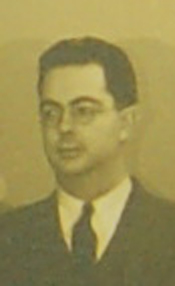
Historical · U.S. Court of Appeals for the Second Circuit
John Joseph Smith
Former Circuit Judge · U.S. Court of Appeals for the Second Circuit · 1960–1980 · Appointed by Dwight D Eisenhower
John Joseph Smith served as a circuit judge of the U.S. Court of Appeals for the Second Circuit (1960–1980). Smith was appointed by Dwight D Eisenhower.
Key facts
- Full name
- John Joseph Smith
- Court
- U.S. Court of Appeals for the Second Circuit
- Office
- Circuit Judge (U.S. Court of Appeals)
- Status
- Former circuit judge
- Duty status
- Not serving
- Appointment
- Senate-confirmed
- FJC seat
- CA20307
- Tenure
- 1960–1980
- Confirmed
- 1960-09-01
- Born
- 1904-01-25
- Died
- 1980-02-16
- First year on the bench
- 1960
- Dataset version
- 1.20260711
Appointment & service record
U.S. Court of Appeals for the Second Circuit · 1960–1971
- Seat
- CA20307
- Appointment
- Senate-confirmed
- Appointing president
- Dwight D Eisenhower
- Confirmed
- 1960-09-01
- Commissioned
- 1960-09-02
- Senior status
- 1971-11-06
Court, FJC seat, appointment type (Senate-confirmed or recess), appointing president, confirmation and commission dates, and senior-status date are drawn from the Federal Judicial Center Biographical Directory and Wikidata.[1][2][3]
Sources
- [1]https://www.fjc.gov/node/1387976fjc · retrieved 2026-07-11
- [2]https://www.fjc.gov/history/judges/biographical-directory-article-iii-federal-judges-exportfjc-directory · retrieved 2026-07-11
- [3]https://www.wikidata.org/wiki/Q1438555Wikidata · retrieved 2026-07-11
Biographical narrative
1,162 words · sourced from the Wikipedia REST extract
John Joseph Smith was a federal appellate judge who served on the United States Court of Appeals for the Second Circuit from 1960 to 1971, and in senior status until his death in 1980. Before his elevation to the circuit court, he had a distinguished career that included service in the United States House of Representatives and nearly two decades as a United States district judge. Appointed to the Second Circuit by President Dwight D. Eisenhower, a Republican, Smith brought to the appellate bench extensive experience in both the legislative and judicial branches of the federal government. His career spanned more than five decades of public service, from his election to Congress in the mid-1930s through his final years on the federal bench.
Early life and legal career
Born on January 25, 1904, in Waterbury, Connecticut, Smith was educated in the public school system of his home state. He pursued his undergraduate education at Yale University, where he earned a Bachelor of Arts degree in 1925. Continuing his studies at Yale, he completed his legal education at the university's law department, which would later become known as Yale Law School, receiving his Bachelor of Laws degree in 1927. That same year, he was admitted to the Connecticut bar, beginning his professional legal career.
Following his admission to the bar, Smith remained connected to his alma mater as a research fellow at Yale Law School, a position he held from 1927 to 1928. This fellowship allowed him to deepen his understanding of legal scholarship and research during the formative period of his career. Concurrent with his early legal work, Smith also maintained a military commitment, serving in the Field Artillery Reserves from 1925 to 1935, a decade-long period that reflected the civic engagement common among professionals of his generation.
After completing his fellowship, Smith entered private legal practice in his hometown of Waterbury in 1928. He practiced law privately for thirteen years, establishing himself as a member of the Connecticut legal community. His work in private practice provided him with practical experience in the law and helped build the foundation for his subsequent career in public service. This period of private practice lasted until 1941, when he transitioned to federal judicial service.
During his years in private practice, Smith also pursued a career in electoral politics. He was elected as a Democrat to the United States House of Representatives, representing Connecticut beginning in 1935. He served in the Seventy-fourth, Seventy-fifth, Seventy-sixth, and Seventy-seventh Congresses, giving him approximately six years of legislative experience at the federal level. His congressional service came to an end on November 4, 1941, when he resigned his seat to accept an appointment to the federal judiciary, marking a significant transition from the legislative to the judicial branch.
Federal appellate service
Smith's federal judicial career began at the district court level. President Franklin D. Roosevelt nominated him on October 16, 1941, to serve on the United States District Court for the District of Connecticut. The nomination came to fill a vacancy that had been created by Judge Edwin Stark Thomas. The Senate confirmed Smith's nomination on October 28, 1941, and he received his commission two days later, on October 30, 1941. He would serve on the district court for nearly two decades, gaining substantial trial court experience across a wide range of federal matters.
During his tenure on the district court, Smith rose to a leadership position within that court. He served as Chief Judge of the District of Connecticut from 1953 to 1960, a seven-year period during which he was responsible for administrative oversight of the court in addition to his judicial duties. His service on the district court concluded on September 13, 1960, when he was elevated to the court of appeals.
Smith's appointment to the United States Court of Appeals for the Second Circuit came through nomination by President Dwight D. Eisenhower, a Republican, demonstrating the bipartisan respect he had earned during his years of public service. Eisenhower nominated Smith on January 11, 1960, to fill a seat that had been vacated by Judge Carroll C. Hincks. The confirmation process extended over several months, with the Senate confirming the nomination on September 1, 1960. Smith received his commission the following day, on September 2, 1960, and began his service on the Second Circuit, one of the most prominent and influential federal appellate courts in the nation.
As a circuit judge, Smith served on a court with jurisdiction over Connecticut, New York, and Vermont, hearing appeals from the federal district courts within those states. He served in active status on the Second Circuit for eleven years. On November 6, 1971, he assumed senior status, a form of semi-retirement that allows federal judges to continue hearing cases with a reduced caseload. Smith remained in senior status for nearly nine years, continuing to contribute to the work of the court until his death.
Jurisprudence and legacy
Smith's judicial career encompassed nearly four decades on the federal bench, with service at both the trial and appellate levels. His experience as a district judge, including seven years as chief judge, provided him with a thorough grounding in federal trial practice and procedure before he joined the appellate court. This background likely informed his approach to reviewing lower court decisions during his time on the Second Circuit.
The Second Circuit during Smith's tenure was widely regarded as one of the most important federal appellate courts, handling significant cases arising from the major metropolitan area of New York City and the surrounding region. As a member of this court, Smith participated in the resolution of appeals across the full spectrum of federal law, contributing to the development of legal precedent that would guide district courts and litigants throughout the circuit.
Smith's path to the federal appellate bench was notable for the breadth of experience he brought to the position. Unlike judges who come to the bench solely from private practice or academic positions, Smith had served in all three branches of government at various levels: as an elected member of the legislative branch in Congress, as a trial judge in the judicial branch, and through his work with the executive branch during his years in private practice and military reserve service. This diverse background provided him with multiple perspectives on the operation of government and the law.
Smith maintained his residence in Connecticut throughout his judicial career, living in West Hartford while serving on the federal bench. He died in Waterbury, his birthplace, on February 16, 1980, while still holding senior status on the Second Circuit. His death marked the end of his service on the court. He was interred at Calvary Cemetery in Waterbury, returning to the community where his legal and public service career had begun more than five decades earlier. His lengthy tenure on the federal bench, spanning from 1941 to 1980, represented a significant contribution to the administration of federal justice in Connecticut and the Second Circuit.
Sources & provenance
Every quantitative or attributable claim above carries a per-section [N] marker that resolves to the corresponding URL below. Each entry records the upstream provider, the canonical URL, and the timestamp at which the underlying source was retrieved.
Key facts
- https://www.fjc.gov/node/1387976fjc · retrieved 2026-07-11
- https://www.fjc.gov/history/judges/biographical-directory-article-iii-federal-judges-exportfjc-directory · retrieved 2026-07-11
- https://www.wikidata.org/wiki/Q1438555Wikidata · retrieved 2026-07-11
Biographical narrative
- https://en.wikipedia.org/wiki/J._Joseph_SmithWikipedia · retrieved 2026-07-11
Explore the federal judiciary
The U.S. Courts of Appeals are the intermediate appellate courts of the federal judiciary — thirteen circuits sitting between the district courts and the Supreme Court. Browse the full roster of judges on the U.S. Court of Appeals for the Second Circuit, or explore how the appointed federal judiciary fits into the federal government.