
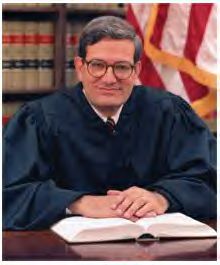
Currently serving · U.S. Court of Appeals for the Second Circuit
José Alberto Cabranes
Currently servingSenior status
Senior Circuit Judge · U.S. Court of Appeals for the Second Circuit · 1994–present · Appointed by Bill Clinton
José Alberto Cabranes serves as a senior circuit judge of the U.S. Court of Appeals for the Second Circuit (1994–present). Cabranes was appointed by Bill Clinton. Cabranes assumed senior status in 2023 and continues to hear cases.
Key facts
- Full name
- José Alberto Cabranes
- Court
- U.S. Court of Appeals for the Second Circuit
- Office
- Circuit Judge (U.S. Court of Appeals)
- Status
- Senior circuit judge (still serving)
- Duty status
- Senior
- Appointment
- Senate-confirmed
- FJC seat
- CA20208
- Tenure
- 1994–present
- Confirmed
- 1994-08-09
- Born
- 1940
- Died
- —
- First year on the bench
- 1994
- Dataset version
- 1.20260705
Appointment & service record
U.S. Court of Appeals for the Second Circuit · 1994–present
- Seat
- CA20208
- Appointment
- Senate-confirmed
- Appointing president
- Bill Clinton
- Confirmed
- 1994-08-09
- Commissioned
- 1994-08-10
- Senior status
- 2023-03-09 (still serving)
Court, FJC seat, appointment type (Senate-confirmed or recess), appointing president, confirmation and commission dates, and senior-status date are drawn from the Federal Judicial Center Biographical Directory and Wikidata.[1][2][3]
Sources
- [1]https://www.fjc.gov/node/1378686fjc · retrieved 2026-07-05
- [2]https://www.fjc.gov/history/judges/biographical-directory-article-iii-federal-judges-exportfjc-directory · retrieved 2026-07-05
- [3]https://www.wikidata.org/wiki/Q6291233Wikidata · retrieved 2026-07-05
Biographical narrative
1,548 words · sourced from the Wikipedia REST extract
José Alberto Cabranes (born December 22, 1940) is a senior United States circuit judge on the Court of Appeals for the Second Circuit. Appointed to the appellate bench by President William J. Clinton in 1994, he has continued to hear cases after assuming senior status. Prior to his service on the Second Circuit, Cabranes was a district judge in Connecticut and built a career that combined private practice, academic scholarship, university administration, and public‑service roles at both state and federal levels. He is noted for being the first Puerto Rican appointed to a federal judgeship in the continental United States.
Early life and legal career
José Alberto Cabranes was born in Mayagüez, Puerto Rico, into a family of educators; both his mother and father had attended public schools on the island and earned degrees from the University of Puerto Rico. When he was five years old, his father—one of the first professionally trained social workers in Puerto Rico and then chief probation officer for the U.S. District Court there—was recruited by the National Council of Jewish Women to direct Melrose House, a settlement house in the South Bronx that had historically served newly arrived Jewish immigrants and was increasingly assisting Puerto Rican newcomers. The family relocated to New York City, where Cabranes attended St. Anselm’s School, a Roman Catholic elementary institution in the Bronx, before moving with his family to Flushing, Queens.
He completed secondary education at Flushing High School, graduating in 1957. Cabranes pursued undergraduate studies at Columbia College, earning a Bachelor of Arts in history in 1961. Between his college graduation and enrollment in law school, he returned to Puerto Rico for a brief period to teach courses on the History of Puerto Rico and the History of the United States at Colegio San Ignacio de Loyola in Río Piedras.
Cabranes entered Yale Law School and received his Juris Doctor in 1965. During his legal studies he was awarded a Kellett Research Fellowship from Columbia College and a Humanitarian Trust Studentship in Public International Law from the Faculty Board of Law of the University of Cambridge. These awards enabled him to study international law at Queens’ College, Cambridge, where he completed a Master of Letters in 1967.
After returning to New York City, Cabranes began his legal practice as an associate with the firm Casey, Lane & Mittendorf from 1967 until 1971. While working as an attorney, he became actively involved in civic and community organizations that served the Puerto Rican population and broader public‑interest causes. He served as a trustee of the Hudson Guild settlement house on Manhattan’s West Side, held a directorship with Citizens Union—a long‑standing good‑government organization—and chaired the board of ASPIRA of New York, an agency dedicated to preparing Hispanic youth for higher education. In addition, he was a founding member of the Puerto Rican Legal Defense and Education Fund and later served as its chairman from 1975 to 1980.
In 1971 Cabranes transitioned from private practice to academia, accepting an appointment as associate professor of law at Rutgers University Law School in Newark. His teaching portfolio included administrative law, conflicts of law, and international law. That same year he was appointed by New York City Mayor John V. Lindsay to the board of directors of the newly created New York City Health and Hospitals Corporation, a public corporation overseeing municipal hospitals.
Two years later, Cabranes took a leave of absence from Rutgers to serve as Special Counsel to Governor Rafael Hernández‑Colón of Puerto Rico and head of the Commonwealth’s Washington office, an entity that would later become known as the Puerto Rico Federal Affairs Administration. In 1975 he was recruited by Yale University President Kingman Brewster, Jr. to become the institution’s first general counsel. Cabranes held this position through successive university administrations, providing legal guidance on matters ranging from academic governance to institutional finance.
During his tenure at Yale, Cabranes continued to engage in public service. He served as a public member of the United States delegation to the Conference on Security and Cooperation in Europe (Belgrade, 1977–1978) and acted as a consultant to Secretary of State Cyrus R. Vance during the same period. His expertise in international law earned him election to the Council on Foreign Relations. In 1978 he published *Citizenship and the American Empire*, a legislative history examining the 1917 statute that conferred U.S. citizenship on Puerto Ricans.
President Jimmy Carter appointed Cabranes as a lay member of the President’s Commission on Mental Health (1977–1979), chaired by First Lady Rosalynn Carter. Although Carter reportedly considered him for an ambassadorship to Colombia, Cabranes declined the nomination after diplomatic concerns arose regarding his Puerto Rican heritage.
Cabranes’ early legal and academic career was marked by a blend of scholarly work, university administration, and sustained involvement in civic organizations that addressed the needs of immigrant and minority communities in New York and beyond.
Federal appellate service
Following a distinguished period in private practice, academia, and public service, Cabranes entered the federal judiciary. In 1979 he was nominated by President Carter to a seat on the United States District Court for the District of Connecticut; his confirmation that December was unanimous. This appointment made him the first Puerto Rican to receive a federal judgeship on the continental United States.
Cabranes served as a district judge in Connecticut for several years, handling a broad docket that included civil and criminal matters. His reputation for thorough legal analysis and his background in administrative and international law contributed to his effectiveness on the trial bench.
In 1994 President William J. Clinton nominated Cabranes to the United States Court of Appeals for the Second Circuit, filling the seat designated as CA20208. The Senate confirmed his appointment on August 9, 1994, and he received his commission shortly thereafter. As a circuit judge, Cabranes participated in panels that reviewed decisions from federal district courts within New York, Connecticut, and Vermont, applying precedent to resolve complex issues of federal law.
During his tenure on the Second Circuit, Cabranes also served as presiding judge of the United States Foreign Intelligence Surveillance Court of Review (FISCR). In this capacity he oversaw appellate review of applications for electronic surveillance conducted under the Foreign Intelligence Surveillance Act, a role that required careful balancing of national security interests with constitutional protections.
After more than two decades of active service on the appellate bench, Cabranes assumed senior status. While senior judges carry a reduced caseload, they remain fully empowered to hear and decide cases, and Cabranes continues to contribute to the work of the Second Circuit in this capacity.
Jurisprudence and legacy
Judge José Alberto Cabranes’ judicial career reflects a convergence of scholarly expertise, administrative experience, and commitment to public service. His early academic focus on administrative law, conflicts of law, and international law informed his approach to appellate decision‑making, particularly in cases involving federal agencies, cross‑border legal questions, and the interplay between domestic statutes and international obligations.
His tenure as general counsel for Yale University provided him with extensive experience navigating complex institutional governance issues, a background that proved valuable when adjudicating disputes concerning university policies, academic freedom, and the application of federal regulations to educational entities. Moreover, his participation in high‑level diplomatic forums such as the Conference on Security and Cooperation in Europe contributed to an understanding of international legal norms that has been evident in opinions addressing treaty interpretation and foreign sovereign immunity.
Cabranes’ service on the Foreign Intelligence Surveillance Court of Review placed him at the intersection of national security law and civil liberties. In that role, he helped shape the procedural standards governing government surveillance requests, ensuring that appellate review adhered to statutory requirements while respecting constitutional safeguards. Although specific opinions from his time on the FISCR are not detailed here, his leadership in that specialized court underscores a legacy of involvement in some of the most sensitive areas of federal jurisprudence.
Beyond his judicial work, Cabranes’ broader contributions to the legal profession include mentorship of law students and young attorneys, particularly those from Hispanic and Puerto Rican backgrounds. His early involvement with organizations such as ASPIRA of New York and the Puerto Rican Legal Defense and Education Fund demonstrated a longstanding commitment to expanding educational and professional opportunities for minority communities. By breaking racial and ethnic barriers—most notably as the first Puerto Rican appointed to a federal judgeship in the continental United States—Cabranes has served as a visible role model, illustrating the possibilities of public service for members of underrepresented groups.
His scholarly output, highlighted by *Citizenship and the American Empire*, continues to be cited in discussions of U.S. territorial law and the constitutional status of Puerto Rico. The book’s detailed legislative history offers insight into the legal foundations of American citizenship policy, reflecting Cabranes’ ability to blend rigorous historical research with contemporary legal analysis.
In sum, Judge José Alberto Cabranes’ career spans private practice, academia, university administration, public‑policy advising, and federal judicial service at both trial and appellate levels. His work has contributed to the development of administrative and international law jurisprudence, informed the oversight of intelligence surveillance activities, and paved the way for greater diversity within the federal judiciary. As a senior judge who remains active on the Second Circuit, his influence endures through ongoing participation in the adjudication of significant federal legal questions.
Sources & provenance
Every quantitative or attributable claim above carries a per-section [N] marker that resolves to the corresponding URL below. Each entry records the upstream provider, the canonical URL, and the timestamp at which the underlying source was retrieved.
Key facts
- https://www.fjc.gov/node/1378686fjc · retrieved 2026-07-05
- https://www.fjc.gov/history/judges/biographical-directory-article-iii-federal-judges-exportfjc-directory · retrieved 2026-07-05
- https://www.wikidata.org/wiki/Q6291233Wikidata · retrieved 2026-07-05
Biographical narrative
- https://en.wikipedia.org/wiki/Jos%C3%A9_A._CabranesWikipedia · retrieved 2026-07-05
Explore the federal judiciary
The U.S. Courts of Appeals are the intermediate appellate courts of the federal judiciary — thirteen circuits sitting between the district courts and the Supreme Court. Browse the full roster of judges on the U.S. Court of Appeals for the Second Circuit, or explore how the appointed federal judiciary fits into the federal government.