
Historical · U.S. Court of Appeals for the Second Circuit
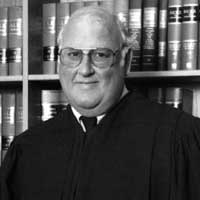
Ralph K. Winter Jr.
Former Circuit Judge · U.S. Court of Appeals for the Second Circuit · 1981–2020 · Appointed by Ronald Reagan
Ralph K. Winter Jr. served as a circuit judge of the U.S. Court of Appeals for the Second Circuit (1981–2020). Jr. was appointed by Ronald Reagan.
Key facts
- Full name
- Ralph K. Winter Jr.
- Court
- U.S. Court of Appeals for the Second Circuit
- Office
- Circuit Judge (U.S. Court of Appeals)
- Status
- Former circuit judge
- Duty status
- Not serving
- Appointment
- Senate-confirmed
- FJC seat
- CA20407
- Tenure
- 1981–2020
- Confirmed
- 1981-12-09
- Born
- 1935-07-30
- Died
- 2020-12-08
- First year on the bench
- 1981
- Dataset version
- 1.20260711
Appointment & service record
U.S. Court of Appeals for the Second Circuit · 1981–2000
- Seat
- CA20407
- Appointment
- Senate-confirmed
- Appointing president
- Ronald Reagan
- Confirmed
- 1981-12-09
- Commissioned
- 1981-12-10
- Senior status
- 2000-09-30
- Chief Judge
- 1997–2000
Court, FJC seat, appointment type (Senate-confirmed or recess), appointing president, confirmation and commission dates, and senior-status date are drawn from the Federal Judicial Center Biographical Directory and Wikidata.[1][2][3]
Sources
- [1]https://www.fjc.gov/node/1389966fjc · retrieved 2026-07-11
- [2]https://www.fjc.gov/history/judges/biographical-directory-article-iii-federal-judges-exportfjc-directory · retrieved 2026-07-11
- [3]https://www.wikidata.org/wiki/Q7287734Wikidata · retrieved 2026-07-11
Biographical narrative
1,156 words · sourced from the Wikipedia REST extract
Ralph K. Winter Jr. was a United States circuit judge who served on the United States Court of Appeals for the Second Circuit from 1981 to 2000, including as Chief Judge from 1997 to 2000. Born in 1935 and passing away in 2020, Winter had a distinguished career that spanned both academia and the federal judiciary. Before his appointment to the bench by President Ronald Reagan, a Republican, he was a longtime faculty member at Yale Law School for two decades. His judicial service was marked by his experience in multiple important judicial roles, including later service on the United States Foreign Intelligence Surveillance Court of Review. Winter's career bridged the worlds of legal scholarship and federal appellate jurisprudence during a significant period in American legal history.
Early life and legal career
Ralph Karl Winter Jr. was born on July 30, 1935, in Waterbury, Connecticut. He attended the Taft School, a preparatory institution, graduating in 1953. He continued his education at Yale University, where he earned his Bachelor of Arts degree in 1957. Winter remained at Yale for his legal education, obtaining his Bachelor of Laws from Yale Law School in 1960.
Following his graduation from law school, Winter embarked on a traditional path for aspiring legal professionals by serving in prestigious judicial clerkships. From 1960 to 1961, he clerked for Judge Caleb Merrill Wright of the United States District Court for the District of Delaware. He then moved to a clerkship with Judge Thurgood Marshall of the United States Court of Appeals for the Second Circuit, serving from 1961 to 1962. This clerkship with Marshall, who would later become a Supreme Court Justice, provided Winter with experience in the very circuit where he would eventually serve as a judge himself.
After completing his clerkships, Winter joined the faculty at Yale Law School in 1962, beginning what would become a twenty-year academic career. He started as a research associate and lecturer from 1962 to 1964, then advanced to assistant and associate professor positions from 1964 to 1968. In 1968, he was promoted to professor of law, a position he held until his appointment to the federal bench in 1982.
During his academic tenure, Winter maintained connections to policy and research institutions in Washington, D.C. He served as a consultant to the Subcommittee on Separation of Powers of the United States Senate Committee on the Judiciary from 1968 to 1972. From 1968 to 1970, he was a senior fellow at the Brookings Institution. He received a Guggenheim Fellowship, serving as a Guggenheim Fellow in Washington from 1971 to 1972. Additionally, he was an adjunct scholar at the American Enterprise Institute from 1972 to 1981. Winter also served as a member of the Board of Trustees at Brooklyn Law School.
In his academic and policy work, Winter was known for advocating positions favoring limited government involvement in business matters. He also supported the principle of state control over such matters rather than federal control, reflecting a particular approach to questions of federalism and economic regulation.
Federal appellate service
President Ronald Reagan, a Republican, nominated Winter to the United States Court of Appeals for the Second Circuit on November 18, 1981. The nomination was to fill a seat that had been vacated by Judge Walter R. Mansfield. Winter was confirmed by the United States Senate on December 9, 1981, and received his commission the following day, on December 10, 1981. His confirmation marked the transition from a distinguished academic career to service on one of the nation's most prominent federal appellate courts.
Winter served as an active circuit judge for nearly two decades. The Second Circuit, based in New York City, has jurisdiction over appeals from federal district courts in New York, Connecticut, and Vermont, and handles a significant volume and variety of federal cases. During his tenure on the court, Winter participated in numerous panels and contributed to the development of federal law across multiple areas of jurisprudence.
In 1997, Winter was elevated to the position of Chief Judge of the Second Circuit, the administrative head of the court. He served in this leadership capacity from 1997 to 2000, overseeing the court's operations during a period of significant caseload and administrative responsibility. As Chief Judge, he was also a member of the Judicial Conference of the United States from 1997 to 2000. The Judicial Conference is the national policy-making body for the federal courts, and membership reflects the significant administrative responsibilities that accompany the chief judgeship of a circuit court.
Winter assumed senior status on September 30, 2000, a form of semi-retirement that allows federal judges to continue hearing cases with a reduced caseload. His assumption of senior status concluded his service as Chief Judge and as an active member of the court, though senior judges often continue to make important contributions to their circuits.
Following his transition to senior status, Winter took on an additional specialized judicial role. From 2003 to 2010, he served as one of three judges on the United States Foreign Intelligence Surveillance Court of Review. This court reviews decisions of the Foreign Intelligence Surveillance Court and handles matters related to foreign intelligence surveillance, representing a highly specialized and sensitive area of federal law.
Winter died on December 8, 2020, from esophageal cancer, several months after his eighty-fifth birthday.
Jurisprudence and legacy
Over the course of his judicial career, Winter's chambers served as a training ground for numerous law clerks who went on to prominent legal careers. His former clerks include individuals who later served in significant positions across the legal profession, judiciary, academia, and government. Among those who clerked for Winter were Steven G. Calabresi, who clerked from 1983 to 1984 and also clerked for other prominent judges; Paul G. Mahoney, who clerked from 1984 to 1985; George T. Conway III, who clerked from 1987 to 1988; and Robert J. Giuffra Jr., who also clerked from 1987 to 1988. Laura Ingraham clerked for Winter from 1991 to 1992, and Emmet Flood clerked from 1992 to 1993. Florence Y. Pan, who clerked from 1994 to 1995, later became a federal judge herself. Wendy E. Stone (Long) clerked from 1996 to 1997, and Robert M. Daines also served as a clerk during Winter's tenure. The prominence achieved by many of his former clerks reflects the quality of the experience and mentorship provided in Winter's chambers.
Winter's career represents a significant contribution to American federal jurisprudence spanning multiple decades. His path from academic scholarship at one of the nation's leading law schools to service on a major federal appellate court, followed by leadership as Chief Judge and specialized service on the Foreign Intelligence Surveillance Court of Review, demonstrates the breadth of his engagement with the federal judicial system. His service during the final two decades of the twentieth century and into the twenty-first century placed him at the center of important developments in federal law during a dynamic period in American legal history.
Sources & provenance
Every quantitative or attributable claim above carries a per-section [N] marker that resolves to the corresponding URL below. Each entry records the upstream provider, the canonical URL, and the timestamp at which the underlying source was retrieved.
Key facts
- https://www.fjc.gov/node/1389966fjc · retrieved 2026-07-11
- https://www.fjc.gov/history/judges/biographical-directory-article-iii-federal-judges-exportfjc-directory · retrieved 2026-07-11
- https://www.wikidata.org/wiki/Q7287734Wikidata · retrieved 2026-07-11
Biographical narrative
- https://en.wikipedia.org/wiki/Ralph_K._Winter_Jr.Wikipedia · retrieved 2026-07-11
Explore the federal judiciary
The U.S. Courts of Appeals are the intermediate appellate courts of the federal judiciary — thirteen circuits sitting between the district courts and the Supreme Court. Browse the full roster of judges on the U.S. Court of Appeals for the Second Circuit, or explore how the appointed federal judiciary fits into the federal government.