
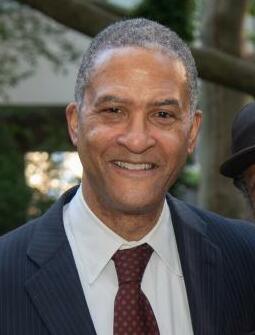
Currently serving · U.S. Court of Appeals for the Second Circuit
Raymond Joseph Lohier Jr.
Currently serving
Circuit Judge · U.S. Court of Appeals for the Second Circuit · 2010–present · Appointed by Barack Obama
Raymond Joseph Lohier Jr. serves as a circuit judge of the U.S. Court of Appeals for the Second Circuit (2010–present). Jr. was appointed by Barack Obama.
Key facts
- Full name
- Raymond Joseph Lohier Jr.
- Court
- U.S. Court of Appeals for the Second Circuit
- Office
- Circuit Judge (U.S. Court of Appeals)
- Status
- Active circuit judge
- Duty status
- Active
- Appointment
- Senate-confirmed
- FJC seat
- CA21503
- Tenure
- 2010–present
- Confirmed
- 2010-12-19
- Born
- 1965
- Died
- —
- First year on the bench
- 2010
- Dataset version
- 1.20260705
Appointment & service record
U.S. Court of Appeals for the Second Circuit · 2010–present
- Seat
- CA21503
- Appointment
- Senate-confirmed
- Appointing president
- Barack Obama
- Confirmed
- 2010-12-19
- Commissioned
- 2010-12-20
- Senior status
- —
- Chief Judge
- 2026–present
Court, FJC seat, appointment type (Senate-confirmed or recess), appointing president, confirmation and commission dates, and senior-status date are drawn from the Federal Judicial Center Biographical Directory and Wikidata.[1][2][3]
Sources
- [1]https://www.fjc.gov/node/1393561fjc · retrieved 2026-07-05
- [2]https://www.fjc.gov/history/judges/biographical-directory-article-iii-federal-judges-exportfjc-directory · retrieved 2026-07-05
- [3]https://www.wikidata.org/wiki/Q7298967Wikidata · retrieved 2026-07-05
Biographical narrative
1,100 words · sourced from the Wikipedia REST extract
Raymond Joseph Lohier Jr., born in 1965, is an American jurist who serves on the United States Court of Appeals for the Second Circuit and has held the position of chief judge since 2026. Appointed by President Barack Obama, he was confirmed to the appellate bench in December 2010 after a career that included service as an assistant United States attorney in the Southern District of New York and as a senior trial attorney in the Department of Justice’s Civil Rights Division. Lohier is noted for being the first Haitian‑American appointed to an Article III federal judgeship and for his involvement in high‑profile securities fraud investigations prior to joining the judiciary.
Early life and legal career
Raymond Joseph Lohier Jr. was born on December 1, 1965, in Montreal, Quebec, Canada, and is of Haitian heritage. He completed his secondary education at Friends’ Central School in Philadelphia, graduating in 1984. Pursuing higher education, Lohier attended Harvard College where he earned a Bachelor of Arts degree with cum laude honors, reflecting strong academic performance in an undergraduate liberal‑arts environment. He then enrolled at the New York University School of Law, obtaining his Juris Doctor and serving as editor‑in‑chief of the NYU Annual Survey of American Law, a role that gave him early experience in legal scholarship and editorial oversight.
Following law school, Lohier clerked for Judge Robert P. Patterson Jr. of the United States District Court for the Southern District of New York. The clerkship provided direct exposure to federal trial procedures, opinion drafting, and the inner workings of a busy district court that handles complex commercial and criminal matters. After completing his clerkship, he entered private practice as an associate at the New York City office of Cleary Gottlieb Steen & Hamilton. In that capacity he worked on a range of commercial matters, gaining practical experience in corporate law, securities transactions, and litigation strategy.
In 1997 Lohier transitioned to public service, joining the Civil Rights Division of the United States Department of Justice as a senior trial attorney. Working under then‑assistant attorney general Bill Lann Lee, he led litigation concerning employment discrimination and contributed to other civil‑rights initiatives undertaken by the federal government through the year 2000. This period deepened his expertise in statutory interpretation, constitutional claims, and the enforcement of federal anti‑discrimination policies.
That same year marked Lohier’s entry into the U.S. Attorney’s Office for the Southern District of New York as an assistant United States attorney. Within that office he held several leadership roles, first as chief of the narcotics unit, where he supervised investigations and prosecutions involving controlled substances and related organized‑crime activity. He later became chief of the Securities and Commodities Fraud Task Force, a position that placed him at the forefront of federal efforts to combat complex financial fraud. In these capacities he oversaw significant investigations, most notably the probe into the Bernard Madoff investment fraud scheme and the prosecution of attorney Marc Dreier for securities violations. His work in the criminal division emphasized the enforcement of federal statutes governing financial markets and organized crime, and it contributed to high‑profile outcomes that reinforced the integrity of New York’s financial sector.
Federal appellate service
The vacancy on the Second Circuit created by Judge Sonia Sotomayor’s elevation to the United States Supreme Court prompted New York Senator Charles Schumer to recommend Lohier for the open seat. President Barack Obama formally nominated him on March 10, 2010. The United States Senate confirmed his appointment on December 19, 2010 by a unanimous vote, and he received his judicial commission the following day.
Since joining the Second Circuit in 2010, Judge Lohier has participated in the court’s appellate review of federal cases arising from New York, Connecticut, and Vermont. The Second Circuit is widely regarded as one of the nation’s most influential appellate courts because of its jurisdiction over a dense concentration of financial institutions, major corporations, and significant civil‑rights litigation. In his role as an active circuit judge, Lohier has sat on numerous three‑judge panels, contributed to majority and concurring opinions, and engaged in the rigorous legal analysis that shapes precedent within the federal system.
In 2026 he succeeded to the role of chief judge, assuming administrative leadership of the circuit while continuing to hear and decide appeals. The chief judgeship carries responsibilities such as overseeing case assignment procedures, managing the court’s budget and personnel, and representing the circuit in interactions with other branches of government and the Judicial Conference of the United States. By combining these managerial duties with his ongoing judicial work, Judge Lohier helps ensure both the efficient operation of the court and the consistent development of its jurisprudence.
Jurisprudence and legacy
Judge Lohier’s career is distinguished by several historic firsts and contributions to both the legal profession and broader civic institutions. As the inaugural Haitian‑American Article III federal judge, his confirmation marked a milestone for representation within the United States judiciary and signaled progress toward greater ethnic diversity on the federal bench. His background in civil‑rights litigation and securities‑fraud prosecution informs his perspective on cases involving governmental authority, individual rights, and financial regulation, although he adjudicates each matter according to established legal standards without regard to personal experience.
Beyond his judicial duties, Lohier maintains active involvement with academic and professional organizations. He is married to Donna Hae Kyun Lee, a senior associate dean of clinical programs and professor at the City University of New York School of Law; the couple has been married since 1999 and resides in Brooklyn, New York. In 2021 he was elected to serve on Harvard University’s Board of Overseers for a six‑year term concluding in 2027, reflecting his ongoing commitment to higher education governance. In May 2026 Harvard announced that Lohier would serve as president of the Board of Overseers for the 2026‑27 academic year, a role that includes presiding over meetings and guiding the board’s oversight responsibilities. Additionally, Judge Lohier is an elected member of the American Law Institute, an organization dedicated to producing scholarly work on legal reform and model statutes.
Through his combined experience as a federal prosecutor, civil‑rights attorney, and appellate judge, Lohier has helped shape the development of law in areas ranging from employment discrimination to securities regulation. His leadership role as chief judge positions him to influence the administration of justice within one of the nation’s most prominent circuit courts, while his participation in educational governance underscores a commitment to legal education and institutional stewardship. The totality of his service reflects both personal achievement and broader contributions to the rule of law, civil‑rights protection, and the effective functioning of the federal judiciary.
Sources & provenance
Every quantitative or attributable claim above carries a per-section [N] marker that resolves to the corresponding URL below. Each entry records the upstream provider, the canonical URL, and the timestamp at which the underlying source was retrieved.
Key facts
- https://www.fjc.gov/node/1393561fjc · retrieved 2026-07-05
- https://www.fjc.gov/history/judges/biographical-directory-article-iii-federal-judges-exportfjc-directory · retrieved 2026-07-05
- https://www.wikidata.org/wiki/Q7298967Wikidata · retrieved 2026-07-05
Biographical narrative
- https://en.wikipedia.org/wiki/Raymond_LohierWikipedia · retrieved 2026-07-05
Explore the federal judiciary
The U.S. Courts of Appeals are the intermediate appellate courts of the federal judiciary — thirteen circuits sitting between the district courts and the Supreme Court. Browse the full roster of judges on the U.S. Court of Appeals for the Second Circuit, or explore how the appointed federal judiciary fits into the federal government.