
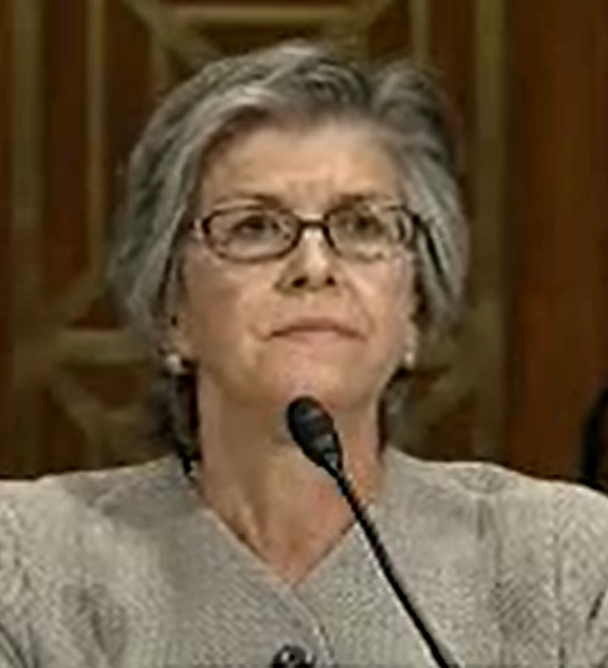
Currently serving · U.S. Court of Appeals for the Second Circuit
Susan Laura Carney
Currently servingSenior status
Senior Circuit Judge · U.S. Court of Appeals for the Second Circuit · 2011–present · Appointed by Barack Obama
Susan Laura Carney serves as a senior circuit judge of the U.S. Court of Appeals for the Second Circuit (2011–present). Carney was appointed by Barack Obama. Carney assumed senior status in 2022 and continues to hear cases.
Key facts
- Full name
- Susan Laura Carney
- Court
- U.S. Court of Appeals for the Second Circuit
- Office
- Circuit Judge (U.S. Court of Appeals)
- Status
- Senior circuit judge (still serving)
- Duty status
- Senior
- Appointment
- Senate-confirmed
- FJC seat
- CA20409
- Tenure
- 2011–present
- Confirmed
- 2011-05-17
- Born
- 1951
- Died
- —
- First year on the bench
- 2011
- Dataset version
- 1.20260705
Appointment & service record
U.S. Court of Appeals for the Second Circuit · 2011–present
- Seat
- CA20409
- Appointment
- Senate-confirmed
- Appointing president
- Barack Obama
- Confirmed
- 2011-05-17
- Commissioned
- 2011-05-17
- Senior status
- 2022-09-27 (still serving)
Court, FJC seat, appointment type (Senate-confirmed or recess), appointing president, confirmation and commission dates, and senior-status date are drawn from the Federal Judicial Center Biographical Directory and Wikidata.[1][2][3]
Sources
- [1]https://www.fjc.gov/node/1393711fjc · retrieved 2026-07-05
- [2]https://www.fjc.gov/history/judges/biographical-directory-article-iii-federal-judges-exportfjc-directory · retrieved 2026-07-05
- [3]https://www.wikidata.org/wiki/Q7648092Wikidata · retrieved 2026-07-05
Biographical narrative
820 words · sourced from the Wikipedia REST extract
Susan Laura Carney (born September 16, 1951) is a senior United States circuit judge on the Court of Appeals for the Second Circuit. Appointed by President Barack Obama in 2010 and confirmed the following year, she served as an active‑service judge from 2011 until assuming senior status in late 2022. Throughout her career she has worked in private practice, federal government service, and university administration, bringing experience in litigation, appellate advocacy, and complex regulatory matters to the federal bench.
Early life and legal career
Carney was born in Waltham, Massachusetts, to Cleo Olgas Carney and John R. Carney Jr., both of whom had served in the United States Navy. Her father later became a partner at the Boston law firm Young & Carney. She grew up with five brothers and pursued an undergraduate education at Radcliffe College, graduating cum laude in 1973 with a Bachelor of Arts focused on Russian history and literature.
Following her undergraduate studies, Carney attended Harvard Law School, where she earned a Juris Doctor magna cum laude in 1977. After law school she clerked for Judge Levin H. Campbell of the United States Court of Appeals for the First Circuit, gaining early exposure to appellate practice.
From 1979 to 1986 Carney practiced law at Rogovin, Huge & Lenzner in Washington, D.C., initially as an associate and later attaining partnership status. Her work there centered on federal‑court litigation and business counseling, particularly for large nonprofit organizations. In 1986 she joined two former colleagues from Rogovin to establish the Washington office of Los Angeles‑based firm Tuttle & Taylor. Subsequent to that venture, Carney served as Of Counsel at Bredhoff & Kaiser, a D.C. labor law firm where she focused on appellate work.
Carney’s public‑sector experience includes a two‑year tenure (1996–1998) as Associate General Counsel of the Peace Corps, where she contributed to legal matters affecting the agency’s worldwide operations. Relocating to Connecticut in 1998, she entered the legal department of Yale University. Beginning as counsel and later advancing to Deputy General Counsel in 2001, Carney became the second‑ranking attorney for an institution with a multi‑billion‑dollar budget. Her responsibilities at Yale spanned compliance with federal statutes governing scientific research, intellectual property, health care, and international collaborations. She also served briefly as Acting General Counsel during the summer of 2008.
In addition to her professional roles, Carney is admitted to practice law in Connecticut, the District of Columbia, and Massachusetts. She has contributed to the governance of the National Association of College & University Attorneys by serving on its board of directors.
Federal appellate service
President Barack Obama nominated Carney on May 20, 2010 to fill a vacancy on the Second Circuit created when Judge Barrington D. Parker Jr. took senior status in October 2009. The United States Senate confirmed her nomination in 2011, and she received her judicial commission on May 17, 2011. Carney entered active service as a circuit judge on June 21, 2011.
During her tenure as an active‑service judge, Carney participated in the adjudication of appeals arising from federal district courts within New York, Connecticut, and Vermont, the jurisdiction of the Second Circuit. She contributed to panels that addressed a broad spectrum of legal issues, including commercial disputes, civil rights matters, and complex regulatory questions.
On November 5, 2021 Carney announced her intention to assume senior status once her successor was confirmed. She formally took senior status on September 27, 2022, thereby continuing to hear cases on a reduced basis while creating a vacancy for a new full‑time judge on the court.
Jurisprudence and legacy
Carney’s judicial work reflects the breadth of her prior experience in both private practice and institutional counsel. Her opinions often demonstrate careful analysis of statutory language and regulatory frameworks, consistent with her background handling federal compliance matters at Yale and the Peace Corps. While serving on the Second Circuit, she has been part of panels that issued rulings later reviewed by the United States Supreme Court.
A notable instance occurred in 2024 when the Supreme Court unanimously reversed a decision authored by Carney and two fellow Second Circuit judges in the First Amendment case involving the National Rifle Association of America v. Vullo. The high court’s reversal underscores the appellate process whereby circuit opinions may be examined and, at times, superseded by the nation’s highest judicial authority.
Beyond specific cases, Carney’s legacy includes her role as a senior judge who continues to contribute to the court’s workload while mentoring newer members of the judiciary. Her career trajectory—from clerkship through diverse legal practice, governmental service, and university administration—exemplifies a multifaceted legal background that informs her approach to appellate adjudication.
Carney is married to journalist Lincoln W. Caplan, also a Harvard Law School alumnus; the couple wed in February 1979 in Carney’s hometown of Waltham and have one daughter, Molly Caplan. Her personal connections to both the legal profession and public service complement her professional contributions to the federal judiciary.
Sources & provenance
Every quantitative or attributable claim above carries a per-section [N] marker that resolves to the corresponding URL below. Each entry records the upstream provider, the canonical URL, and the timestamp at which the underlying source was retrieved.
Key facts
- https://www.fjc.gov/node/1393711fjc · retrieved 2026-07-05
- https://www.fjc.gov/history/judges/biographical-directory-article-iii-federal-judges-exportfjc-directory · retrieved 2026-07-05
- https://www.wikidata.org/wiki/Q7648092Wikidata · retrieved 2026-07-05
Biographical narrative
- https://en.wikipedia.org/wiki/Susan_L._CarneyWikipedia · retrieved 2026-07-05
Explore the federal judiciary
The U.S. Courts of Appeals are the intermediate appellate courts of the federal judiciary — thirteen circuits sitting between the district courts and the Supreme Court. Browse the full roster of judges on the U.S. Court of Appeals for the Second Circuit, or explore how the appointed federal judiciary fits into the federal government.