
Historical · U.S. Court of Appeals for the Second Circuit
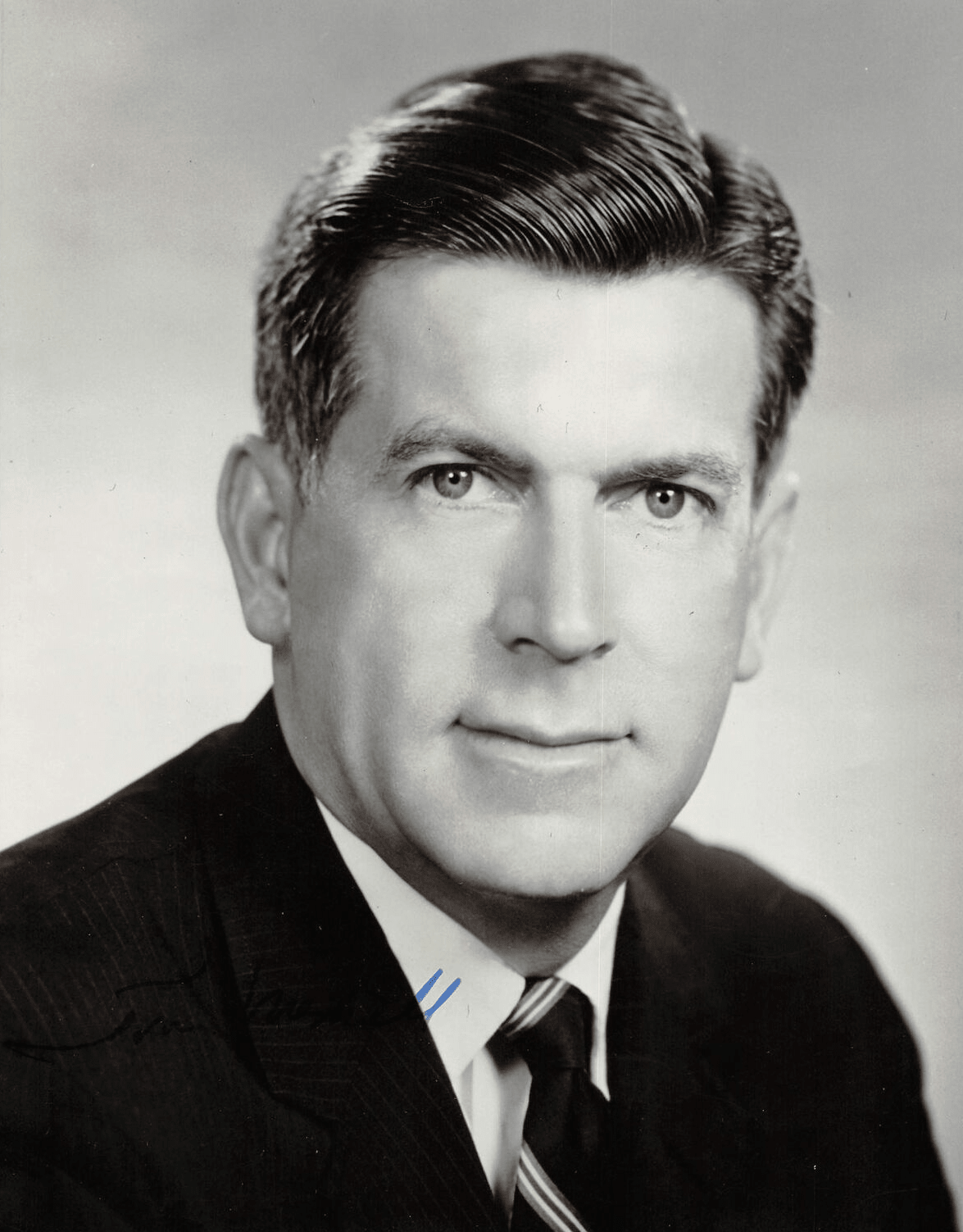
Thomas Joseph Meskill
Former Circuit Judge · U.S. Court of Appeals for the Second Circuit · 1975–2007 · Appointed by Gerald Ford
Thomas Joseph Meskill served as a circuit judge of the U.S. Court of Appeals for the Second Circuit (1975–2007). Meskill was appointed by Gerald Ford.
Key facts
- Full name
- Thomas Joseph Meskill
- Court
- U.S. Court of Appeals for the Second Circuit
- Office
- Circuit Judge (U.S. Court of Appeals)
- Status
- Former circuit judge
- Duty status
- Not serving
- Appointment
- Senate-confirmed
- FJC seat
- CA20308
- Tenure
- 1975–2007
- Confirmed
- 1975-04-22
- Born
- 1928-01-30
- Died
- 2007-10-29
- First year on the bench
- 1975
- Dataset version
- 1.20260711
Appointment & service record
U.S. Court of Appeals for the Second Circuit · 1975–1993
- Seat
- CA20308
- Appointment
- Senate-confirmed
- Appointing president
- Gerald Ford
- Confirmed
- 1975-04-22
- Commissioned
- 1975-04-23
- Senior status
- 1993-06-30
- Chief Judge
- 1992–1993
Court, FJC seat, appointment type (Senate-confirmed or recess), appointing president, confirmation and commission dates, and senior-status date are drawn from the Federal Judicial Center Biographical Directory and Wikidata.[1][2][3]
Sources
- [1]https://www.fjc.gov/node/1385056fjc · retrieved 2026-07-11
- [2]https://www.fjc.gov/history/judges/biographical-directory-article-iii-federal-judges-exportfjc-directory · retrieved 2026-07-11
- [3]https://www.wikidata.org/wiki/Q431804Wikidata · retrieved 2026-07-11
Biographical narrative
1,275 words · sourced from the Wikipedia REST extract
Thomas Joseph Meskill was a United States circuit judge who served on the United States Court of Appeals for the Second Circuit from 1975 until his death in 2007, including a term as Chief Judge from 1992 to 1993. Born in New Britain, Connecticut, in 1928, he had an extensive career in public service that spanned all three branches of government at the local, state, and federal levels. Before his judicial appointment, he served as mayor of New Britain, as a member of the United States House of Representatives representing Connecticut's 6th congressional district, and as the 82nd Governor of Connecticut. He was appointed to the Second Circuit by President Gerald Ford, a Republican, in 1975.
Early life and legal career
Thomas Joseph Meskill was born on January 30, 1928, in New Britain, Connecticut, into a family where his father was politically active. He completed his secondary education at New Britain High School, graduating in 1946. Following high school, Meskill attended St. Thomas Seminary in Bloomfield, though he had initially considered pursuing pre-medical studies. He ultimately earned a Bachelor of Science degree from Trinity College in Hartford in 1950.
After completing his undergraduate education, Meskill enlisted in the United States Air Force, serving for three years during the Korean War. He was honorably discharged in 1953, having attained the rank of first lieutenant. Following his military service, Meskill pursued legal education, studying at both the New York University School of Law and the University of Connecticut Law School. At the University of Connecticut Law School, he distinguished himself academically by serving as editor of the Law Review. He earned his Bachelor of Laws degree from the University of Connecticut in 1956, and was admitted to the bar that same year, beginning his legal practice in New Britain.
Meskill's entry into public service began in the late 1950s. In 1958, he made an unsuccessful bid for the Connecticut Senate. The following year, he ran for mayor of New Britain but was narrowly defeated by 116 votes. In 1960, he began serving as New Britain's assistant corporation counsel, a position he held for two years. He successfully won election as mayor of New Britain in 1962, serving until 1964. That year proved challenging, as he was defeated both in his bid for re-election as mayor and in a campaign for Congress. He subsequently served as New Britain's corporation counsel from 1965 to 1966. During 1965, he also participated as a member of a state constitutional convention held in Hartford, which was convened to draft a new Connecticut State Constitution in response to a United States Supreme Court ruling.
In 1966, Meskill achieved electoral success at the federal level, winning election to the United States House of Representatives on the Republican Party ticket to represent Connecticut's 6th congressional district, even as Democrats swept most other races in the state. He served in the 90th and 91st Congresses, from January 3, 1967, to January 3, 1971. In 1970, he ran for Governor of Connecticut and defeated Democratic Congressman Emilio Q. Daddario, receiving 53.76% of the vote to Daddario's 46.23%. His victory made him the first Republican elected governor of Connecticut since John Davis Lodge in 1950.
As governor, Meskill served from January 6, 1971, to January 8, 1975. His administration oversaw a significant fiscal turnaround, transforming a budget deficit of $260 million into a surplus of $65 million. He was also involved in establishing the Connecticut Department of Environmental Protection and the Connecticut Lottery. In 1974, facing the backdrop of the Watergate scandal and criticism for not returning from a Vermont skiing trip during a severe ice storm in Connecticut, Meskill decided not to seek re-election. He would be the only Republican nominee to win a gubernatorial election in Connecticut between 1950 and 1994.
Federal appellate service
On August 8, 1974, President Richard Nixon nominated Meskill to serve as a judge on the United States Court of Appeals for the Second Circuit, which has jurisdiction over Connecticut, New York, and Vermont. This nomination came during one of the final acts of Nixon's presidency. The nomination proved controversial and the Senate did not act on it that year. On January 16, 1975, President Gerald Ford, a Republican, renominated Meskill to the Second Circuit, where he would succeed Judge J. Joseph Smith, himself a former Member of Congress, to seat CA20308.
The nomination faced substantial opposition from multiple quarters. The American Bar Association opposed the appointment, citing Meskill's lack of legal experience. Law professors from his own alma mater, the University of Connecticut Law School, also publicly opposed the nomination. In a letter to the Senate, they expressed concerns about his judicial temperament and stated that his record as governor demonstrated insensitivity to the rights of the poor and disadvantaged, as well as indifference to civil and political liberties. Despite this opposition, the Senate confirmed Meskill's nomination on April 22, 1975. He was commissioned to his seat the following day.
The initial criticism of Meskill's appointment would prove short-lived. Within one year of his confirmation, Lawrence E. Walsh, who as President of the American Bar Association had led the opposition to Meskill's nomination, publicly acknowledged his error and described Meskill as a hardworking and able judge. Other organizations that had initially opposed his appointment subsequently reversed their positions and honored his judicial service. The Connecticut Bar Association awarded Meskill its highest award for judicial service, the Henry J. Naruk Award, in 1994. That same year, the Federal Bar Council recognized his excellence in federal jurisprudence by presenting him with its Learned Hand Medal. In 1982, the University of Connecticut Law School, whose faculty had opposed his nomination, honored Meskill with its Connecticut Law Review Award, commending his commitment to public service and the intellectual honesty and conviction that characterized his career.
Meskill served as Chief Judge of the Second Circuit from 1992 to 1993. He assumed senior status on June 30, 1993, but continued to serve in that capacity until his death. His tenure on the federal bench spanned more than three decades.
Jurisprudence and legacy
During his lengthy tenure on the Second Circuit, Meskill participated in numerous influential rulings, several of which were later adopted by the United States Supreme Court. His judicial work demonstrated the qualities that had led his early critics to reverse their initial assessments and recognize his contributions to federal jurisprudence.
In the criminal case Barnes v. Jones, decided by the Second Circuit in 1981, Meskill wrote a dissenting opinion in which he argued that appointed counsel should not be required to present all non-frivolous arguments requested by a client. The United States Supreme Court subsequently agreed with Meskill's position and reversed the Second Circuit's majority decision, vindicating his interpretation of the law.
Meskill's career represented a distinctive path through American government, encompassing service at the local level as mayor, at the state level as governor, at the federal legislative level as a congressman, and at the federal judicial level as a circuit judge and chief judge. This breadth of experience across all three branches of government and multiple levels of the federal system was unusual among federal judges. His transformation from a controversial judicial nominee to a widely respected jurist, as evidenced by the reversal of opinion among his initial critics and the numerous honors he received from legal organizations, marked a significant aspect of his legacy.
Thomas Joseph Meskill died on October 29, 2007, having served on the federal bench for over thirty-two years. His service spanned the administrations of multiple presidents and represented one of the longer tenures on the Second Circuit during the late twentieth and early twenty-first centuries.
Sources & provenance
Every quantitative or attributable claim above carries a per-section [N] marker that resolves to the corresponding URL below. Each entry records the upstream provider, the canonical URL, and the timestamp at which the underlying source was retrieved.
Key facts
- https://www.fjc.gov/node/1385056fjc · retrieved 2026-07-11
- https://www.fjc.gov/history/judges/biographical-directory-article-iii-federal-judges-exportfjc-directory · retrieved 2026-07-11
- https://www.wikidata.org/wiki/Q431804Wikidata · retrieved 2026-07-11
Biographical narrative
- https://en.wikipedia.org/wiki/Thomas_MeskillWikipedia · retrieved 2026-07-11
Explore the federal judiciary
The U.S. Courts of Appeals are the intermediate appellate courts of the federal judiciary — thirteen circuits sitting between the district courts and the Supreme Court. Browse the full roster of judges on the U.S. Court of Appeals for the Second Circuit, or explore how the appointed federal judiciary fits into the federal government.