
Historical · U.S. Court of Appeals for the Second Circuit
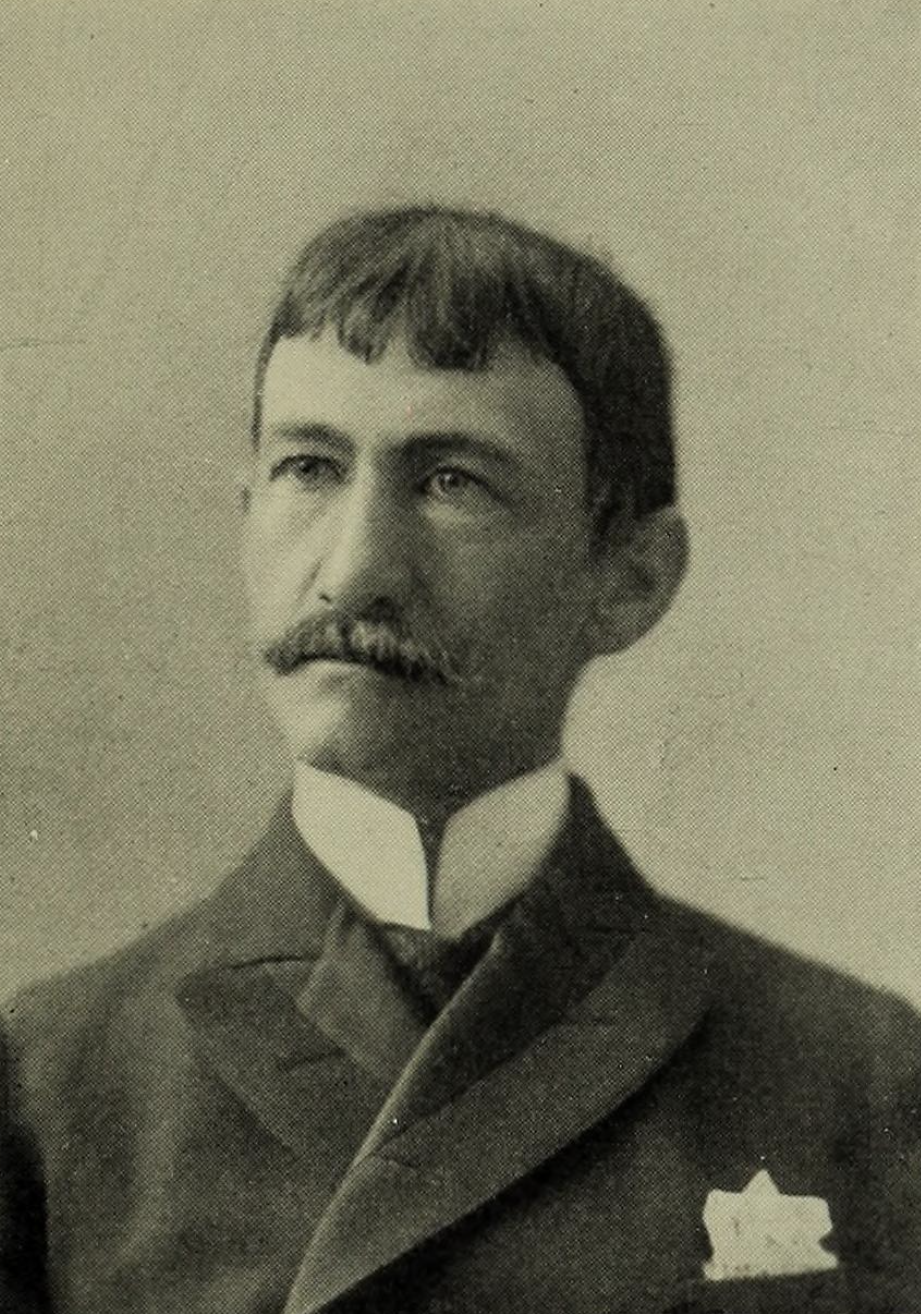
William Kneeland Townsend
Former Circuit Judge · U.S. Court of Appeals for the Second Circuit · 1902–1907 · Appointed by Theodore Roosevelt
William Kneeland Townsend served as a circuit judge of the U.S. Court of Appeals for the Second Circuit (1902–1907). Townsend was appointed by Theodore Roosevelt.
Key facts
- Full name
- William Kneeland Townsend
- Court
- U.S. Court of Appeals for the Second Circuit
- Office
- Circuit Judge (U.S. Court of Appeals)
- Status
- Former circuit judge
- Duty status
- Not serving
- Appointment
- Senate-confirmed
- FJC seat
- CA20302
- Tenure
- 1902–1907
- Confirmed
- 1902-01-21
- Born
- 1849-06-12
- Died
- 1907-06-02
- First year on the bench
- 1902
- Dataset version
- 1.20260711
Appointment & service record
U.S. Court of Appeals for the Second Circuit · 1902–1907
- Seat
- CA20302
- Appointment
- Senate-confirmed
- Appointing president
- Theodore Roosevelt
- Confirmed
- 1902-01-21
- Commissioned
- 1902-01-21
- Senior status
- —
Court, FJC seat, appointment type (Senate-confirmed or recess), appointing president, confirmation and commission dates, and senior-status date are drawn from the Federal Judicial Center Biographical Directory and Wikidata.[1][2][3]
Sources
- [1]https://www.fjc.gov/node/1388886fjc · retrieved 2026-07-11
- [2]https://www.fjc.gov/history/judges/biographical-directory-article-iii-federal-judges-exportfjc-directory · retrieved 2026-07-11
- [3]https://www.wikidata.org/wiki/Q8014078Wikidata · retrieved 2026-07-11
Biographical narrative
1,151 words · sourced from the Wikipedia REST extract
William Kneeland Townsend was a United States circuit judge who served on the United States Court of Appeals for the Second Circuit from 1902 until his death in 1907. Born in New Haven, Connecticut in 1849, he pursued an extensive legal education at Yale University and Yale Law School before establishing himself as both a practicing attorney and legal educator. Prior to his appellate service, he served as a United States district judge for the District of Connecticut for a decade, and he maintained a professorship at Yale Law School throughout much of his judicial career. Appointed to the federal bench by two different presidents, Townsend represented the tradition of accomplished legal scholars transitioning to the federal judiciary during the late nineteenth and early twentieth centuries.
Early life and legal career
William Kneeland Townsend was born on June 12, 1849, in New Haven, Connecticut, a city with which he would maintain close ties throughout his life. He pursued his undergraduate education at Yale University, earning an Artium Baccalaureus degree in 1871. Following his undergraduate studies, Townsend continued at Yale Law School, where he embarked on an unusually comprehensive course of legal education that extended over several years. He received his Bachelor of Laws degree in 1874, followed by a Master of Laws degree in 1878, and culminated his formal legal training with a Doctor of Civil Law degree in 1880, all from Yale Law School. During his time at Yale, he became a member of Skull and Bones, the university's prominent secret society.
Townsend entered private legal practice in New Haven in 1875, while still pursuing his advanced legal degrees. His early professional work included serving as an attorney for the New York, New Haven and Hartford Railroad, a position he held until 1881. This role would have provided him with substantial experience in corporate and commercial law, as the railroad industry was among the most legally complex and economically significant sectors of the American economy during this period.
Beyond his private practice, Townsend became involved in local government and legal education. From 1880 to 1882, he served as an alderman for the city of New Haven, gaining experience in municipal governance and public service. In 1881, he joined the faculty of Yale Law School as a professor, beginning an academic career that would continue for more than a quarter century. His dual roles as practicing attorney and law professor reflected a common pattern among legal educators of his era, when law schools frequently drew upon practitioners to provide instruction grounded in real-world experience. Townsend further deepened his involvement in New Haven's civic affairs by serving as corporation counsel for the city from 1889 to 1891, a position that would have required him to provide legal advice on municipal matters and represent the city's interests in legal proceedings.
Federal appellate service
Townsend's transition to the federal judiciary began with his appointment to the trial bench. President Benjamin Harrison, a Republican, nominated him on March 24, 1892, to a seat on the United States District Court for the District of Connecticut. The vacancy had been created by Judge Nathaniel Shipman, who was departing the district court. The United States Senate confirmed Townsend's nomination on March 28, 1892, and he received his commission the same day, reflecting the swift pace at which his nomination proceeded. He served as a district judge for nearly a decade, presiding over federal cases in Connecticut and gaining substantial experience in federal trial court procedures and jurisprudence.
Townsend's service on the district court concluded when he was elevated to the appellate bench. President Theodore Roosevelt, also a Republican, nominated him on January 15, 1902, to a joint seat on the United States Court of Appeals for the Second Circuit and the United States Circuit Courts for the Second Circuit. This vacancy had been created by the same Judge Nathaniel Shipman whose district court seat Townsend had filled a decade earlier, as Shipman was now departing the circuit court. The Senate confirmed Townsend's nomination on January 21, 1902, and he received his commission the same day. The joint appointment reflected the judicial structure of the era, when circuit judges held commissions to both the Courts of Appeals and the older Circuit Courts, which still retained some jurisdiction before their eventual abolition.
As a circuit judge on the Second Circuit, Townsend would have heard appeals from federal district courts in New York, Connecticut, and Vermont, the states comprising that circuit's jurisdiction. Throughout his service on the appellate bench, he continued his professorship at Yale Law School, maintaining his connection to legal education even while fulfilling his judicial responsibilities. This combination of teaching and judging, while demanding, was not unprecedented during this period. His tenure on the Second Circuit lasted approximately five years, ending with his death on June 2, 1907, in New Haven, just ten days before what would have been his fifty-eighth birthday.
Jurisprudence and legacy
Townsend's judicial career spanned fifteen years of federal service, divided between trial and appellate work. His background combined practical experience in corporate law, municipal government service, and academic legal scholarship, providing him with a diverse foundation for judicial decision-making. The specific details of his judicial opinions and their influence on federal law are not extensively documented in available records, but his career trajectory illustrates the pathways through which accomplished attorneys entered the federal judiciary during the early twentieth century.
His service on the Second Circuit occurred during a formative period in American federal appellate jurisprudence, as the Courts of Appeals, established in 1891, were still relatively new institutions working to define their role in the federal judicial system. Judges serving during this era helped establish precedents and procedures that would shape the development of circuit court practice. Townsend's dual role as both judge and law professor positioned him to contribute to legal education while simultaneously participating in the development of federal law, potentially allowing insights from his judicial work to inform his teaching and vice versa.
The fact that Townsend succeeded the same judge, Nathaniel Shipman, on both the district and circuit courts suggests a degree of continuity in the federal judiciary for Connecticut and the Second Circuit during this period. His long tenure at Yale Law School, spanning from 1881 until his death in 1907, indicates a sustained commitment to legal education that paralleled his judicial service. This extended academic involvement would have made him a familiar figure to generations of Yale law students, some of whom may have gone on to practice before him or other federal judges.
Townsend's career reflects the close relationship between elite legal education, private practice, and the federal bench that characterized the American legal profession during the Gilded Age and Progressive Era. His death in 1907 ended both his judicial service and his academic career, closing a professional life that had been centered in New Haven and dedicated to law in multiple capacities.
Sources & provenance
Every quantitative or attributable claim above carries a per-section [N] marker that resolves to the corresponding URL below. Each entry records the upstream provider, the canonical URL, and the timestamp at which the underlying source was retrieved.
Key facts
- https://www.fjc.gov/node/1388886fjc · retrieved 2026-07-11
- https://www.fjc.gov/history/judges/biographical-directory-article-iii-federal-judges-exportfjc-directory · retrieved 2026-07-11
- https://www.wikidata.org/wiki/Q8014078Wikidata · retrieved 2026-07-11
Biographical narrative
- https://en.wikipedia.org/wiki/William_Kneeland_TownsendWikipedia · retrieved 2026-07-11
Explore the federal judiciary
The U.S. Courts of Appeals are the intermediate appellate courts of the federal judiciary — thirteen circuits sitting between the district courts and the Supreme Court. Browse the full roster of judges on the U.S. Court of Appeals for the Second Circuit, or explore how the appointed federal judiciary fits into the federal government.