
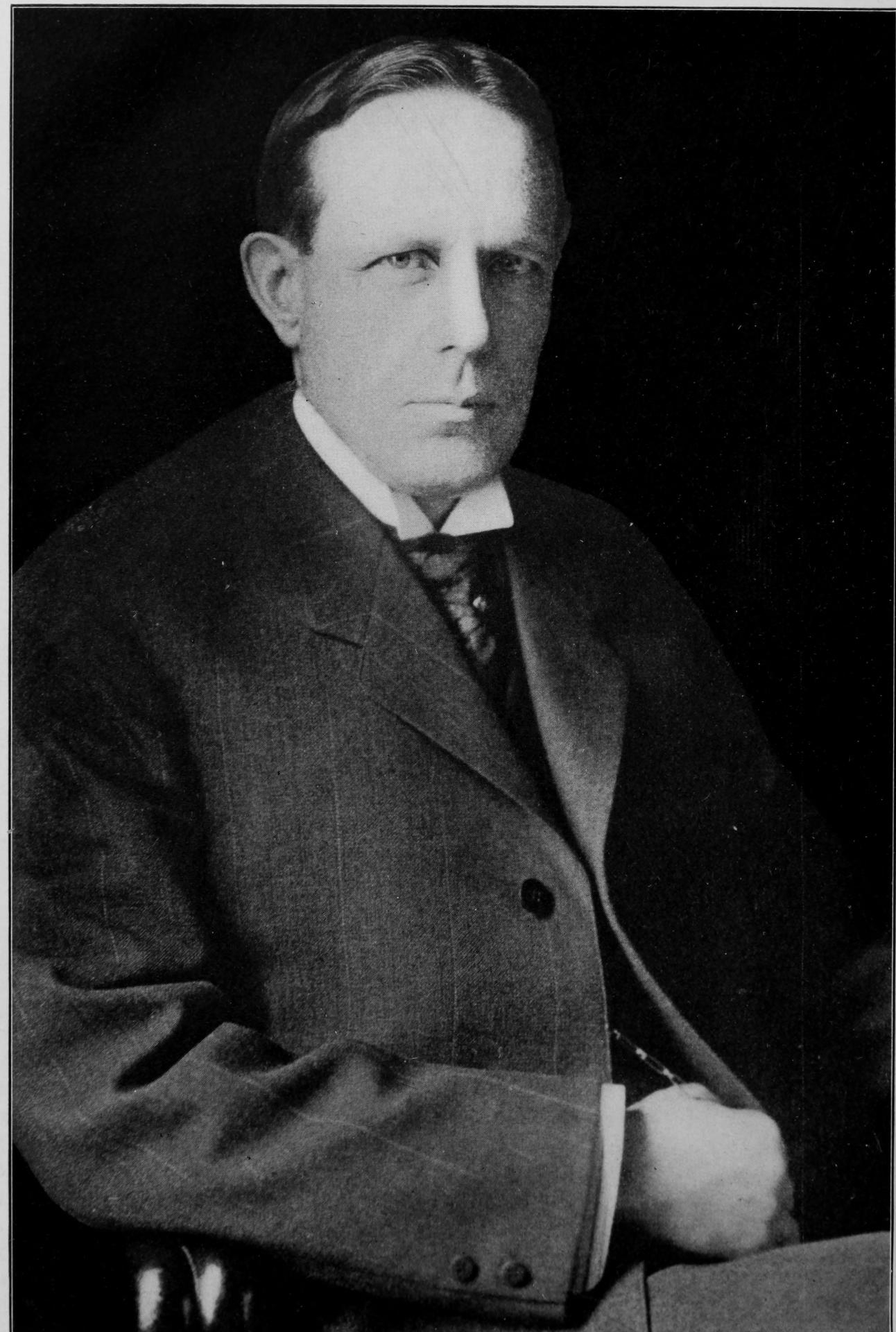
Historical · U.S. Court of Appeals for the Seventh Circuit
Albert Barnes Anderson
Former Circuit Judge · U.S. Court of Appeals for the Seventh Circuit · 1925–1938 · Appointed by Calvin Coolidge
Albert Barnes Anderson served as a circuit judge of the U.S. Court of Appeals for the Seventh Circuit (1925–1938). Anderson was appointed by Calvin Coolidge.
Key facts
- Full name
- Albert Barnes Anderson
- Court
- U.S. Court of Appeals for the Seventh Circuit
- Office
- Circuit Judge (U.S. Court of Appeals)
- Status
- Former circuit judge
- Duty status
- Not serving
- Appointment
- Senate-confirmed
- FJC seat
- CA70203
- Tenure
- 1925–1938
- Confirmed
- 1925-01-06
- Born
- 1857-02-10
- Died
- 1938-04-27
- First year on the bench
- 1925
- Dataset version
- 1.20260711
Appointment & service record
U.S. Court of Appeals for the Seventh Circuit · 1925–1929
- Seat
- CA70203
- Appointment
- Senate-confirmed
- Appointing president
- Calvin Coolidge
- Confirmed
- 1925-01-06
- Commissioned
- 1925-01-06
- Senior status
- 1929-10-30
Court, FJC seat, appointment type (Senate-confirmed or recess), appointing president, confirmation and commission dates, and senior-status date are drawn from the Federal Judicial Center Biographical Directory and Wikidata.[1][2][3]
Sources
- [1]https://www.fjc.gov/node/1377176fjc · retrieved 2026-07-11
- [2]https://www.fjc.gov/history/judges/biographical-directory-article-iii-federal-judges-exportfjc-directory · retrieved 2026-07-11
- [3]https://www.wikidata.org/wiki/Q4709698Wikidata · retrieved 2026-07-11
Biographical narrative
952 words · sourced from the Wikipedia REST extract
Albert Barnes Anderson was a United States circuit judge who served on the United States Court of Appeals for the Seventh Circuit from 1925 to 1929. Born in Indiana in 1857, he spent more than two decades as a federal district judge before his elevation to the circuit court. Anderson's judicial career spanned the early twentieth century, a period of significant legal and social change in the United States, and he presided over several prominent cases during his time on the federal bench.
Early life and legal career
Albert Barnes Anderson was born on February 10, 1857, in Zionsville, Indiana, to parents Emma A. Anderson and Philander Anderson. He pursued his undergraduate education at Wabash College, a liberal arts institution in Indiana, where he earned an Artium Baccalaureus degree in 1879. Following his graduation, Anderson studied law through the traditional method of reading law, completing this preparation in 1881. This approach to legal education, common in the nineteenth century, involved studying under the supervision of an established attorney rather than attending a formal law school. He would later receive an honorary Doctor of Laws degree in 1907, recognizing his contributions to the legal profession.
After completing his legal training, Anderson established a private law practice in Crawfordsville, Indiana, where he worked for more than two decades from 1881 to 1902. During this period, he built a reputation as a capable attorney in the community. His legal career also included public service at the local level: he served as prosecuting attorney for Montgomery County, Indiana, holding that position from 1886 to 1890. This four-year tenure as a county prosecutor provided Anderson with valuable courtroom experience and familiarity with criminal law that would later inform his work on the federal bench. His work in Crawfordsville, both in private practice and as a prosecutor, established him as a prominent legal figure in Indiana and laid the groundwork for his subsequent appointment to the federal judiciary.
Federal appellate service
Anderson's federal judicial career began when President Theodore Roosevelt, a Republican, nominated him to serve as a United States district judge for the United States District Court for the District of Indiana. The nomination came on December 8, 1902, to fill a vacancy left by Judge John Baker. The Senate moved swiftly on the nomination, confirming Anderson on the same day he was nominated, and he received his commission on December 8, 1902. This appointment marked the beginning of a lengthy career on the federal trial bench that would span nearly a quarter century.
During his twenty-three years as a district judge, Anderson presided over numerous cases, including several matters of significant public interest. Among the notable proceedings over which he presided was a case involving a loan scandal connected to Warren T. McCray, who served as Governor of Indiana. Anderson also handled matters arising from the United Mine Workers coal strike of 1919, a major labor dispute that reflected the industrial tensions of the post-World War I period. These high-profile cases demonstrated the range and importance of the matters that came before the federal district court in Indiana during Anderson's tenure.
Anderson's service as a district judge was terminated on January 13, 1925, when he was elevated to the circuit court. President Calvin Coolidge, a Republican, nominated him on January 2, 1925, to a seat on the United States Court of Appeals for the Seventh Circuit. This vacancy had been created by Judge Francis E. Baker. The Senate confirmed Anderson's appointment on January 6, 1925, and he received his commission the same day, allowing him to begin his service on the appellate court promptly. The Seventh Circuit, which hears appeals from federal district courts in Illinois, Indiana, and Wisconsin, provided Anderson with a broader regional jurisdiction than he had exercised as a district judge.
Anderson's active service on the Court of Appeals for the Seventh Circuit lasted approximately four years. On October 30, 1929, he assumed senior status, a form of semi-retirement that allows federal judges to continue hearing cases on a reduced schedule while creating a vacancy for a new active judge. He retired from the bench that same year, concluding his federal judicial service after more than a quarter century on the bench.
Jurisprudence and legacy
Anderson's judicial career reflected the evolution of federal law during a transformative period in American history. His service spanned from the Progressive Era through the 1920s, a time when federal courts grappled with questions involving labor relations, economic regulation, and the expanding role of the federal government. His experience presiding over cases involving labor disputes and political corruption illustrated the types of issues that occupied federal courts during this era.
Following his retirement from the bench, Anderson lived for nearly another decade. He died on April 27, 1938, in Indianapolis, Indiana, at the age of eighty-one. He was laid to rest in Oak Hill Cemetery in Crawfordsville, the city where he had practiced law for many years before joining the federal judiciary. His long life allowed him to witness substantial changes in American law and society, from the post-Civil War period of his youth through the New Deal era.
Anderson's papers and correspondence have been preserved as part of the historical record. The Indiana State Library maintains a collection of his correspondence, providing researchers and historians with primary source materials related to his life and career. These documents offer insights into the work of a federal judge during the early twentieth century and contribute to the broader understanding of the federal judiciary's role during this period. The preservation of such materials ensures that Anderson's contributions to Indiana's legal history and to the federal court system remain accessible to future generations of scholars and legal professionals.
Sources & provenance
Every quantitative or attributable claim above carries a per-section [N] marker that resolves to the corresponding URL below. Each entry records the upstream provider, the canonical URL, and the timestamp at which the underlying source was retrieved.
Key facts
- https://www.fjc.gov/node/1377176fjc · retrieved 2026-07-11
- https://www.fjc.gov/history/judges/biographical-directory-article-iii-federal-judges-exportfjc-directory · retrieved 2026-07-11
- https://www.wikidata.org/wiki/Q4709698Wikidata · retrieved 2026-07-11
Biographical narrative
- https://en.wikipedia.org/wiki/Albert_B._AndersonWikipedia · retrieved 2026-07-11
Explore the federal judiciary
The U.S. Courts of Appeals are the intermediate appellate courts of the federal judiciary — thirteen circuits sitting between the district courts and the Supreme Court. Browse the full roster of judges on the U.S. Court of Appeals for the Seventh Circuit, or explore how the appointed federal judiciary fits into the federal government.