
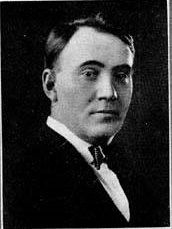
Historical · U.S. Court of Appeals for the Seventh Circuit
James Earl Major
Former Circuit Judge · U.S. Court of Appeals for the Seventh Circuit · 1937–1972 · Appointed by Franklin D Roosevelt
James Earl Major served as a circuit judge of the U.S. Court of Appeals for the Seventh Circuit (1937–1972). Major was appointed by Franklin D Roosevelt.
Key facts
- Full name
- James Earl Major
- Court
- U.S. Court of Appeals for the Seventh Circuit
- Office
- Circuit Judge (U.S. Court of Appeals)
- Status
- Former circuit judge
- Duty status
- Not serving
- Appointment
- Senate-confirmed
- FJC seat
- CA70404
- Tenure
- 1937–1972
- Confirmed
- 1937-03-17
- Born
- 1887-01-05
- Died
- 1972-01-04
- First year on the bench
- 1937
- Dataset version
- 1.20260711
Appointment & service record
U.S. Court of Appeals for the Seventh Circuit · 1937–1956
- Seat
- CA70404
- Appointment
- Senate-confirmed
- Appointing president
- Franklin D Roosevelt
- Confirmed
- 1937-03-17
- Commissioned
- 1937-03-23
- Senior status
- 1956-03-23
- Chief Judge
- 1948–1954
Court, FJC seat, appointment type (Senate-confirmed or recess), appointing president, confirmation and commission dates, and senior-status date are drawn from the Federal Judicial Center Biographical Directory and Wikidata.[1][2][3]
Sources
- [1]https://www.fjc.gov/node/1384256fjc · retrieved 2026-07-11
- [2]https://www.fjc.gov/history/judges/biographical-directory-article-iii-federal-judges-exportfjc-directory · retrieved 2026-07-11
- [3]https://www.wikidata.org/wiki/Q6133277Wikidata · retrieved 2026-07-11
Biographical narrative
1,373 words · sourced from the Wikipedia REST extract
James Earl Major was a United States Circuit Judge who served on the United States Court of Appeals for the Seventh Circuit from 1937 to 1956, including a tenure as Chief Judge from 1948 to 1954. Before his elevation to the federal appellate bench, he had a multifaceted career that included service as a county prosecutor, a member of the United States House of Representatives from Illinois, and a United States District Judge. Appointed to the Seventh Circuit by President Franklin D. Roosevelt, a Democrat, Major's judicial career spanned nearly a quarter-century and coincided with significant developments in American law during the mid-twentieth century.
Early life and legal career
James Earl Major was born on January 5, 1887, in Donnellson, Illinois, a small community where he spent his formative years. He received his early education in the common and high schools of his hometown, obtaining a foundational education typical of rural Illinois at the turn of the twentieth century. Following his secondary education, Major pursued business training at Brown's Business College, from which he graduated in 1907. He then turned his attention to the study of law, enrolling at the Illinois College of Law in Chicago, an institution that would later become known as DePaul University College of Law. He completed his legal studies and graduated in 1909.
After gaining admission to the Illinois bar in 1910, Major established himself in the practice of law. By 1912, he had commenced his legal practice in Hillsboro, Illinois, the seat of Montgomery County, where he would maintain his professional and personal ties for the remainder of his life. That same year, he entered public service as the prosecuting attorney of Montgomery County, a position he held for eight years until 1920. In this role, he gained experience in criminal law and courtroom advocacy, building a reputation in the local legal community that would serve as a foundation for his subsequent political career.
Major's transition from local prosecutor to national legislator began in the early 1920s. Running as a Democrat, he was elected to the 68th United States Congress and served from March 4, 1923, to March 3, 1925. His initial term in the House of Representatives was followed by an unsuccessful reelection campaign in 1924. Undeterred by this setback, Major returned to his law practice in Hillsboro, but his political career was far from over. He successfully ran for Congress again and was elected to the 70th Congress, serving from March 4, 1927, to March 3, 1929. Once again, he faced defeat in his reelection bid in 1928, demonstrating the competitive and often volatile nature of electoral politics during this period.
Major's persistence in seeking public office was rewarded when he won election to both the 72nd and 73rd Congresses, serving from March 4, 1931, until his resignation on October 6, 1933. During this final congressional term, he was selected for a significant responsibility: he was appointed as one of the managers designated by the House of Representatives to conduct impeachment proceedings in 1933 against Harold Louderback, a judge serving on the United States District Court for the Northern District of California. This role in a high-profile judicial impeachment gave Major direct experience with federal judicial standards and accountability, experience that would prove relevant to his own subsequent judicial career.
Major's resignation from Congress in October 1933 came as a result of his appointment to the federal judiciary. President Franklin D. Roosevelt had given him a recess appointment on June 12, 1933, to a seat on the United States District Court for the Southern District of Illinois, a vacancy created by Judge Louis FitzHenry. The formal nomination followed on January 8, 1934, and Major was confirmed by the Senate on January 23, 1934, receiving his commission three days later on January 26, 1934. He served as a district judge for approximately three years, presiding over trials and developing his judicial philosophy at the trial court level.
Federal appellate service
Major's tenure on the district court was relatively brief, as he was soon elevated to the appellate bench. On March 9, 1937, President Roosevelt nominated him to a seat on the United States Court of Appeals for the Seventh Circuit. Notably, this vacancy had also been created by Judge Louis FitzHenry, the same jurist whose departure had opened Major's district court position. The Senate confirmed Major's appointment on March 17, 1937, and he received his commission on March 23, 1937, beginning what would become a lengthy period of service on one of the nation's regional federal appellate courts.
The Seventh Circuit, with jurisdiction over Illinois, Indiana, and Wisconsin, handles appeals from federal district courts in those states and reviews decisions from various federal administrative agencies. As a circuit judge, Major participated in three-judge panels that reviewed lower court decisions, examining questions of law and the application of legal standards. His service on the court spanned a period of significant change in American society and law, including the latter years of the New Deal, World War II, and the post-war era.
In 1948, Major assumed the position of Chief Judge of the Seventh Circuit, a role he would hold until 1954. As Chief Judge, he bore administrative responsibilities for the circuit in addition to his judicial duties, overseeing the court's operations and managing its caseload during a period of growth in federal litigation. His leadership of the circuit coincided with his service on the Judicial Conference of the United States from 1949 to 1954. The Judicial Conference, the national policymaking body for the federal courts, brings together chief judges from the various circuits to address administrative and procedural matters affecting the federal judiciary. Major's participation in this body placed him among the senior leadership of the federal court system during the early Cold War period.
After stepping down as Chief Judge in 1954, Major continued to serve as an active circuit judge. On March 23, 1956, he assumed senior status, a form of semi-retirement that allows federal judges to continue hearing cases on a reduced schedule while creating a vacancy for a new active judge to be appointed. Major continued in senior status for the remainder of his life, maintaining his connection to the Seventh Circuit for two decades after his initial appointment.
Jurisprudence and legacy
Major's nearly quarter-century on the Seventh Circuit placed him on the bench during a transformative era in American law. His service began during the constitutional battles over New Deal legislation and extended through the early years of the modern civil rights movement, encompassing fundamental shifts in federal jurisdiction, administrative law, and constitutional interpretation. As an appellate judge appointed by a Democratic president during the Roosevelt administration, Major was part of a generation of federal jurists who shaped the development of federal law during the mid-twentieth century.
The length of Major's service, particularly his six years as Chief Judge, suggests he played a significant role in the institutional development of the Seventh Circuit during a period when the federal courts were expanding their reach and refining their procedures. His participation in the Judicial Conference during the late 1940s and early 1950s meant he contributed to national discussions about federal court administration at a time when the judiciary was adapting to increased caseloads and new areas of federal law.
Major's career trajectory from county prosecutor to congressman to federal judge reflects a pattern common among federal judicial appointees of his era, when prior political service and party affiliation often played a significant role in judicial selection. His experience in all three branches of government at various levels—as a local prosecutor in the executive branch, as a legislator in Congress, and as a judge in the federal judiciary—provided him with a broad perspective on American governance.
Major died on January 4, 1972, in Hillsboro, Illinois, one day before what would have been his eighty-fifth birthday. He was interred in Oak Grove Cemetery in Hillsboro, the community where he had begun his legal practice six decades earlier and to which he had maintained ties throughout his career. His death came sixteen years after he had assumed senior status, reflecting a long period of continued service to the federal judiciary even after stepping back from the full responsibilities of an active circuit judge.
Sources & provenance
Every quantitative or attributable claim above carries a per-section [N] marker that resolves to the corresponding URL below. Each entry records the upstream provider, the canonical URL, and the timestamp at which the underlying source was retrieved.
Key facts
- https://www.fjc.gov/node/1384256fjc · retrieved 2026-07-11
- https://www.fjc.gov/history/judges/biographical-directory-article-iii-federal-judges-exportfjc-directory · retrieved 2026-07-11
- https://www.wikidata.org/wiki/Q6133277Wikidata · retrieved 2026-07-11
Biographical narrative
- https://en.wikipedia.org/wiki/James_Earl_MajorWikipedia · retrieved 2026-07-11
Explore the federal judiciary
The U.S. Courts of Appeals are the intermediate appellate courts of the federal judiciary — thirteen circuits sitting between the district courts and the Supreme Court. Browse the full roster of judges on the U.S. Court of Appeals for the Seventh Circuit, or explore how the appointed federal judiciary fits into the federal government.