
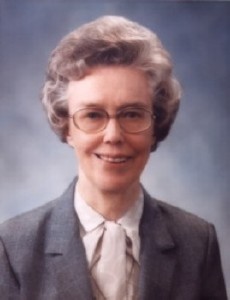
Historical · U.S. Court of Appeals for the Sixth Circuit
Cornelia Groefsema Kennedy
Former Circuit Judge · U.S. Court of Appeals for the Sixth Circuit · 1979–2014 · Appointed by Jimmy Carter
Cornelia Groefsema Kennedy served as a circuit judge of the U.S. Court of Appeals for the Sixth Circuit (1979–2014). Kennedy was appointed by Jimmy Carter.
Key facts
- Full name
- Cornelia Groefsema Kennedy
- Court
- U.S. Court of Appeals for the Sixth Circuit
- Office
- Circuit Judge (U.S. Court of Appeals)
- Status
- Former circuit judge
- Duty status
- Not serving
- Appointment
- Senate-confirmed
- FJC seat
- CA61101
- Tenure
- 1979–2014
- Confirmed
- 1979-09-25
- Born
- 1923-08-04
- Died
- 2014-05-12
- First year on the bench
- 1979
- Dataset version
- 1.20260711
Appointment & service record
U.S. Court of Appeals for the Sixth Circuit · 1979–1999
- Seat
- CA61101
- Appointment
- Senate-confirmed
- Appointing president
- Jimmy Carter
- Confirmed
- 1979-09-25
- Commissioned
- 1979-09-26
- Senior status
- 1999-03-01
Court, FJC seat, appointment type (Senate-confirmed or recess), appointing president, confirmation and commission dates, and senior-status date are drawn from the Federal Judicial Center Biographical Directory and Wikidata.[1][2][3]
Sources
- [1]https://www.fjc.gov/node/1383216fjc · retrieved 2026-07-11
- [2]https://www.fjc.gov/history/judges/biographical-directory-article-iii-federal-judges-exportfjc-directory · retrieved 2026-07-11
- [3]https://www.wikidata.org/wiki/Q5171163Wikidata · retrieved 2026-07-11
Biographical narrative
1,266 words · sourced from the Wikipedia REST extract
Cornelia Groefsema Kennedy was a United States circuit judge who served on the United States Court of Appeals for the Sixth Circuit from 1979 to 1999, assuming senior status until her death in 2014. Born in Detroit, Michigan in 1923, she became a trailblazer in the federal judiciary, serving as the first female chief judge of a federal district court and later being considered twice for appointment to the United States Supreme Court. Appointed to the Sixth Circuit by President Jimmy Carter, a Democrat, she served for two decades in active status and continued in senior status for an additional fifteen years, contributing significantly to federal appellate jurisprudence during her lengthy tenure on the bench.
Early life and legal career
Cornelia Groefsema was born on August 4, 1923, in Detroit, Michigan. She pursued her undergraduate education at the University of Michigan, where she earned a Bachelor of Arts degree in 1945. Continuing her studies at the University of Michigan Law School, she graduated at the top of her class with a Juris Doctor degree in 1947, a notable achievement particularly for a woman in that era when the legal profession remained overwhelmingly male-dominated.
Following her graduation from law school, Kennedy secured a clerkship with Chief Judge Harold Montelle Stephens of the United States Court of Appeals for the District of Columbia Circuit. This position was particularly significant as she became one of the first women to serve as a law clerk on that court, breaking barriers in the federal judicial system at the outset of her legal career. This early experience in the federal appellate system would prove formative for her later service on the bench.
After completing her clerkship, Kennedy entered private practice in Detroit, where she practiced law from 1948 to 1966, establishing herself over nearly two decades as a skilled attorney. Her interest in the judiciary led her to seek elected judicial office in 1965, when she ran for a position as Wayne County Circuit Court judge. That election proved extremely close, with Kennedy losing by fewer than one hundred votes, demonstrating both the competitiveness of her candidacy and the challenges faced by women seeking judicial positions during that period.
Kennedy's persistence was rewarded the following year when she was appointed as a judge of the Michigan Circuit Court for the Third Judicial Circuit, a position she held from 1966 to 1970. During this period, she and her sister, Margaret G. Schaeffer, achieved a unique distinction as the first sister judges in the United States. Schaeffer served on the 47th District Court in Farmington Hills, Michigan from 1974 to 1992, and the two women's parallel judicial careers represented a remarkable family achievement in the legal profession.
Kennedy's state judicial service provided her with substantial trial court experience that would serve as the foundation for her subsequent federal judicial career. Her four years on the Michigan Circuit Court demonstrated her judicial capabilities and brought her to the attention of federal authorities seeking qualified candidates for the federal bench.
Federal appellate service
Kennedy's federal judicial career began when President Richard Nixon, a Republican, nominated her on September 3, 1970, to serve on the United States District Court for the Eastern District of Michigan. She was nominated to fill a vacancy left by Judge Thaddeus M. Machrowicz. The United States Senate confirmed her nomination on October 6, 1970, and she received her commission the following day, on October 7, 1970, beginning her service as a federal district judge.
During her tenure on the district court, Kennedy distinguished herself as an effective jurist and administrator. Her leadership abilities were recognized when she was elevated to the position of Chief Judge, serving in that capacity from 1977 to 1979. In this role, she became the first female chief judge of a federal district court in the United States, once again breaking new ground for women in the federal judiciary. This administrative position involved not only deciding cases but also managing the court's operations and personnel during a critical period.
Kennedy's service on the district court was terminated on October 3, 1979, when she was elevated to the United States Court of Appeals for the Sixth Circuit. President Jimmy Carter, a Democrat, had nominated her on April 9, 1979, to fill a newly created seat on the Sixth Circuit established by federal statute. The Senate confirmed her nomination on September 25, 1979, and she received her commission on September 26, 1979, beginning her service on the appellate court.
Kennedy served as an active circuit judge on the Sixth Circuit for twenty years, hearing appeals from federal district courts in Michigan, Ohio, Kentucky, and Tennessee. On March 1, 1999, she assumed senior status, a form of semi-retirement that allows federal judges to continue hearing cases with a reduced caseload. She continued to serve in senior status until her death, contributing to the work of the Sixth Circuit for an additional fifteen years beyond her active service.
Kennedy's judicial career intersected with Supreme Court history on two notable occasions. In 1975, she was placed on a shortlist of candidates being considered for the Supreme Court seat vacated by Justice William O. Douglas, though that position ultimately went to John Paul Stevens. More significantly, in 1981, President Ronald Reagan, a Republican, narrowed his search for a replacement for Justice Potter Stewart to two finalists: Kennedy and Sandra Day O'Connor. Reagan ultimately selected O'Connor, who became the first woman to serve on the United States Supreme Court. Kennedy's consideration for the nation's highest court on two separate occasions by presidents of different parties reflected the broad respect she commanded across the political spectrum.
Jurisprudence and legacy
During her lengthy tenure on the Sixth Circuit, Kennedy participated in numerous cases addressing a wide range of federal legal issues. Her work as an appellate judge involved interpreting federal statutes, reviewing district court decisions, and developing precedent that would guide lower courts within the circuit's jurisdiction.
One notable example of her judicial work came relatively late in her career when she authored a majority opinion in Connection Distributing Co. v. Keisler, decided in 2007. In that case, Kennedy's opinion for a panel of the Sixth Circuit declared Section 2257 of the Child Protection and Obscenity Enforcement Act unconstitutional. The decision, however, did not stand as the final word on the matter. The full Sixth Circuit subsequently agreed to rehear the case en banc, meaning all active judges of the court would participate. In the en banc decision, titled Connection Distributing Co. v. Holder, the full court vacated Kennedy's panel opinion and upheld the constitutionality of Section 2257. Kennedy authored the primary dissenting opinion in the en banc case, maintaining her view that the statute was unconstitutional and demonstrating her willingness to stand by her legal analysis even when it placed her in the minority.
Kennedy married Charles Stuart Kennedy, Jr., and the couple had one son, Charles Stuart Kennedy III, who was born on November 8, 1962. She balanced her demanding judicial career with her family life over several decades of public service.
Kennedy died on May 12, 2014, at the age of ninety, having served the federal judiciary for nearly forty-four years. Her career represented a series of pioneering achievements for women in the legal profession and the federal courts, from her early clerkship through her service as the first female chief judge of a federal district court and her consideration for the Supreme Court. Her legacy includes not only her judicial opinions and administrative leadership but also the path she helped clear for subsequent generations of women in the federal judiciary.
Sources & provenance
Every quantitative or attributable claim above carries a per-section [N] marker that resolves to the corresponding URL below. Each entry records the upstream provider, the canonical URL, and the timestamp at which the underlying source was retrieved.
Key facts
- https://www.fjc.gov/node/1383216fjc · retrieved 2026-07-11
- https://www.fjc.gov/history/judges/biographical-directory-article-iii-federal-judges-exportfjc-directory · retrieved 2026-07-11
- https://www.wikidata.org/wiki/Q5171163Wikidata · retrieved 2026-07-11
Biographical narrative
- https://en.wikipedia.org/wiki/Cornelia_Groefsema_KennedyWikipedia · retrieved 2026-07-11
Explore the federal judiciary
The U.S. Courts of Appeals are the intermediate appellate courts of the federal judiciary — thirteen circuits sitting between the district courts and the Supreme Court. Browse the full roster of judges on the U.S. Court of Appeals for the Sixth Circuit, or explore how the appointed federal judiciary fits into the federal government.