
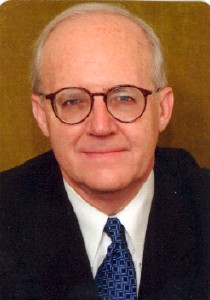
Currently serving · U.S. Court of Appeals for the Sixth Circuit
Danny Julian Boggs
Currently servingSenior status
Senior Circuit Judge · U.S. Court of Appeals for the Sixth Circuit · 1986–present · Appointed by Ronald Reagan
Danny Julian Boggs serves as a senior circuit judge of the U.S. Court of Appeals for the Sixth Circuit (1986–present). Boggs was appointed by Ronald Reagan. Boggs assumed senior status in 2017 and continues to hear cases.
Key facts
- Full name
- Danny Julian Boggs
- Court
- U.S. Court of Appeals for the Sixth Circuit
- Office
- Circuit Judge (U.S. Court of Appeals)
- Status
- Senior circuit judge (still serving)
- Duty status
- Senior
- Appointment
- Senate-confirmed
- FJC seat
- CA61601
- Tenure
- 1986–present
- Confirmed
- 1986-03-03
- Born
- 1944
- Died
- —
- First year on the bench
- 1986
- Dataset version
- 1.20260705
Appointment & service record
U.S. Court of Appeals for the Sixth Circuit · 1986–present
- Seat
- CA61601
- Appointment
- Senate-confirmed
- Appointing president
- Ronald Reagan
- Confirmed
- 1986-03-03
- Commissioned
- 1986-03-25
- Senior status
- 2017-02-28 (still serving)
- Chief Judge
- 2003–2009
Court, FJC seat, appointment type (Senate-confirmed or recess), appointing president, confirmation and commission dates, and senior-status date are drawn from the Federal Judicial Center Biographical Directory and Wikidata.[1][2][3]
Sources
- [1]https://www.fjc.gov/node/1377976fjc · retrieved 2026-07-05
- [2]https://www.fjc.gov/history/judges/biographical-directory-article-iii-federal-judges-exportfjc-directory · retrieved 2026-07-05
- [3]https://www.wikidata.org/wiki/Q5220496Wikidata · retrieved 2026-07-05
Biographical narrative
1,056 words · sourced from the Wikipedia REST extract
Danny Julian Boggs is a senior United States circuit judge on the Court of Appeals for the Sixth Circuit. Appointed by President Ronald Reagan in 1986, he served as an active‑service judge for more than three decades, including a term as chief judge from 2003 to 2009. After assuming senior status in early 2017, Judge Boggs has continued to hear cases on the appellate bench. His career spans academia, state and federal government service, private practice, and leadership roles within the national judiciary, and he was at one time listed among candidates considered for appointment to the United States Supreme Court.
Early life and legal career
Danny Julian Boggs was born in 1944 in Havana, Cuba, and spent his formative years in Bowling Green, Kentucky. He attended College High School, where he participated on a debate team that captured the state championship in 1959. Following high school, Boggs enrolled at Harvard University, graduating cum laude with an Artium Baccalaureus degree in 1965. He then pursued legal studies at the University of Chicago Law School, earning his Juris Doctor in 1968. While there he was elected to the Order of the Coif, won the Hinton Moot Court Competition, and served as an editor of the University of Chicago Law Review.
Boggs began his professional life in academia, holding a Bigelow Fellowship and teaching position at the University of Chicago Law School from 1968 to 1969. He entered public service in Kentucky shortly thereafter, serving as deputy commissioner of the state Department for Economic Security (1969‑1970) and then as legal counsel and administrative assistant to Governor Louie Nunn (1970‑1971). In 1972 he worked as legislative counsel and assisted the minority leader of the Kentucky House of Representatives, and also contributed to the Kentucky Republican campaign that year. Later, in 1979, he acted as deputy campaign director for Governor Nunn’s re‑election effort.
Between his periods of government work, Boggs practiced law privately in Frankfort and Bowling Green, Kentucky, and later in Washington, D.C., gaining experience in both state and national legal environments. His federal career commenced with a position as an attorney for the United States Department of Commerce in 1973. That same year he was appointed assistant to the Solicitor General, Robert Bork, serving until 1975 alongside future jurist Frank Easterbrook and future Labor Secretary Robert Reich.
From 1975 to 1977 Boggs served as an assistant to the chairman of the Federal Power Commission, after which he became deputy minority counsel for the United States Senate Committee on Energy and Natural Resources (1977‑1979). He returned to the executive branch in the early 1980s, first as special assistant to the President in the Executive Office of the President (1981‑1983) and subsequently as Deputy Secretary of the Department of Energy from 1983 until his judicial appointment in 1986. In recognition of his service at the Energy Department, he received the department’s highest civilian honor, the Secretary’s Gold Medal.
Federal appellate service
President Ronald Reagan nominated Boggs to a newly created seat on the United States Court of Appeals for the Sixth Circuit on January 29, 1986. The Senate confirmed his appointment on March 3, 1986, and he received his commission later that month. Throughout his tenure as an active judge, Boggs contributed to the administration of the court in several capacities. He was elected secretary, vice‑chair, and chair of the Appellate Judges Conference of the American Bar Association from 2001 to 2002, reflecting his involvement in broader appellate practice issues.
In September 2003 Boggs succeeded Chief Judge Boyce F. Martin Jr. as chief judge of the Sixth Circuit, a role he held until August 2009. As chief judge, he oversaw the court’s docket management, administrative functions, and represented the circuit in its interactions with the Judicial Conference of the United States, where he served as a member from 2003 to 2009. During this period, Boggs also participated in national judicial policy discussions and contributed to efforts aimed at improving the efficiency and consistency of federal appellate adjudication.
Following his chief‑judge service, Boggs continued to sit on panels and author opinions until he elected senior status effective February 28, 2017. Senior judges retain the authority to hear cases, and Judge Boggs has remained an active participant in Sixth Circuit jurisprudence since that date. His long tenure placed him among the most experienced members of the federal appellate judiciary, and his reputation for scholarly rigor led President George W. Bush’s administration to include him on a shortlist of potential nominees for the United States Supreme Court.
Jurisprudence and legacy
Judge Boggs’s judicial output reflects a commitment to detailed legal analysis and an engagement with complex constitutional questions. One of his most noted opinions is a dissent in the Sixth Circuit’s en banc decision in *Grutter v. Bollinger* (2002). In that case, the majority upheld the University of Michigan Law School’s consideration of race as part of its admissions policy. Judge Boggs argued that the policy failed even the minimal level of scrutiny required under equal‑protection principles and likened the school’s “critical mass” objective to an unconstitutional quota system. His dissent underscored a strict view of racial classifications in higher education.
Beyond specific cases, Boggs has been recognized for his scholarly contributions and mentorship within the legal community. Tributes from prominent figures such as Senator Mitch McConnell highlighted his breadth of knowledge across disciplines and his willingness to engage clerks with diverse viewpoints in rigorous debate. Chief Justice John G. Roberts, in a letter commemorating Boggs’s three‑decade anniversary on the bench, praised the precision of his written opinions and his dedication to the administration of justice.
Judge Boggs’s legacy also includes his influence on appellate practice through leadership roles in professional organizations. As chair of the ABA Appellate Judges Conference, he helped shape policy recommendations concerning procedural reforms and judicial education. His participation in the Judicial Conference contributed to nationwide initiatives aimed at improving case management and fostering consistency among federal courts.
In sum, Danny Julian Boggs’s career encapsulates a trajectory from early academic achievement through extensive public service at both state and federal levels, culminating in a distinguished tenure on one of the nation’s principal appellate courts. His work as a jurist, administrator, and mentor continues to impact the Sixth Circuit and the broader federal judiciary, reflecting a lifetime devoted to the development and application of United States law.
Sources & provenance
Every quantitative or attributable claim above carries a per-section [N] marker that resolves to the corresponding URL below. Each entry records the upstream provider, the canonical URL, and the timestamp at which the underlying source was retrieved.
Key facts
- https://www.fjc.gov/node/1377976fjc · retrieved 2026-07-05
- https://www.fjc.gov/history/judges/biographical-directory-article-iii-federal-judges-exportfjc-directory · retrieved 2026-07-05
- https://www.wikidata.org/wiki/Q5220496Wikidata · retrieved 2026-07-05
Biographical narrative
- https://en.wikipedia.org/wiki/Danny_Julian_BoggsWikipedia · retrieved 2026-07-05
Explore the federal judiciary
The U.S. Courts of Appeals are the intermediate appellate courts of the federal judiciary — thirteen circuits sitting between the district courts and the Supreme Court. Browse the full roster of judges on the U.S. Court of Appeals for the Sixth Circuit, or explore how the appointed federal judiciary fits into the federal government.