
Historical · U.S. Court of Appeals for the Sixth Circuit
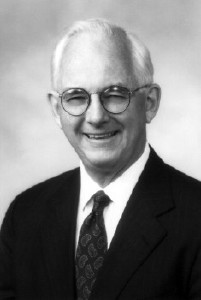
David Aldrich Nelson
Former Circuit Judge · U.S. Court of Appeals for the Sixth Circuit · 1985–2010 · Appointed by Ronald Reagan
David Aldrich Nelson served as a circuit judge of the U.S. Court of Appeals for the Sixth Circuit (1985–2010). Nelson was appointed by Ronald Reagan.
Key facts
- Full name
- David Aldrich Nelson
- Court
- U.S. Court of Appeals for the Sixth Circuit
- Office
- Circuit Judge (U.S. Court of Appeals)
- Status
- Former circuit judge
- Duty status
- Not serving
- Appointment
- Senate-confirmed
- FJC seat
- CA61401
- Tenure
- 1985–2010
- Confirmed
- 1985-10-16
- Born
- 1932-08-14
- Died
- 2010-10-01
- First year on the bench
- 1985
- Dataset version
- 1.20260711
Appointment & service record
U.S. Court of Appeals for the Sixth Circuit · 1985–1999
- Seat
- CA61401
- Appointment
- Senate-confirmed
- Appointing president
- Ronald Reagan
- Confirmed
- 1985-10-16
- Commissioned
- 1985-10-17
- Senior status
- 1999-10-01
Court, FJC seat, appointment type (Senate-confirmed or recess), appointing president, confirmation and commission dates, and senior-status date are drawn from the Federal Judicial Center Biographical Directory and Wikidata.[1][2][3]
Sources
- [1]https://www.fjc.gov/node/1385611fjc · retrieved 2026-07-11
- [2]https://www.fjc.gov/history/judges/biographical-directory-article-iii-federal-judges-exportfjc-directory · retrieved 2026-07-11
- [3]https://www.wikidata.org/wiki/Q5230682Wikidata · retrieved 2026-07-11
Biographical narrative
1,266 words · sourced from the Wikipedia REST extract
David Aldrich Nelson was a United States circuit judge who served on the United States Court of Appeals for the Sixth Circuit from 1985 to 1999. Born in 1932 in Watertown, New York, he had a distinguished legal career that included private practice with a major Cleveland law firm, service as General Counsel of the Post Office Department during a pivotal period of postal reform, and fourteen years as a federal appellate judge. Appointed to the bench by President Ronald Reagan, a Republican, Nelson contributed to the work of the Sixth Circuit during a period of significant development in federal law. He took senior status in 1999 and passed away in 2010.
Early life and legal career
David Aldrich Nelson was born on August 14, 1932, in Watertown, New York, to Carlton Low Nelson and Irene Demetria Aldrich Nelson. He grew up in East Aurora, New York, where he attended the local public schools. His academic excellence became evident early, and he went on to attend Hamilton College, graduating in 1954 as valedictorian of his class with an Artium Baccalaureus degree.
Following his undergraduate education, Nelson embarked on an international academic experience that would shape his intellectual formation. In 1954, he received a Fulbright Scholarship to study at the University of Cambridge in England. During his journey to England, he met Mary Dickson, a recent graduate of Vassar College who was also traveling to Cambridge as a Fulbright Scholar. The two became engaged while in England, beginning a marriage that would last fifty-four years and produce three children. At Cambridge, Nelson studied at Peterhouse, one of the university's oldest colleges. His performance was exceptional: he achieved first class honours in 1955, a distinction that led to his retrospective appointment as a scholar of Peterhouse.
Nelson returned to the United States to pursue his legal education at Harvard Law School, where he earned his Bachelor of Laws degree cum laude in 1958. Upon admission to the bar that same year, he joined the Cleveland, Ohio office of Squire, Sanders & Dempsey, a prominent law firm where he began building his legal practice.
His early career was interrupted by military service. From 1959 to 1962, Nelson served on active duty with the United States Air Force, working at the Pentagon as a Lieutenant Attorney-advisor in the Office of General Counsel. This experience provided him with exposure to federal government operations and military legal matters. After completing his active duty service, he continued his affiliation with the Air Force Reserve for several additional years, eventually attaining the rank of major.
Returning to Squire, Sanders & Dempsey after his military service, Nelson continued to develop his legal expertise and was admitted to partnership in the firm in 1967. His practice flourished in Cleveland, but after two years as a partner, he made a significant career transition. In 1969, he resigned from the firm to accept an appointment by President Richard Nixon to serve as General Counsel of the Post Office Department.
Nelson's tenure in this position coincided with one of the most significant transformations in American postal history. He played a key role in the development and implementation of legislation that would fundamentally restructure the nation's postal system. His work on what became the Postal Reorganization Act of 1970 was recognized by Postmaster General Winton M. Blount, who awarded Nelson the Department's Benjamin Franklin award. Following the enactment of this landmark legislation, which transformed the Post Office Department into an independent establishment of the executive branch, Nelson was promoted to Senior Assistant Postmaster General and General Counsel of the newly established United States Postal Service. In 1972, having completed this important chapter of public service, Nelson returned to private practice, rejoining his former law firm in Cleveland.
Federal appellate service
On September 9, 1985, President Ronald Reagan, a Republican, nominated Nelson to serve as a United States circuit judge on the United States Court of Appeals for the Sixth Circuit. The position was a newly created seat, established by legislation enacted as 98 Stat. 333. The United States Senate confirmed his nomination on October 16, 1985, and Nelson received his commission the following day, on October 17, 1985.
The Sixth Circuit, which hears appeals from federal district courts in Ohio, Michigan, Kentucky, and Tennessee, is one of the busiest federal appellate courts in the nation. As a circuit judge, Nelson participated in the resolution of numerous appeals spanning the full range of federal law, including criminal matters, civil disputes, constitutional questions, and administrative law cases. His work contributed to the development of legal precedent binding throughout the four-state region covered by the circuit.
During his tenure on the bench, Nelson took on additional responsibilities within the federal judiciary. He served two terms on the Criminal Law Committee of the Judicial Conference of the United States, the principal policymaking body for the federal court system. This committee addresses issues related to criminal procedure, sentencing, and the administration of criminal justice in the federal courts, and service on it reflects recognition by judicial colleagues of a judge's expertise and judgment in this important area of law.
Nelson continued in active service on the Sixth Circuit for fourteen years. On October 1, 1999, he assumed senior status, a form of semi-retirement that allows federal judges to continue hearing cases on a reduced schedule while creating a vacancy for a new active judge to be appointed. However, Nelson's health gradually deteriorated in the years following his transition to senior status, and he eventually closed his courthouse chambers in 2006, ending his active participation in judicial work.
Jurisprudence and legacy
Beyond his judicial service, Nelson maintained an active involvement in the legal profession and in educational institutions throughout his career. He was elected to membership in Phi Beta Kappa, the nation's oldest academic honor society, reflecting his scholarly achievements. His standing in the legal community was recognized through his election as a Fellow of the American College of Trial Lawyers, an honorary society of trial lawyers, and as a Life Fellow of the Ohio State Bar Foundation.
Nelson held membership in the Court of Nisi Prius in Cleveland, an organization of lawyers and judges, where he was designated a Sergeant Emeritus. He contributed to legal education through his service as a member of the National Council of the Ohio State University Moritz College of Law, helping to guide one of the region's leading law schools.
His connection to his undergraduate alma mater remained strong throughout his life. Nelson served as a trustee of Hamilton College, contributing to the governance and development of the institution where he had excelled as a student decades earlier. He also served in the corporate sector as a director of Blount, Inc., maintaining a connection to the family of the Postmaster General under whom he had served during the postal reorganization.
Nelson was involved with the Alexander Hamilton Institute for the Study of Western Civilization, based in Clinton, New York, serving as a director of the organization. Following his death, the Institute established an annual lecture on constitutional law in his honor, recognizing his contributions to the law and to constitutional discourse. In 2011, the inaugural lecture in this series was delivered by his son, Caleb Nelson, who had followed his father into the legal profession as a Professor of Law at the University of Virginia.
David Aldrich Nelson died on October 1, 2010, having spent more than five decades in the legal profession as a practitioner, government attorney, and federal judge. His career reflected a commitment to public service, legal excellence, and the institutions of American law.
Sources & provenance
Every quantitative or attributable claim above carries a per-section [N] marker that resolves to the corresponding URL below. Each entry records the upstream provider, the canonical URL, and the timestamp at which the underlying source was retrieved.
Key facts
- https://www.fjc.gov/node/1385611fjc · retrieved 2026-07-11
- https://www.fjc.gov/history/judges/biographical-directory-article-iii-federal-judges-exportfjc-directory · retrieved 2026-07-11
- https://www.wikidata.org/wiki/Q5230682Wikidata · retrieved 2026-07-11
Biographical narrative
- https://en.wikipedia.org/wiki/David_Aldrich_NelsonWikipedia · retrieved 2026-07-11
Explore the federal judiciary
The U.S. Courts of Appeals are the intermediate appellate courts of the federal judiciary — thirteen circuits sitting between the district courts and the Supreme Court. Browse the full roster of judges on the U.S. Court of Appeals for the Sixth Circuit, or explore how the appointed federal judiciary fits into the federal government.