
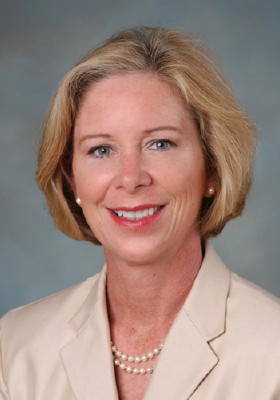
Currently serving · U.S. Court of Appeals for the Sixth Circuit
Deborah L. Cook
Currently servingSenior status
Senior Circuit Judge · U.S. Court of Appeals for the Sixth Circuit · 2003–present · Appointed by George W Bush
Deborah L. Cook serves as a senior circuit judge of the U.S. Court of Appeals for the Sixth Circuit (2003–present). Cook was appointed by George W Bush. Cook assumed senior status in 2019 and continues to hear cases.
Key facts
- Full name
- Deborah L. Cook
- Court
- U.S. Court of Appeals for the Sixth Circuit
- Office
- Circuit Judge (U.S. Court of Appeals)
- Status
- Senior circuit judge (still serving)
- Duty status
- Senior
- Appointment
- Senate-confirmed
- FJC seat
- CA60507
- Tenure
- 2003–present
- Confirmed
- 2003-05-05
- Born
- 1952
- Died
- —
- First year on the bench
- 2003
- Dataset version
- 1.20260705
Appointment & service record
U.S. Court of Appeals for the Sixth Circuit · 2003–present
- Seat
- CA60507
- Appointment
- Senate-confirmed
- Appointing president
- George W Bush
- Confirmed
- 2003-05-05
- Commissioned
- 2003-05-07
- Senior status
- 2019-03-06 (still serving)
Court, FJC seat, appointment type (Senate-confirmed or recess), appointing president, confirmation and commission dates, and senior-status date are drawn from the Federal Judicial Center Biographical Directory and Wikidata.[1][2][3]
Sources
- [1]https://www.fjc.gov/node/1391826fjc · retrieved 2026-07-05
- [2]https://www.fjc.gov/history/judges/biographical-directory-article-iii-federal-judges-exportfjc-directory · retrieved 2026-07-05
- [3]https://www.wikidata.org/wiki/Q5248296Wikidata · retrieved 2026-07-05
Biographical narrative
1,001 words · sourced from the Wikipedia REST extract
Deborah Louise Cook is a senior United States circuit judge on the Court of Appeals for the Sixth Circuit. Appointed to the federal bench by President George W. Bush in 2003, she took senior status in 2019 but continues to hear cases. Prior to her federal service, Cook served as a justice of the Ohio Supreme Court from 1995 until her elevation to the appellate court. Her career encompasses private practice, state‑level judicial service, and extensive involvement in legal education and community organizations.
Early life and legal career
Deborah L. Cook was born in 1952 and completed her secondary education at Crafton High School near Pittsburgh, Pennsylvania, graduating in 1970. She pursued higher education at the University of Akron, where she earned a Bachelor of Arts degree followed by a Juris Doctor from the university’s law school. While an undergraduate, Cook held leadership positions as president of Delta Gamma sorority and as senior class president; she also became a member of Omicron Delta Kappa, an honor society recognizing academic achievement and leadership.
After admission to the bar, Cook joined Roderick, Myers & Linton in Akron, Ohio. During her tenure at the firm she achieved the distinction of becoming its first female partner, marking a notable milestone in the firm’s history. Her experience in private practice preceded her entry into the judiciary.
Cook’s judicial career began with election to the Ohio Ninth District Court of Appeals, where she served for four years. The district court reviews cases from Summit, Wayne, Medina, and Lorain counties, providing Cook with appellate experience at the state level. In 1994 she was elected to a six‑year term on the Ohio Supreme Court, assuming office in 1995. She secured re‑election in November 2000 and continued to serve until her appointment to the federal bench in 2003.
Beyond her judicial duties, Cook contributed to several state commissions and legal education initiatives. She chaired the Commission on Public Legal Education and participated in both the Ohio Courts Futures Commission and the Ohio Commission on Dispute Resolution and Conflict Management. In recognition of her contributions, the University of Akron awarded her an honorary Doctor of Laws degree in 1996.
Cook’s professional affiliations include past presidency of the Akron Bar Association Foundation and fellowship in the American Bar Foundation. From 1981 to 1993 she served on the disciplinary committee of the Akron Bar Association. Her community involvement has been broad, encompassing service on the Summit County United Way Board of Trustees, leadership of the Volunteer Center Board of Trustees, participation on the Women’s Network Board of Directors, and past chairmanship of the Junior Leadership Akron Project. She currently co‑chairs Collegescholars, Inc., a mentored scholarship program that supports disadvantaged students in Akron. An additional personal note recorded in public sources is her distinction as the only woman to have played on the all‑male Sharon Golf Club’s course.
Federal appellate service
President George W. Bush nominated Cook to the United States Court of Appeals for the Sixth Circuit on May 9, 2001, filling a vacancy created when Judge Alan Eugene Norris assumed senior status on July 1, 2001. The nomination was submitted during the 107th Congress, which at that time was controlled by the Democratic Party; consequently, the Senate did not bring the nomination to a floor vote for nearly two years.
The Senate ultimately confirmed Cook on May 5, 2003, with a vote of 66 in favor and 25 against. She received her commission two days later, on May 7, 2003, and began serving as an active circuit judge based in Akron, Ohio. During her tenure as an active judge she participated in the Sixth Circuit’s adjudication of federal appeals arising from Kentucky, Michigan, Ohio, and Tennessee.
Cook assumed senior status on March 6, 2019, coinciding with the confirmation of her successor, Chad Readler. After moving to inactive senior status on August 27, 2021, she returned to hearing cases by at least April 27, 2023, demonstrating continued engagement with the court’s workload.
Jurisprudence and legacy
Throughout her service on the Sixth Circuit, Judge Cook has authored opinions addressing a range of constitutional and statutory issues. Her written decisions have covered matters involving the Fourth Amendment’s protections against unreasonable searches and seizures, voting‑rights challenges, and the scope of free speech in public schools. While specific case citations are not enumerated here, these areas reflect the breadth of her judicial involvement.
In 2014 Judge Cook participated in a panel decision that upheld state bans on same‑sex marriage in Michigan, Kentucky, Ohio, and Tennessee. The ruling was issued by a three‑judge panel with a 2‑1 vote, representing one of the circuit’s last affirmations of such bans prior to the United States Supreme Court’s decision in *Obergefell v. Hodges*, which ultimately invalidated those prohibitions nationwide.
Cook’s professional reputation extended beyond the appellate bench. In 2005 she was mentioned as a potential nominee for the United States Supreme Court to replace Justice Sandra Day O’Connor, though another candidate was ultimately selected. Speculation about her possible nomination resurfaced in discussions of a hypothetical appointment by former Senator John McCain had he won the presidency in 2008.
Beyond her judicial opinions, Cook’s legacy includes contributions to legal education and public service. Her leadership of the Commission on Public Legal Education reflects an ongoing commitment to improving public understanding of the law. Participation in state commissions addressing court futures and dispute resolution underscores a broader interest in systemic improvements to the judiciary. Moreover, her involvement with community organizations such as United Way, the Volunteer Center, and Collegescholars illustrates a sustained dedication to civic engagement and mentorship.
Collectively, Deborah L. Cook’s career spans private practice, state appellate and supreme court service, and more than two decades on the federal appellate bench. Her work has influenced legal doctrine in several key constitutional areas, while her extracurricular activities have contributed to legal education and community development within Ohio and beyond. As a senior judge who continues to hear cases, she remains an active participant in the Sixth Circuit’s ongoing jurisprudential evolution.
Sources & provenance
Every quantitative or attributable claim above carries a per-section [N] marker that resolves to the corresponding URL below. Each entry records the upstream provider, the canonical URL, and the timestamp at which the underlying source was retrieved.
Key facts
- https://www.fjc.gov/node/1391826fjc · retrieved 2026-07-05
- https://www.fjc.gov/history/judges/biographical-directory-article-iii-federal-judges-exportfjc-directory · retrieved 2026-07-05
- https://www.wikidata.org/wiki/Q5248296Wikidata · retrieved 2026-07-05
Biographical narrative
- https://en.wikipedia.org/wiki/Deborah_L._CookWikipedia · retrieved 2026-07-05
Explore the federal judiciary
The U.S. Courts of Appeals are the intermediate appellate courts of the federal judiciary — thirteen circuits sitting between the district courts and the Supreme Court. Browse the full roster of judges on the U.S. Court of Appeals for the Sixth Circuit, or explore how the appointed federal judiciary fits into the federal government.