
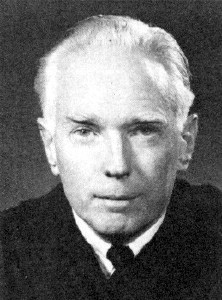
Historical · U.S. Court of Appeals for the Sixth Circuit
George Clifton Edwards Jr.
Former Circuit Judge · U.S. Court of Appeals for the Sixth Circuit · 1963–1995 · Appointed by John F Kennedy
George Clifton Edwards Jr. served as a circuit judge of the U.S. Court of Appeals for the Sixth Circuit (1963–1995). Jr. was appointed by John F Kennedy.
Key facts
- Full name
- George Clifton Edwards Jr.
- Court
- U.S. Court of Appeals for the Sixth Circuit
- Office
- Circuit Judge (U.S. Court of Appeals)
- Status
- Former circuit judge
- Duty status
- Not serving
- Appointment
- Senate-confirmed
- FJC seat
- CA60603
- Tenure
- 1963–1995
- Confirmed
- 1963-12-16
- Born
- 1914-08-06
- Died
- 1995-04-08
- First year on the bench
- 1963
- Dataset version
- 1.20260711
Appointment & service record
U.S. Court of Appeals for the Sixth Circuit · 1963–1985
- Seat
- CA60603
- Appointment
- Senate-confirmed
- Appointing president
- John F Kennedy
- Confirmed
- 1963-12-16
- Commissioned
- 1963-12-19
- Senior status
- 1985-01-15
- Chief Judge
- 1979–1983
Court, FJC seat, appointment type (Senate-confirmed or recess), appointing president, confirmation and commission dates, and senior-status date are drawn from the Federal Judicial Center Biographical Directory and Wikidata.[1][2][3]
Sources
- [1]https://www.fjc.gov/node/1380406fjc · retrieved 2026-07-11
- [2]https://www.fjc.gov/history/judges/biographical-directory-article-iii-federal-judges-exportfjc-directory · retrieved 2026-07-11
- [3]https://www.wikidata.org/wiki/Q5537978Wikidata · retrieved 2026-07-11
Biographical narrative
1,328 words · sourced from the Wikipedia REST extract
George Clifton Edwards Jr. was a United States circuit judge who served on the United States Court of Appeals for the Sixth Circuit from 1963 until his death in 1995, including a term as Chief Judge from 1979 to 1983. Born in Dallas, Texas, in 1914, Edwards had an unusually diverse career before his federal judicial appointment, serving as a labor organizer, municipal official, state court judge, Michigan Supreme Court justice, and Detroit Police Commissioner. His appointment to the federal bench by President John F. Kennedy, a Democrat, came during a turbulent period in American history and was notably opposed by FBI Director J. Edgar Hoover. Edwards's career was marked by consistent advocacy for civil rights and social justice, themes that would inform his work throughout his decades of public service.
Early life and legal career
George Clifton Edwards Jr. was born on August 6, 1914, in Dallas, Texas. He pursued his undergraduate education at Southern Methodist University, where he earned a Bachelor of Arts degree in 1933 at the age of nineteen. He continued his studies at Harvard University, receiving a Master of Arts degree in 1934. Following his graduate work, Edwards relocated to Detroit, Michigan, in 1936, where he would spend the majority of his professional life and establish himself as a significant figure in the city's civic and political landscape.
Upon arriving in Detroit, Edwards became involved in the labor movement, working as an organizer for the United Automobile Workers union during a formative period in American labor history. This experience with organized labor and working-class issues would shape his perspective throughout his subsequent career. In 1939, he transitioned to municipal government when Mayor Edward Jeffries appointed him as director-secretary of the Detroit Housing Commission. Two years later, in 1941, Edwards won election to the Detroit Common Council at the remarkably young age of twenty-five, beginning what would become an extensive career in public service.
Edwards's education was interrupted by World War II. He served in the United States Army from 1943 to 1946, with most of his service taking place in the Philippines, where he attained the rank of second lieutenant. During his military service, he began his legal education, receiving a Certificate of Completion from Detroit College of Law (now known as Michigan State University College of Law) in 1944. After returning from military duty, Edwards completed his legal studies while simultaneously resuming his political career, earning his Juris Doctor from the same institution in 1949. Upon his return to civilian life, he was elected president of the Detroit Common Council in 1946, a position he would hold until 1950. During this same period, he also served as Chairman of the Detroit Election Commission from 1946 to 1950, and he established a law practice.
In 1949, Edwards mounted a campaign for Mayor of Detroit, running on a platform that included support for equal rights for African Americans and the protection of individual civil liberties. The election proved to be racially divisive, and Edwards lost to Albert Cobo. Despite this electoral defeat, Edwards's commitment to civil rights remained a defining characteristic of his career.
Edwards's judicial career began in 1951 when Michigan Governor G. Mennen Williams appointed him as probate judge of the Wayne County Juvenile Court. Three years later, in 1954, he won election to the Wayne County Circuit Court. His judicial ascent continued in 1956 when he was appointed to the Michigan Supreme Court to fill a vacancy. He subsequently won election to two additional terms on the state's highest court, serving until 1961. This period of state judicial service provided Edwards with substantial experience in appellate jurisprudence and established his reputation as a jurist.
In 1962, Edwards made the unusual decision to resign from the Michigan Supreme Court to accept appointment as Detroit Police Commissioner under Mayor Jerome Cavanagh. This move reflected Edwards's ongoing commitment to addressing racial tensions and social problems in Detroit, as city leaders hoped his appointment could help ease growing racial troubles in the community. His tenure as police commissioner, though brief, demonstrated his willingness to take on challenging administrative roles in service of social progress.
Federal appellate service
President John F. Kennedy nominated Edwards to the United States Court of Appeals for the Sixth Circuit on September 9, 1963, to fill a vacancy created by the departure of Judge Thomas Francis McAllister. The nomination came during a period of significant national turmoil. Edwards's confirmation hearing in the United States Senate began on November 21, 1963, the day before President Kennedy was assassinated in Dallas. Despite the national tragedy and notable opposition from FBI Director J. Edgar Hoover, the Senate confirmed Edwards on December 16, 1963. He received his commission on December 19, 1963, from President Lyndon B. Johnson, who had assumed the presidency following Kennedy's death.
Edwards served as an active circuit judge for more than two decades. On January 16, 1979, he became Chief Judge of the Sixth Circuit, a position he held until September 30, 1983. As Chief Judge, he bore administrative responsibilities for the circuit in addition to his judicial duties, overseeing the court during a period of significant caseload growth and evolving jurisprudence in areas including civil rights, criminal procedure, and constitutional law. After completing his term as Chief Judge, Edwards continued as an active judge until assuming senior status on January 15, 1985. Senior status allowed him to continue hearing cases with a reduced caseload while making his seat available for a new active judge.
Edwards remained active in senior status for a decade, continuing to contribute to the work of the Sixth Circuit until his death on April 8, 1995, in Cincinnati, Ohio. His federal judicial service thus spanned more than three decades, during which the federal courts addressed many of the most significant legal questions of the late twentieth century.
Jurisprudence and legacy
Throughout his career, Edwards demonstrated a consistent commitment to civil rights and social justice that predated his federal judicial service and informed his approach to the law. His willingness to take controversial positions was evident from his 1949 mayoral campaign through his appointment to the federal bench over the objections of J. Edgar Hoover, suggesting that his judicial philosophy likely reflected the progressive values he had championed throughout his career in labor organizing, municipal government, and state judicial service.
In 1974, while serving on the Sixth Circuit, Edwards published "Pioneer at Law: A Legacy in Pursuit of Justice," a work that combined a biography of his father, George C. Edwards, with autobiographical reflections on his own early life. His father had been a lawyer and activist who advocated for labor unions, the poor, and African Americans in Dallas, Texas, during the first half of the twentieth century. This book provided insight into the family background and formative influences that shaped Edwards's own commitment to justice and equality. The publication of this work while he was an active federal judge demonstrated his continued engagement with questions of social justice and his willingness to reflect publicly on the values that informed his work.
Edwards's career trajectory—from union organizer to federal appellate judge—was unusual among federal jurists and reflected the diverse pathways to the bench that existed during the mid-twentieth century. His experience in municipal government, police administration, and state courts provided him with a broad perspective on the practical implications of legal decisions, particularly in areas affecting urban communities and civil rights. His service on the Sixth Circuit, which hears appeals from federal district courts in Kentucky, Michigan, Ohio, and Tennessee, placed him at the center of legal developments in a region experiencing significant social and economic change during his tenure.
George Clifton Edwards Jr. died on April 8, 1995, having served the federal judiciary for more than thirty-one years. His lengthy career in public service, spanning municipal government, state courts, police administration, and the federal appellate bench, reflected a sustained commitment to using law and government as instruments of social progress and equal justice.
Sources & provenance
Every quantitative or attributable claim above carries a per-section [N] marker that resolves to the corresponding URL below. Each entry records the upstream provider, the canonical URL, and the timestamp at which the underlying source was retrieved.
Key facts
- https://www.fjc.gov/node/1380406fjc · retrieved 2026-07-11
- https://www.fjc.gov/history/judges/biographical-directory-article-iii-federal-judges-exportfjc-directory · retrieved 2026-07-11
- https://www.wikidata.org/wiki/Q5537978Wikidata · retrieved 2026-07-11
Biographical narrative
- https://en.wikipedia.org/wiki/George_Clifton_Edwards_Jr.Wikipedia · retrieved 2026-07-11
Explore the federal judiciary
The U.S. Courts of Appeals are the intermediate appellate courts of the federal judiciary — thirteen circuits sitting between the district courts and the Supreme Court. Browse the full roster of judges on the U.S. Court of Appeals for the Sixth Circuit, or explore how the appointed federal judiciary fits into the federal government.