
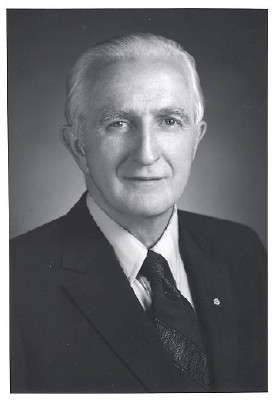
Historical · U.S. Court of Appeals for the Sixth Circuit
Harry Phillips
Former Circuit Judge · U.S. Court of Appeals for the Sixth Circuit · 1963–1985 · Appointed by John F Kennedy
Harry Phillips served as a circuit judge of the U.S. Court of Appeals for the Sixth Circuit (1963–1985). Phillips was appointed by John F Kennedy.
Key facts
- Full name
- Harry Phillips
- Court
- U.S. Court of Appeals for the Sixth Circuit
- Office
- Circuit Judge (U.S. Court of Appeals)
- Status
- Former circuit judge
- Duty status
- Not serving
- Appointment
- Senate-confirmed
- FJC seat
- CA60702
- Tenure
- 1963–1985
- Confirmed
- 1963-06-28
- Born
- 1909-07-28
- Died
- 1985-08-03
- First year on the bench
- 1963
- Dataset version
- 1.20260711
Appointment & service record
U.S. Court of Appeals for the Sixth Circuit · 1963–1979
- Seat
- CA60702
- Appointment
- Senate-confirmed
- Appointing president
- John F Kennedy
- Confirmed
- 1963-06-28
- Commissioned
- 1963-07-03
- Senior status
- 1979-01-15
- Chief Judge
- 1969–1979
Court, FJC seat, appointment type (Senate-confirmed or recess), appointing president, confirmation and commission dates, and senior-status date are drawn from the Federal Judicial Center Biographical Directory and Wikidata.[1][2][3]
Sources
- [1]https://www.fjc.gov/node/1386296fjc · retrieved 2026-07-11
- [2]https://www.fjc.gov/history/judges/biographical-directory-article-iii-federal-judges-exportfjc-directory · retrieved 2026-07-11
- [3]https://www.wikidata.org/wiki/Q5671574Wikidata · retrieved 2026-07-11
Biographical narrative
1,181 words · sourced from the Wikipedia REST extract
Harry Phillips was a United States circuit judge who served on the United States Court of Appeals for the Sixth Circuit from 1963 until his death in 1985. Born in Tennessee in 1909, he had a distinguished legal career that included service in the Tennessee state legislature, work as an assistant state attorney general, military service during World War II, and private practice before his appointment to the federal bench. He served as Chief Judge of the Sixth Circuit from 1969 to 1979, presiding over the court during a significant period in American legal history. His contributions to the federal judiciary and legal profession in Tennessee were recognized posthumously through the naming of institutional honors in his memory.
Early life and legal career
Harry Phillips was born on July 28, 1909, in Watertown, Tennessee, a small community in Wilson County in the middle portion of the state. He pursued his higher education at Cumberland University, a private institution with deep roots in Tennessee, where he earned an Artium Baccalaureus degree in 1932. He continued his legal education at Cumberland School of Law, the university's law school, receiving his Bachelor of Laws degree in 1933. This educational foundation prepared him for what would become a multifaceted legal career spanning state government, military service, and ultimately the federal judiciary.
Phillips began his professional career in private legal practice in his hometown of Watertown in 1935. That same year, he entered public service when he was elected to serve as a member of the Tennessee House of Representatives, where he served from 1935 to 1937. This early experience in the state legislature provided him with insight into the legislative process and public policy that would inform his later judicial work. In 1937, Phillips transitioned from legislative service to the executive branch, accepting a position as an assistant state attorney general of Tennessee. In this role, he represented the state's interests in legal matters and gained substantial experience in appellate advocacy and government law. He served in this capacity until 1943, a period that encompassed the early years of American involvement in World War II.
During World War II, Phillips interrupted his legal career to serve his country in the United States Navy. He served from 1943 to 1946, rising to the rank of Lieutenant Commander, a senior officer position that reflected both his leadership abilities and his contributions to the naval service during the war. Following his honorable discharge in 1946, Phillips returned to Tennessee and resumed his work as an assistant state attorney general, serving in that position from 1946 to 1950. This second tenure in the attorney general's office further deepened his expertise in state law and appellate practice.
In 1950, Phillips transitioned to private practice, relocating to Nashville, Tennessee, the state capital and a major legal and commercial center. He practiced law in Nashville for thirteen years, from 1950 to 1963, building a reputation as a skilled attorney and establishing himself within the legal community of Middle Tennessee. This period of private practice allowed him to handle a diverse range of legal matters and develop the breadth of experience that would serve him well on the federal bench.
Federal appellate service
President John F. Kennedy, a Democrat, nominated Phillips to the United States Court of Appeals for the Sixth Circuit on June 4, 1963. The nomination was to fill a vacancy created by the departure of Judge John Donelson Martin Sr. from the court. The United States Senate confirmed Phillips on June 28, 1963, and he received his commission on July 3, 1963, formally beginning his service on the federal appellate bench. The Sixth Circuit, which hears appeals from federal district courts in Kentucky, Michigan, Ohio, and Tennessee, provided Phillips with a broad jurisdiction covering significant industrial, commercial, and population centers of the Midwest and Upper South.
Phillips served as an active circuit judge for sixteen years, during which time he participated in the resolution of numerous appeals across the full spectrum of federal law. In 1969, he assumed the position of Chief Judge of the Sixth Circuit, the administrative and ceremonial head of the court. As Chief Judge, Phillips bore responsibility not only for deciding cases but also for managing the court's operations, assigning cases, and representing the circuit within the federal judiciary. He served in this leadership capacity for a full decade, from 1969 to 1979, a period that saw significant developments in civil rights law, criminal procedure, and federal regulatory matters.
On January 15, 1979, Phillips assumed senior status, a form of semi-retirement available to federal judges who meet certain age and service requirements. Senior status allowed him to continue hearing cases and contributing to the work of the court while reducing his caseload and making his seat available for a new active judge. Phillips continued to serve in senior status for more than six years, remaining an active participant in the Sixth Circuit's work until his death.
Phillips died on August 3, 1985, in London, England, under tragic circumstances. He suffered fatal injuries after being struck by a vehicle while crossing a street in London. His death at age seventy-six ended more than two decades of service to the federal judiciary.
Jurisprudence and legacy
Phillips served on the Sixth Circuit during a transformative era in American law, participating in the court's work as it addressed the implementation of landmark Supreme Court decisions and the expansion of federal jurisdiction in numerous areas. His tenure as Chief Judge coincided with significant growth in the federal courts' dockets and the increasing complexity of federal litigation. While specific details of his judicial opinions and legal philosophy are not extensively documented in available records, his long service and leadership role indicate that he was a respected and active member of the federal appellate judiciary.
The legal community's regard for Phillips became evident in the honors established after his death. In 1986, the United States Court of Appeals for the Sixth Circuit formally named its Nashville satellite library in his honor, recognizing his lifelong dedication to legal scholarship and his connection to Middle Tennessee. This institutional recognition reflected both his service to the court and his commitment to the legal profession's intellectual foundations.
In 1990, five years after his death, the Harry Phillips American Inn of Court was founded in Nashville. The American Inns of Court are professional associations designed to foster legal excellence and professionalism through mentoring and continuing education, bringing together judges, lawyers, law professors, and law students. The Harry Phillips American Inn of Court became the 120th such organization established in the United States. During its first two decades of operation, from 1990 to 2011, approximately four hundred legal professionals and students from Middle Tennessee participated in the organization. The decision to name this Inn of Court after Phillips was among the organization's first official acts, demonstrating the lasting impact of his career and the esteem in which he was held by the Tennessee legal community. These posthumous honors ensure that Phillips's contributions to the federal judiciary and the legal profession continue to be remembered and celebrated.
Sources & provenance
Every quantitative or attributable claim above carries a per-section [N] marker that resolves to the corresponding URL below. Each entry records the upstream provider, the canonical URL, and the timestamp at which the underlying source was retrieved.
Key facts
- https://www.fjc.gov/node/1386296fjc · retrieved 2026-07-11
- https://www.fjc.gov/history/judges/biographical-directory-article-iii-federal-judges-exportfjc-directory · retrieved 2026-07-11
- https://www.wikidata.org/wiki/Q5671574Wikidata · retrieved 2026-07-11
Biographical narrative
- https://en.wikipedia.org/wiki/Harry_Phillips_(judge)Wikipedia · retrieved 2026-07-11
Explore the federal judiciary
The U.S. Courts of Appeals are the intermediate appellate courts of the federal judiciary — thirteen circuits sitting between the district courts and the Supreme Court. Browse the full roster of judges on the U.S. Court of Appeals for the Sixth Circuit, or explore how the appointed federal judiciary fits into the federal government.