
Historical · U.S. Court of Appeals for the Sixth Circuit
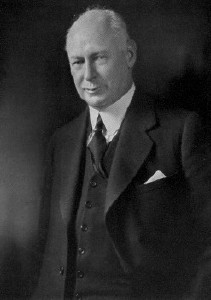
John Weld Peck II
Former Circuit Judge · U.S. Court of Appeals for the Sixth Circuit · 1966–1993 · Appointed by Lyndon B Johnson
John Weld Peck II served as a circuit judge of the U.S. Court of Appeals for the Sixth Circuit (1966–1993). II was appointed by Lyndon B Johnson.
Key facts
- Full name
- John Weld Peck II
- Court
- U.S. Court of Appeals for the Sixth Circuit
- Office
- Circuit Judge (U.S. Court of Appeals)
- Status
- Former circuit judge
- Duty status
- Not serving
- Appointment
- Senate-confirmed
- FJC seat
- CA60801
- Tenure
- 1966–1993
- Confirmed
- 1966-07-22
- Born
- 1913-06-23
- Died
- 1993-09-07
- First year on the bench
- 1966
- Dataset version
- 1.20260711
Appointment & service record
U.S. Court of Appeals for the Sixth Circuit · 1966–1978
- Seat
- CA60801
- Appointment
- Senate-confirmed
- Appointing president
- Lyndon B Johnson
- Confirmed
- 1966-07-22
- Commissioned
- 1966-07-22
- Senior status
- 1978-07-01
Court, FJC seat, appointment type (Senate-confirmed or recess), appointing president, confirmation and commission dates, and senior-status date are drawn from the Federal Judicial Center Biographical Directory and Wikidata.[1][2][3]
Sources
- [1]https://www.fjc.gov/node/1386196fjc · retrieved 2026-07-11
- [2]https://www.fjc.gov/history/judges/biographical-directory-article-iii-federal-judges-exportfjc-directory · retrieved 2026-07-11
- [3]https://www.wikidata.org/wiki/Q15451760Wikidata · retrieved 2026-07-11
Biographical narrative
1,047 words · sourced from the Wikipedia REST extract
John Weld Peck II was a United States Circuit Judge who served on the United States Court of Appeals for the Sixth Circuit from 1966 to 1978. Born in 1913, he was appointed to the federal appellate bench by President Lyndon B. Johnson, a Democrat, and was confirmed by the Senate in July 1966. He served for twelve years before stepping down from active service, and he passed away in 1993. Peck was the nephew and namesake of John Weld Peck, who had previously served as a United States District Judge for the Southern District of Ohio in the early twentieth century.
Early life and legal career
John Weld Peck II was born on June 23, 1913, into a family with established legal connections in Ohio. His uncle, John Weld Peck, had served as a federal district judge and had been a prominent attorney in Cincinnati during the late nineteenth and early twentieth centuries. This family background in the legal profession provided the younger Peck with both a namesake and a professional legacy to follow.
While specific details of Peck's educational background and early legal training are not extensively documented in available records, he pursued a career in law that would eventually lead him to the federal judiciary. Before his appointment to the federal bench, Peck would have gained the legal experience and professional standing necessary for consideration for a lifetime appointment to the United States Court of Appeals, one of the most prestigious positions in the American legal system. The path to such an appointment typically involved years of distinguished legal practice, whether in private law, public service, or lower judicial positions, though the particular details of Peck's pre-judicial career are not fully specified in the historical record.
The legal environment in which Peck developed his career was one of significant change in American law. The mid-twentieth century saw transformations in civil rights law, administrative law, and federal jurisdiction that would have shaped the work of any attorney practicing during this period. Attorneys who would later serve on the federal appellate bench during the 1960s and 1970s had typically built their reputations during the post-World War II era, a time of expanding federal authority and evolving constitutional interpretation.
Federal appellate service
President Lyndon B. Johnson, a Democrat, appointed John Weld Peck II to the United States Court of Appeals for the Sixth Circuit in 1966. The appointment came during a period of active judicial nominations by the Johnson administration, which sought to fill vacancies across the federal judiciary. The Senate confirmed Peck's nomination on July 22, 1966, and he took his seat on the court, designated as seat CA60801 in the Federal Judicial Center's records.
The Sixth Circuit, which has jurisdiction over federal appeals from district courts in Kentucky, Michigan, Ohio, and Tennessee, handles a diverse caseload reflecting the economic, social, and legal issues of the industrial Midwest and upper South. During Peck's tenure from 1966 to 1978, the court would have addressed cases arising from the implementation of civil rights legislation, labor disputes in the region's manufacturing sector, criminal appeals, and questions of federal regulatory authority. This was a particularly dynamic period in American law, as the federal courts grappled with the implications of landmark Supreme Court decisions and new federal statutes enacted during the 1960s.
As a circuit judge, Peck would have participated in three-judge panels that heard oral arguments and decided appeals, as well as occasional en banc proceedings involving the full court. Circuit judges during this era typically handled a substantial caseload, reviewing decisions from federal district courts and federal administrative agencies. The work required careful analysis of complex legal questions, application of precedent, and the crafting of written opinions that would guide lower courts and litigants within the circuit.
Peck served on the Sixth Circuit for twelve years, stepping down from the bench in 1978. His service spanned both the Johnson and Nixon administrations, as well as the Ford and early Carter years, a period that saw significant shifts in national politics and legal priorities. The reasons for his departure from active service in 1978 are not specified in available records, though federal judges may choose to take senior status or retire for various personal or professional reasons.
Jurisprudence and legacy
The specific contours of Judge Peck's judicial philosophy and his most significant opinions are not extensively documented in readily available historical sources. Like many circuit judges whose careers predate the digital age and widespread online legal databases, the full scope of his contributions to federal jurisprudence may be preserved primarily in the bound volumes of the Federal Reporter and in the institutional memory of the Sixth Circuit.
Circuit judges who served during the 1960s and 1970s confronted a rapidly evolving legal landscape. The federal courts during this period addressed questions arising from the Civil Rights Act of 1964, the Voting Rights Act of 1965, and other landmark legislation, as well as the implementation of Supreme Court decisions expanding individual rights and federal authority. Judges on the Sixth Circuit, given the region's industrial character and diverse population, would have encountered cases involving employment discrimination, school desegregation, labor relations, and environmental regulation, among many other areas of federal law.
The institutional role of a circuit judge involves not only deciding individual cases but also contributing to the development of circuit precedent and maintaining uniformity in the application of federal law within the circuit's jurisdiction. Over the course of twelve years of service, a circuit judge typically participates in hundreds of decisions, some published and precedential, others unpublished or addressing narrow procedural questions.
John Weld Peck II's service on the Sixth Circuit represented a continuation of his family's involvement in the federal judiciary. His uncle's earlier service as a district judge had established a tradition of judicial service that the younger Peck extended to the appellate level. This family connection to the federal bench, spanning different eras and different levels of the federal court system, reflects the role that certain families and professional networks have played in the American legal establishment.
Judge Peck passed away on September 7, 1993, fifteen years after concluding his active service on the Sixth Circuit. His tenure on the court contributed to the administration of federal justice during a formative period in modern American law.
Sources & provenance
Every quantitative or attributable claim above carries a per-section [N] marker that resolves to the corresponding URL below. Each entry records the upstream provider, the canonical URL, and the timestamp at which the underlying source was retrieved.
Key facts
- https://www.fjc.gov/node/1386196fjc · retrieved 2026-07-11
- https://www.fjc.gov/history/judges/biographical-directory-article-iii-federal-judges-exportfjc-directory · retrieved 2026-07-11
- https://www.wikidata.org/wiki/Q15451760Wikidata · retrieved 2026-07-11
Biographical narrative
- https://en.wikipedia.org/wiki/John_Weld_PeckWikipedia · retrieved 2026-07-11
Explore the federal judiciary
The U.S. Courts of Appeals are the intermediate appellate courts of the federal judiciary — thirteen circuits sitting between the district courts and the Supreme Court. Browse the full roster of judges on the U.S. Court of Appeals for the Sixth Circuit, or explore how the appointed federal judiciary fits into the federal government.