
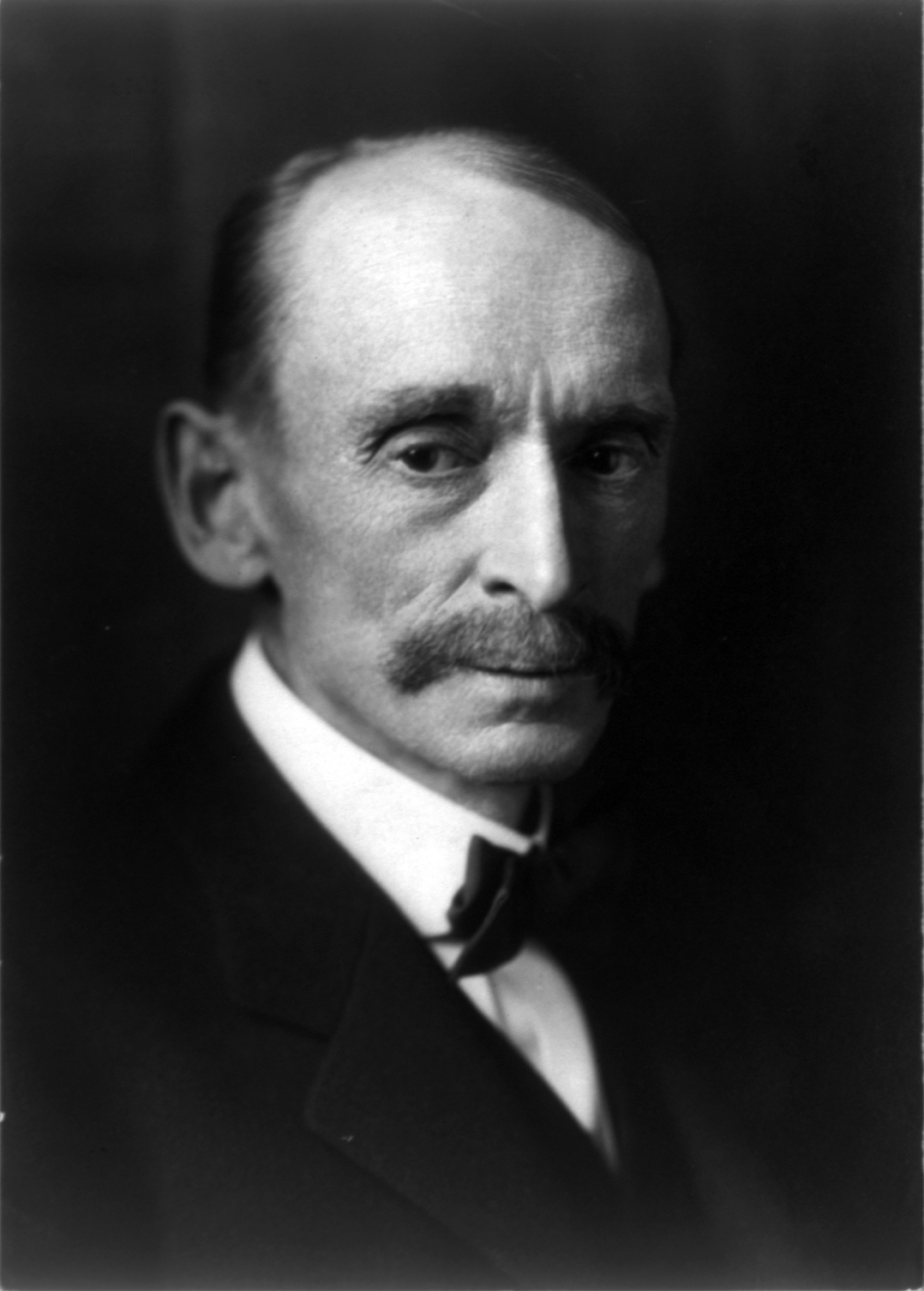
Historical · U.S. Court of Appeals for the Sixth Circuit
William Rufus Day
Former Circuit Judge · U.S. Court of Appeals for the Sixth Circuit · 1899–1903 · Appointed by William Mckinley
William Rufus Day served as a circuit judge of the U.S. Court of Appeals for the Sixth Circuit (1899–1903). Day was appointed by William Mckinley.
Key facts
- Full name
- William Rufus Day
- Court
- U.S. Court of Appeals for the Sixth Circuit
- Office
- Circuit Judge (U.S. Court of Appeals)
- Status
- Former circuit judge
- Duty status
- Not serving
- Appointment
- Senate-confirmed
- FJC seat
- CA60301
- Tenure
- 1899–1903
- Confirmed
- 1899-02-28
- Born
- 1849-04-17
- Died
- 1923-07-09
- First year on the bench
- 1899
- Dataset version
- 1.20260711
Appointment & service record
U.S. Court of Appeals for the Sixth Circuit · 1899–1903
- Seat
- CA60301
- Appointment
- Senate-confirmed
- Appointing president
- William Mckinley
- Confirmed
- 1899-02-28
- Commissioned
- 1899-02-28
- Senior status
- —
Court, FJC seat, appointment type (Senate-confirmed or recess), appointing president, confirmation and commission dates, and senior-status date are drawn from the Federal Judicial Center Biographical Directory and Wikidata.[1][2][3]
Sources
- [1]https://www.fjc.gov/node/1379896fjc · retrieved 2026-07-11
- [2]https://www.fjc.gov/history/judges/biographical-directory-article-iii-federal-judges-exportfjc-directory · retrieved 2026-07-11
- [3]https://www.wikidata.org/wiki/Q707528Wikidata · retrieved 2026-07-11
Biographical narrative
1,600 words · sourced from the Wikipedia REST extract
William Rufus Day was a distinguished American jurist and diplomat who served as a judge of the United States Court of Appeals for the Sixth Circuit from 1899 to 1903. Born in Ohio in 1849 into a family with deep judicial roots, Day built a career that spanned private legal practice, high-level diplomacy, and federal judicial service. He is perhaps best known for his subsequent nearly two-decade tenure as an associate justice of the United States Supreme Court, but his earlier service on the Sixth Circuit marked an important transition from his diplomatic work to his judicial career. President William McKinley, a Republican, appointed him to the federal appellate bench following Day's service as Secretary of State and his role in negotiating the end of the Spanish-American War.
Early life and legal career
William Rufus Day was born on April 17, 1849, in Ravenna, Ohio, into a family steeped in the legal profession. His father, Luther Day, served as a judge on the Ohio Supreme Court, and his maternal grandfather, Rufus P. Spalding, also sat on the state's highest court. This judicial heritage provided Day with early exposure to the law and public service. He pursued his undergraduate education at the University of Michigan, graduating with a Bachelor of Science degree in 1870. Following his graduation, Day began his legal training by studying for one year under the tutelage of attorney and Judge George F. Robinson, then continued his legal education with an additional year at the University of Michigan Law School.
Day was admitted to the Ohio bar on July 5, 1872, and chose to establish his practice in Canton, Ohio, where he entered into a law partnership with William A. Lynch. For the next quarter-century, Day built a successful legal practice in the growing industrial community, handling both criminal defense matters and corporate legal work. During this extended period in private practice, he also became active in Republican politics, forging connections that would prove significant for his later career.
Among the most consequential relationships Day developed during his years in Canton was his friendship with William McKinley. The two men became close associates, and Day served as McKinley's legal and political adviser throughout McKinley's rise through various levels of government. Day provided counsel during McKinley's campaigns for Congress, his successful bids for the governorship of Ohio, and ultimately his election to the presidency of the United States. This long-standing relationship of trust and mutual respect positioned Day for appointment to significant federal positions once McKinley assumed the presidency.
After winning the 1896 presidential election, McKinley appointed Day to serve as Assistant Secretary of State, working under Secretary of State John Sherman. Sherman's tenure was marked by difficulties stemming from declining health and memory problems, which limited his effectiveness in the role. In 1898, President McKinley elevated Day to replace Sherman as Secretary of State. Day's tenure in this position was relatively brief but occurred during a critical period in American foreign policy. The Spanish-American War began during his time as Secretary of State, and Day played a central role in the diplomatic efforts surrounding the conflict.
After serving as Secretary of State for approximately five months, Day resigned from the cabinet to lead the United States Peace Commission tasked with negotiating the treaty to end the Spanish-American War. Day's views on the appropriate terms of peace differed from those of President McKinley. Day believed that Spanish colonies other than Cuba should be returned to Spain, while McKinley determined that the United States should assume control of the Philippines, Puerto Rico, and Guam. Despite his personal reservations, Day carried out his diplomatic duties and negotiated on behalf of McKinley's position. Day expressed concern that the terms McKinley insisted upon would prove humiliating to Spain and might prevent agreement, but Spain ultimately accepted what were described as harsh terms. Day led the American delegation to Paris to finalize and sign the treaty ending the war. Following this diplomatic achievement, John Hay succeeded Day at the Department of State.
Federal appellate service
Day's transition to the federal judiciary came shortly after his diplomatic service concluded. He had previously been offered a federal judicial position when President Benjamin Harrison provided him with a recess appointment to the United States District Court for the Northern District of Ohio on May 24, 1889, but Day declined that appointment. A decade later, circumstances had changed, and Day accepted a position on the federal appellate bench.
On February 25, 1899, President McKinley nominated Day to serve on both the United States Court of Appeals for the Sixth Circuit and the United States Circuit Courts for the Sixth Circuit. This dual appointment was to a newly created joint seat that had been authorized by federal statute. The nomination came from the president who had been Day's close friend and political ally for many years, reflecting McKinley's continued confidence in Day's abilities and judgment. The United States Senate acted swiftly on the nomination, confirming Day on February 28, 1899, just three days after the nomination was submitted. Day received his commission on the same day as his confirmation.
Day served on the Sixth Circuit for approximately four years, presiding over cases from the federal appellate jurisdiction that covered several states in the Midwest and upper South. His tenure on the circuit court provided him with experience in the federal judiciary and allowed him to develop his judicial philosophy and approach to deciding cases. This period represented an important phase in Day's career, bridging his executive branch service in diplomacy and his later work on the nation's highest court.
Day's service on the Sixth Circuit terminated on February 23, 1903, when he was elevated to the United States Supreme Court. President Theodore Roosevelt nominated Day to serve as an associate justice, filling the vacancy created by the retirement of Justice George Shiras Jr. Roosevelt had initially offered the position to William Howard Taft, who declined in order to continue serving as governor of the Philippines. The Senate confirmed Day's nomination to the Supreme Court on February 23, 1903, and he took the judicial oath of office on March 2, 1903.
Jurisprudence and legacy
Day's service on the Supreme Court extended for nearly two decades, from 1903 until his retirement in 1922. During this lengthy tenure, he established himself as a productive member of the Court, authoring a substantial body of opinions. Over the course of his Supreme Court service, Day wrote 439 opinions, the vast majority of which represented the majority view of the Court, with only 18 dissenting opinions among them. This ratio suggests that Day generally found himself aligned with his colleagues on the Court and was frequently entrusted with articulating the Court's reasoning.
Throughout his time on the Supreme Court, Day demonstrated a skepticism toward large corporate entities and consistently supported antitrust enforcement. He voted with majorities that sided with the government in major antitrust cases involving some of the era's most powerful corporations. Day supported the government's position in cases involving Standard Oil, American Tobacco, and Union Pacific during 1911 and 1912, and again in a case involving Southern Pacific in 1922, near the end of his tenure.
One of Day's most significant contributions to American constitutional law came in his opinion for the Court in a case involving Fourth Amendment protections against unreasonable searches and seizures. In that decision, the Court ruled that the warrantless seizure of documents from a private residence violated the Fourth Amendment, and established that evidence obtained through such unconstitutional means must be excluded from use in federal criminal prosecutions. This exclusionary rule became a foundational principle in American criminal procedure.
Day served as Circuit Justice for the Seventh Circuit from March 9, 1903, to March 17, 1912, and then as Circuit Justice for the Sixth Circuit—the same circuit on which he had previously served as a circuit judge—from March 18, 1912, until November 13, 1922. These assignments involved supervisory responsibilities for the lower federal courts within those geographic regions.
Following the death of Chief Justice Edward Douglass White, Day proposed an unusual arrangement to President Warren G. Harding, who like Day was from Ohio. Day suggested that Harding appoint him as chief justice for a brief period of approximately six months, after which Day would retire and allow former President William Howard Taft to assume the position of chief justice. President Harding gave consideration to this proposal, but Taft, upon learning of the plan, expressed the view that such a short-term appointment would not serve the institution well and that Day's memory would fade quickly once he left the bench.
Day was known for his enthusiasm for baseball and frequently attended games of the Washington Senators at Boundary Field, often going directly to the ballpark after the Court concluded oral arguments. During the Court's hearing of one antitrust case in 1912, Day reportedly requested regular updates from his law clerk regarding the progress of the final game of the World Series, illustrating his passion for the sport even while engaged in judicial duties.
Day retired from the Supreme Court on November 13, 1922, after nearly two decades of service. Following his retirement, he briefly served as an Umpire of the Mixed Claims Commission, which adjudicated war claims against Germany in the aftermath of World War I. Day died on July 9, 1923, at his home in a cottage on Mackinac Island in Michigan, at the age of seventy-four. He was buried at West Lawn Cemetery in Canton, Ohio, the city where he had built his legal career and maintained his deepest community ties throughout his life.
Sources & provenance
Every quantitative or attributable claim above carries a per-section [N] marker that resolves to the corresponding URL below. Each entry records the upstream provider, the canonical URL, and the timestamp at which the underlying source was retrieved.
Key facts
- https://www.fjc.gov/node/1379896fjc · retrieved 2026-07-11
- https://www.fjc.gov/history/judges/biographical-directory-article-iii-federal-judges-exportfjc-directory · retrieved 2026-07-11
- https://www.wikidata.org/wiki/Q707528Wikidata · retrieved 2026-07-11
Biographical narrative
- https://en.wikipedia.org/wiki/William_R._DayWikipedia · retrieved 2026-07-11
Explore the federal judiciary
The U.S. Courts of Appeals are the intermediate appellate courts of the federal judiciary — thirteen circuits sitting between the district courts and the Supreme Court. Browse the full roster of judges on the U.S. Court of Appeals for the Sixth Circuit, or explore how the appointed federal judiciary fits into the federal government.